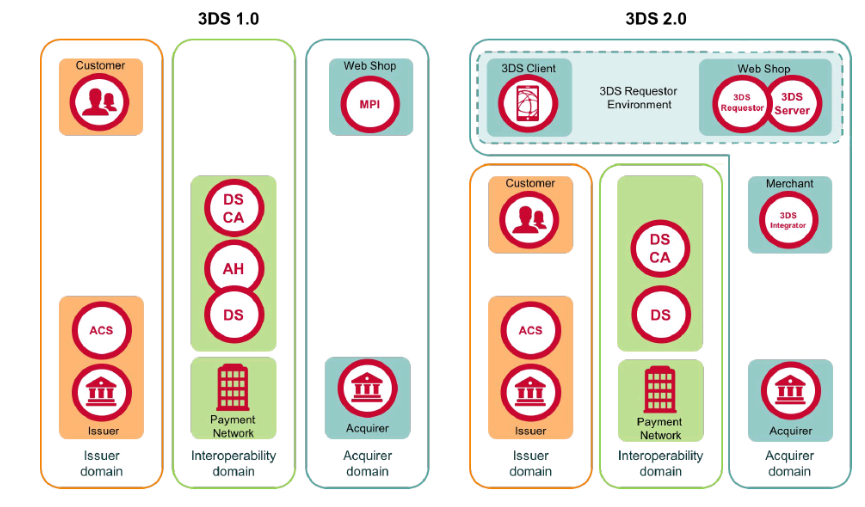
Before looking at 3D Secure 2.0, let's first explain what 3D Secure is.
3D Secure is a two-layer payment authentication system that protects both the cardholder and the merchant in online payments. Visa first released it in 1999, and other card schemes such as Mastercard, JCB, American Express and Discover adopted it later.
In a 3D Secure transaction, authentication is done with a one-time password sent by SMS to the cardholder's mobile phone. After entering the card details at checkout, the cardholder completes the 3D Secure transaction by entering the code they receive.
3D Secure protects the merchant as well as the cardholder. Transactions made through a merchant's virtual POS without 3D Secure carry risk: if a chargeback occurs, the party liable is the merchant's bank, the acquirer.
Why was a move to 3D Secure 2.0 needed?
The following problems with the original 3D Secure made 3D Secure 2.0 necessary:
- It runs in a web browser, so it does not support in-app, mobile and digital wallet payments.
- It only allows authentication by password and asks for it on every transaction, without exception.
- The verification screens are not responsive, which makes them hard to use on tablets and smartphones.
How has 3D Secure evolved?
3D Secure has become more secure over time, in response to the variety of fraud cases and technological developments. The latest version, 3D Secure 2.0, was announced in 2016.
What did 3D Secure 2.0 bring?
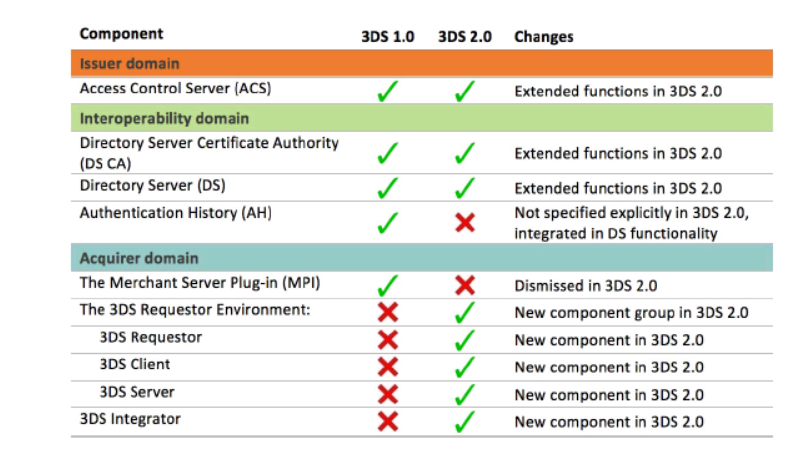
- 3D Secure 2.0 brings important improvements, especially for risk-based authentication. With its more advanced integration, it can analyse many details about the shopper and automatically skip the SMS password step. This also helps prevent the lost sales that e-commerce businesses in particular suffer.
- One of the biggest problems with 3D Secure 1 was mobile compatibility and mobile integration. With 3D Secure 2.0, mobile SDKs (Software Development Kits) built to the standards set by EMVCo will soon come into use.
- 3D Secure 2.0 supports authentication methods other than SMS. Methods such as fingerprint, face recognition and other biometrics will contribute greatly to mobile payments.
In short, 3D Secure 2.0 takes into account the additional payment channels whose popularity is growing rapidly. Compared with 3D Secure, expectations are high because it offers smarter, more advanced security methods and higher performance. However, there is also a high chance of difficulties during the transition.