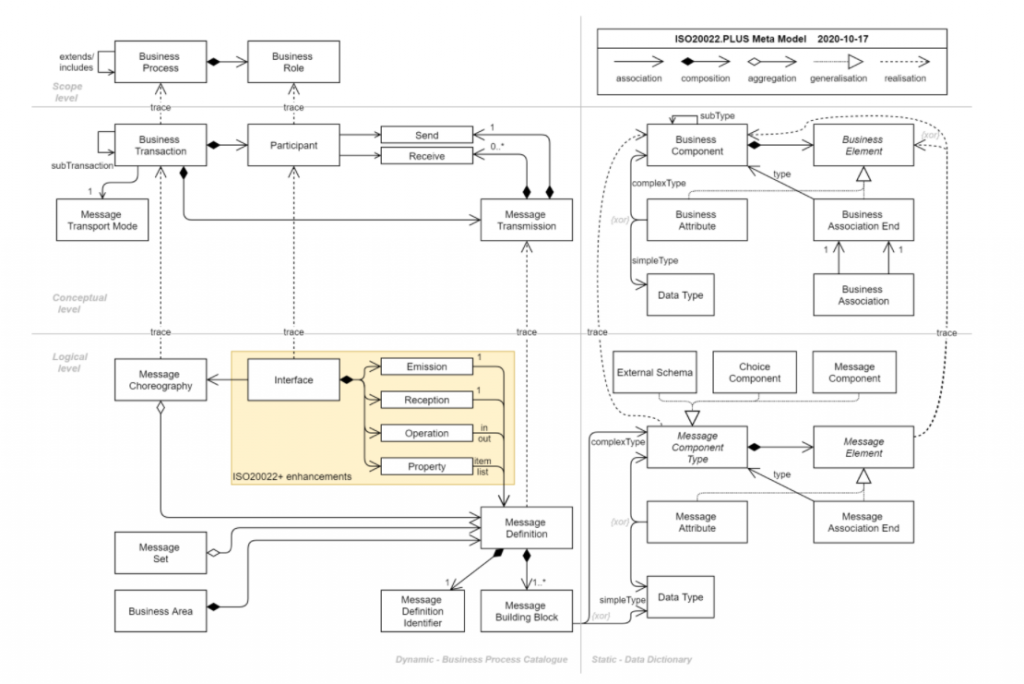
There are certain standards used to keep payment systems operating in a healthy and stable manner. One of these standards is ISO 20022.
So what is ISO 20022, and for what purpose was it created?
Developed in 2009 in XML format for all financial services and accepted by many institutions, it is an international and open "financial messaging" standard created, as with all standards, to establish a common communication language between systems.
Although it has undergone many revisions since its original release date of September 2005, the message format itself has never changed when you look at the applications built on this standard.
With the "instant" transmission of a message over the internet and the ability to settle transactions quickly, a "Real-Time Payments" subgroup was formed within the ISO 20022 group in the second half of 2015. In addition, the fact that work is being done on the concept of "Instant Payments" is a revolutionary decision for the standard.
So what is the difference between ISO 20022 and ISO 8583?
The main differences between ISO 20022 and ISO 8583 are:
- While ISO 8583 is a standard used for card-based financial transactions whose "focus is technology," ISO 20022 set out to become a universal international language usable across all financial services, and as a business standard its "focus is content."
- The essence of ISO 20022 is that it is a "standard for standards."
- In ISO 20022, through a modeling methodology that separates business rules from physical message formats, there are 320 different message types under 5 basic categories (Payments, Securities, Trade Services, Cards, and Foreign Exchange-FX), with each message type containing hundreds of fields.
- Complying with a common standard brings advantages such as automation, reduced cost, and reduced risk.