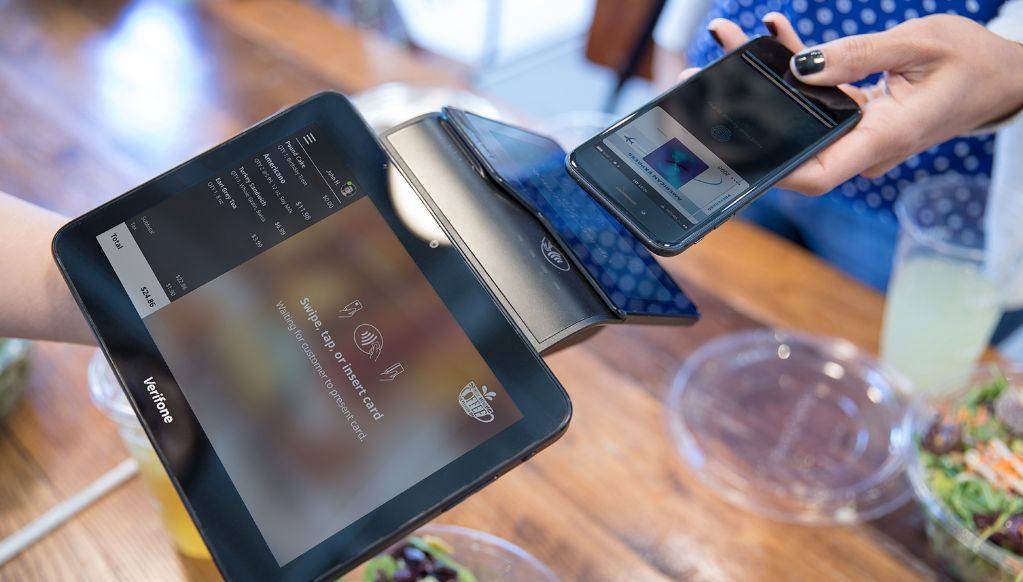
Magnetic Secure Transmission (MST) is the name of a mobile payment technology in which devices such as smartphones emit a signal that mimics the magnetic stripe on a traditional payment card.
To imitate the use of a physical card on a POS device without requiring the terminal's software or hardware to be upgraded, MST sends a magnetic signal from the device to the payment terminal's card reader. The payment process is triggered along with the signal that is sent.
Samsung Pay uses a technology called NFC and Magnetic Secure Transmission (MST). When you hold the phone up to any terminal, it emits a signal that simulates the magnetic stripe on the card.
This means it works with almost any terminal, without merchants needing to update their POS (point of sale) devices.
In which cases does MST not work?
MST does not work in situations where the card must be used physically. For example, this setup does not work at self-service pumps at gas stations. Solutions for this are expected to be developed in the future.
If my phone has no internet or Wi-Fi access, can I still transact with MST?
If your phone has no internet or Wi-Fi access, a limited number of transactions can still be made.
Is MST secure?
Mobile payment systems use a method called tokenization to keep card details safe. When you add your cards to the app, it generates a virtual account number, and your real card number is never given to the merchant. When you tap your phone to pay, it sends an encrypted value that behaves like a tokenized card number and password. The card system then verifies and processes the payment.