Skip to content

Search

"Processing Code"

117 articles found

TR QR Code merchant registry system diagram

Merchant & POS

What Is the Merchant Registry System?

The Merchant Registry System is the system at BKM that holds information on merchants accepting electronic payments, set up to simplify TR QR Code payment processes and prevent fraud and misuse in payments.
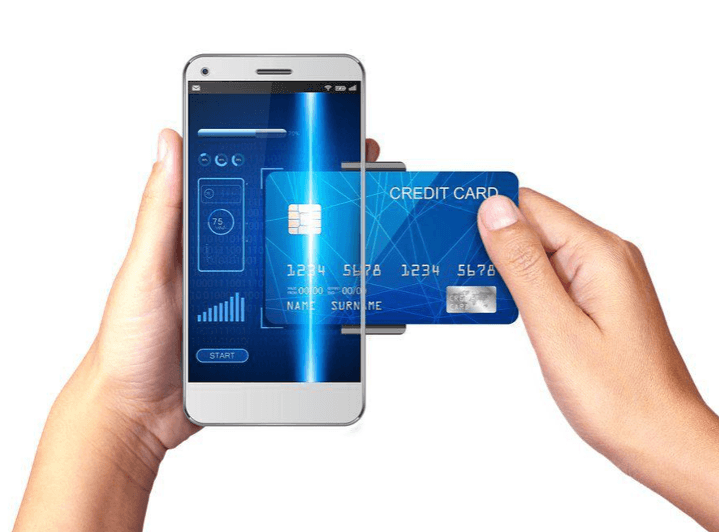
Contactless card payment at an overseas POS terminal that prompts for a PIN after a limit is exceeded

Payment Systems

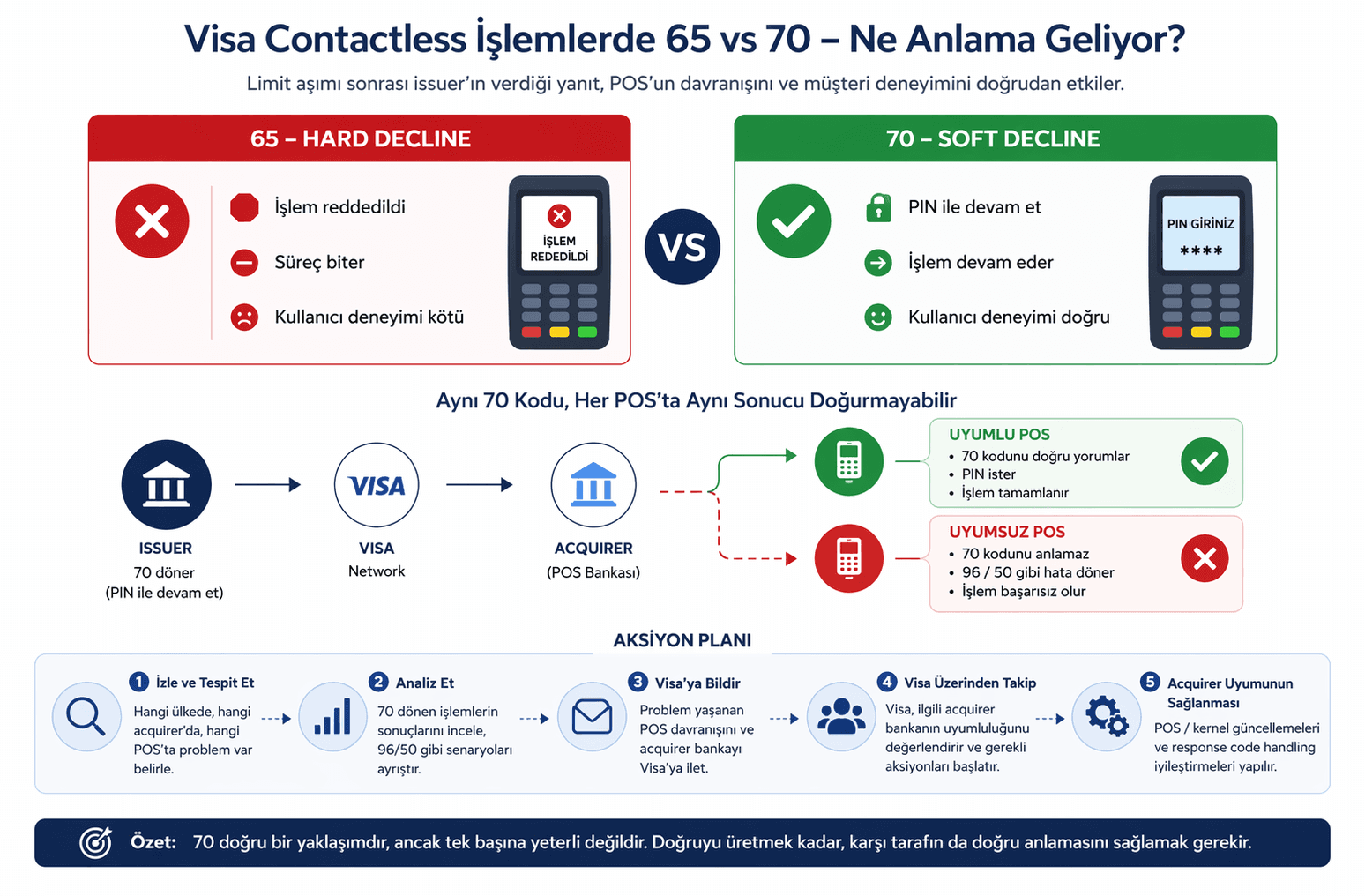
Visa Overseas Contactless Transactions – After Code 70 (Part 2)

After switching to response code 70 for contactless limit-exceeded cases, we found that some overseas POS devices and acquirers did not handle it as expected. This post covers why the problem lies in the ecosystem and how to address it.

Smartphone being used as a mobile POS device for a card payment

Merchant & POS

Mobile Phones Are Turning Into POS Devices

With advances in technology, mobile phones can now be used for many functions besides calls and internet access. One such innovation is the ability to use smartphones or tablets as POS devices.

Illustration of a phone scam call impersonating a bank

Security

We're Calling From the Bank, Your Account Has Been Compromised...

Fraud cases where scammers pose as bank staff or other institution employees to obtain citizens' banking information have increased significantly recently. Interestingly, the new fraud trend closely mirrors the steps of a genuine banking procedure.

POS terminal used for EMV card payment processing

Merchant & POS

TVR (Terminal Verification Results)

Terminal Verification Results (TVR): a sequence of bits produced when a terminal reads an EMV card, based on logical checks such as an expired card. This data object is used to decide whether a payment transaction should be accepted online, declined, or allowed to proceed.

Diagram illustrating the difference between Online PIN and Offline PIN verification in card payments

Payment Systems

What are Online and Offline PIN? Can PIN be bypassed?

Online PIN is verified by the card-issuing institution through the message itself, while Offline PIN is verified on the chip. This article explains the difference and when PIN bypass is allowed.

Diagram illustrating the ISO 8583 field 32 structure

ISO 8583

ISO 8583 Field Descriptions (F32)

F32 - ACQUIRING INSTITUTION IDENTIFICATION CODE: the 11-digit acquirer bank ID. The values it can take for domestic transactions and by card brand include Visa, MasterCard, UnionPay, Discover and JCB formats.

Discover chargeback reason codes list

Payment Systems

What Are the Discover Chargeback Reason Codes?

Chargeback reason codes differ by card scheme. Here is the list of Discover chargeback reason codes and their descriptions, along with how merchants can use them.

ISO 8583 field table showing the F38 authorization identification response field

ISO 8583

ISO 8583 Field Descriptions (F38)

DE 38 (AUTHORIZATION IDENTIFICATION RESPONSE) is the authorization code generated when a transaction is approved. It is alphanumeric, 6 characters long, and left empty for declined transactions.

Diagram of a partial authorization where an issuer approves only part of the requested amount

Merchant & POS

What Are the Partial Authorization Requirements for an Acquirer Bank?

Partial authorization lets an issuer approve part of the requested amount when the card lacks the full balance, with the rest paid another way. This post covers the technical, receipt, clearing, reconciliation, merchant and certification requirements for acquirers.

Diagram illustrating the EMV Tag-Length-Value (TLV) data structure used in card transactions

Online & Authorization

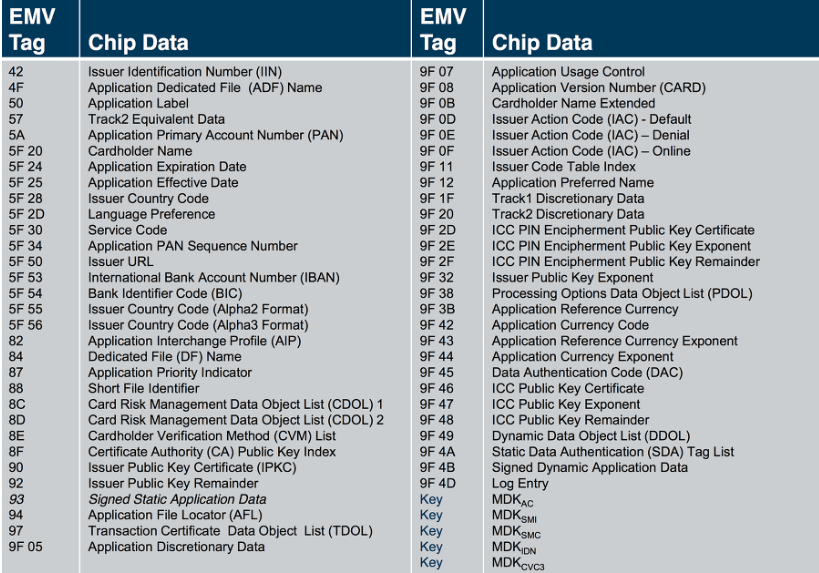
What are EMV Tags?

In EMV, data is stored in Tag-Length-Value (TLV) format, and it is carried between the card, the POS terminal, and the authorization system in this same format. This post lists every EMV Tag, its type, and its description.