Developments in artificial intelligence over the past few years have paved the way for fundamental changes in many areas of business. But the new concept being discussed today is not just about AI that generates content or answers questions; it is about “agent” systems that can take action on their own, make decisions, and manage processes in pursuit of specific goals.
This transformation is opening the door to a new era in e-commerce and payment systems as well. The name of this increasingly discussed approach in the industry is Agentic Commerce.
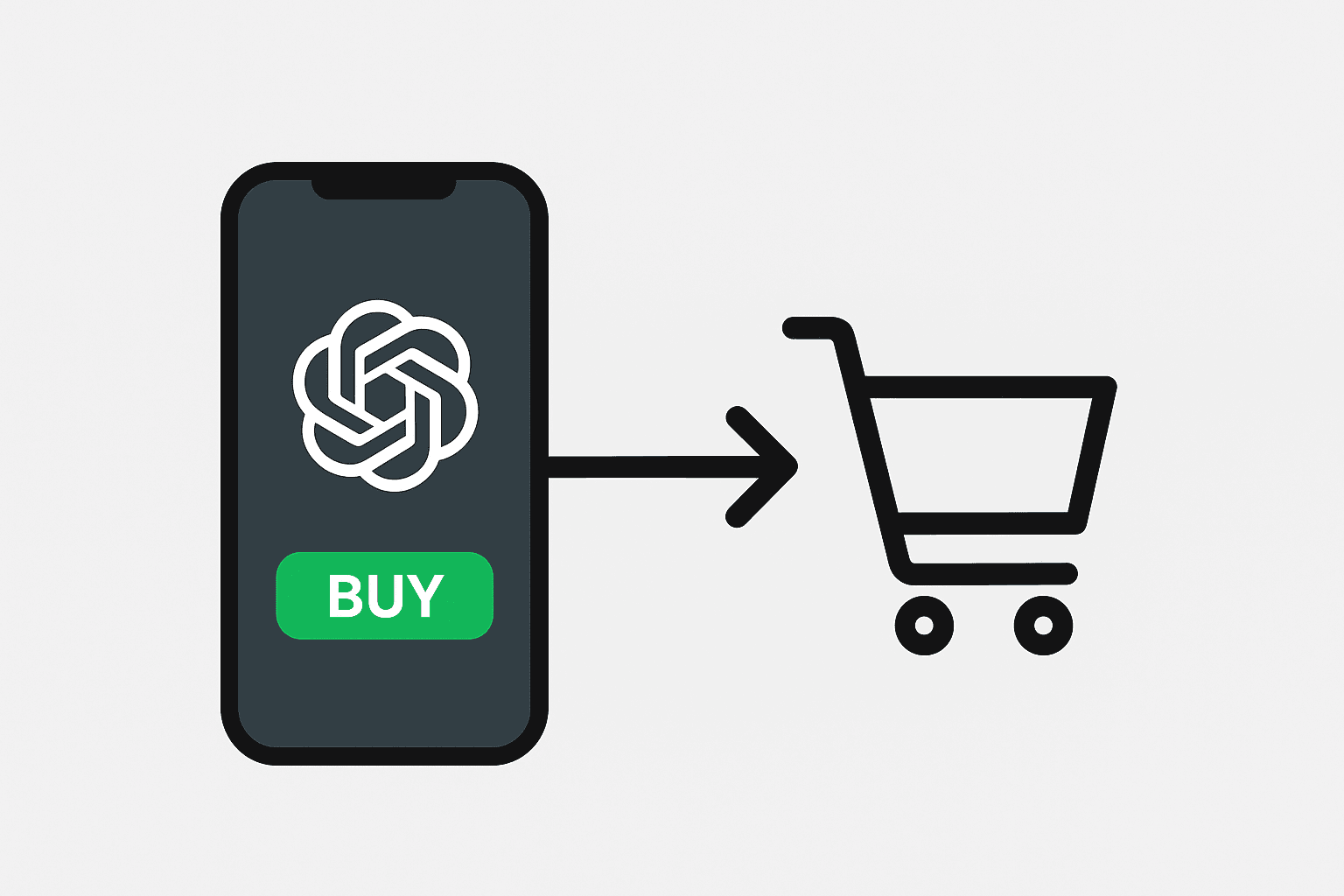
In the near future, the party that searches for products, compares prices, analyzes promotions, makes purchase decisions, and completes the payment will not only be humans. AI agents working on behalf of users will also become an active part of the purchasing process.
This situation requires e-commerce, banking, payment systems, digital wallets, and e-money institutions to re-evaluate their current business models.
What Is Agentic AI?
Agentic AI refers to artificial intelligence systems that can act on their own in pursuit of a specific goal.
Traditional generative AI models wait for a prompt and produce a response to it. For example:
“Recommend a laptop that suits me.”
After this request, the system offers recommendations and the process ends there.
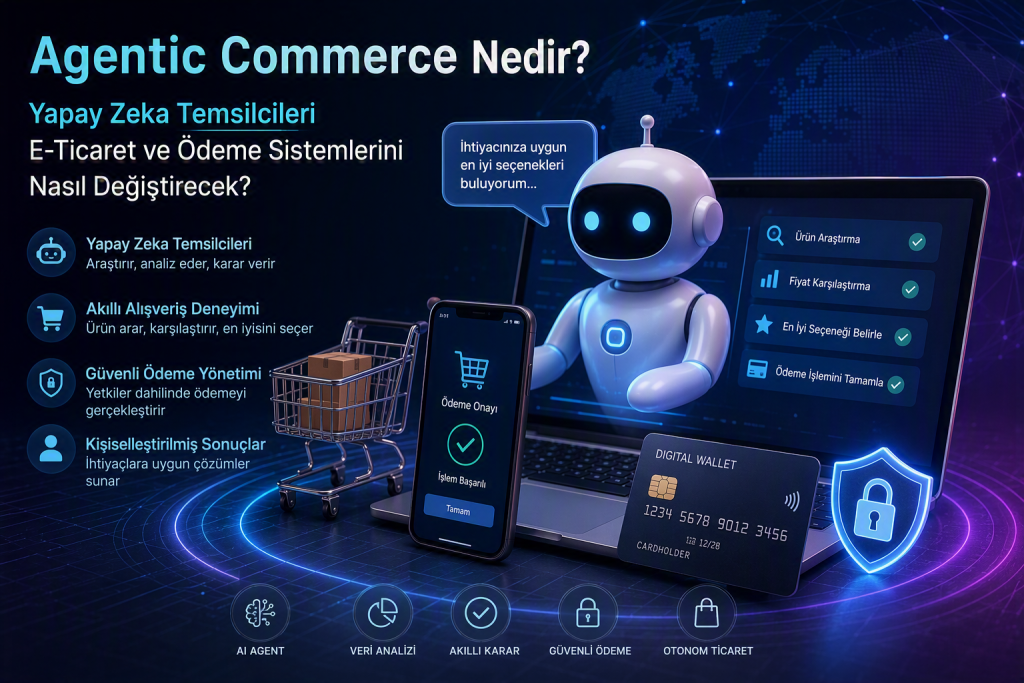
Agentic AI goes much further toward the same goal by:
- Analyzing needs
- Researching products
- Comparing prices
- Evaluating promotions
- Taking the user’s preferences into account
- Forming the purchase decision
- Obtaining the necessary approvals
- Initiating the payment process
In other words, it does not just produce information; it gets work done.
What Is Agentic Commerce?
Agentic Commerce is a next-generation commerce model in which a significant part of the purchasing and payment processes is carried out by AI agents.
In a typical purchasing process today, the user researches products, evaluates alternatives, compares prices, makes the purchase decision, and completes the payment.
In the Agentic Commerce model, a significant part of these processes is carried out by AI agents.
For example, a user can give an AI assistant the following task:
Buy 10 laptops for the team this month. The total budget must not exceed TRY 400,000. They must have at least a 3-year warranty.
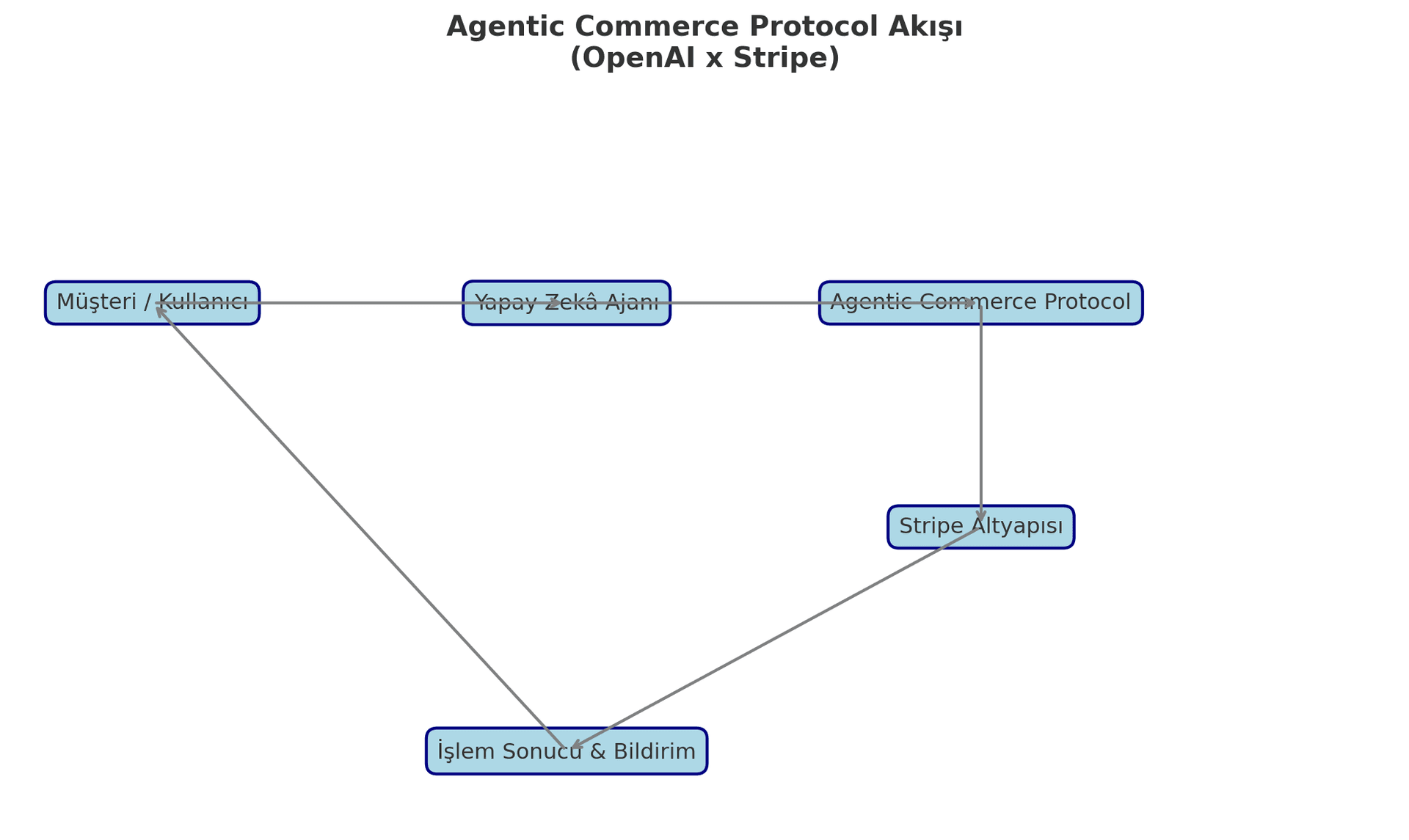
From this point on, the AI agent can research suppliers, collect price quotes, check stock availability, compare delivery times, and select the most suitable option. The human is often only the party who gives the final approval.
How Will AI Agents Shop?
Today’s e-commerce experience is designed around humans. In the future, customers’ digital agents will also be direct users of shopping systems.
For example:
- The AI assistant in your home can detect products that are running low.
- A corporate purchasing agent can track stock levels.
- A travel assistant can book flight tickets and hotels.
- A financial assistant can make payments while checking budget limits.
In these scenarios, instead of “How will I buy it?”, the user will be managing the question “Under which rules do I want it to be bought?”.
What Will Change for Payment Systems?
As Agentic Commerce becomes widespread, significant changes will take place in the payment systems industry.
Existing payment infrastructures are mostly designed around human interaction. However, having an AI agent as the party carrying out the transaction will bring new requirements.
Agent Identity
Payment systems will have to recognize not only the customer but also the AI agent acting on the customer’s behalf.
Authorization Management
Users will define certain limits for their agents.
For example:
- Daily spending limit
- Merchant-based permissions
- Product category restrictions
- Geographic usage limits
Real-Time Risk Analysis
Fraud monitoring systems will have to analyze not only human behavior but also AI behavior.
How Will Digital Wallets Evolve?
Today’s digital wallets work as applications in which payment instruments are stored.
In the Agentic Commerce era, however, digital wallets will manage the following:
- Agent identities
- Authorization policies
- Spending rules
- Risk preferences
- Approval mechanisms
- Autonomous payment permissions
and will turn into intelligent financial platforms.
In other words, digital wallets will become not just a payment instrument but the management center of AI agents.
New Opportunities for E-Money Institutions and Fintechs
Agentic Commerce creates significant opportunities, especially for e-money institutions and fintech companies.
In the near future, new product categories may emerge in the following areas:
- Agent Wallets
- Agent KYC and Identity Management
- Agent-Based Risk Analysis
- Agent Authorization Services
- AI-Native Payment Networks
- Autonomous Reconciliation Systems
- Agent Commerce Platforms
- Agent API Marketplaces
Global standards have not yet been established in most of these areas. For this reason, companies that move early can gain a significant advantage.
How Should Banks and Fintech Companies Prepare for Agentic Commerce?
In the coming period, customers will not only transact through mobile applications or online branches. AI agents acting on behalf of users will also become users of financial systems.
For this reason, financial institutions need to invest in the following areas:
- API-oriented architecture
- Agent identity management
- Authorization models
- Real-time risk engines
- AI-native product design
Just as internet banking and mobile banking created new business models, Agentic Commerce can create a transformation of a similar scale in the financial sector.
Opportunities for Turkey
Thanks to its FAST infrastructure, open banking ecosystem, advanced payment systems, and dynamic fintech startups, Turkey has significant potential in terms of Agentic Commerce.
E-money institutions and fintech companies in particular can move faster than large banks and develop agent-based financial products.
The success achieved in mobile banking today can be repeated in the future in agent banking and agent payments.
Conclusion
Agentic Commerce is not just a new technology trend.
It is a new commerce model that emerges as AI agents, which do not decide in place of people but work toward people’s goals, become part of economic life.
Today, banks, payment institutions, and fintech companies are designed around the needs of the mobile world. In the coming period, however, their customers’ AI agents will become users of financial systems as much as the customers themselves.
For this reason, preparing for Agentic Commerce should no longer be seen as an innovation project but as a strategic necessity.