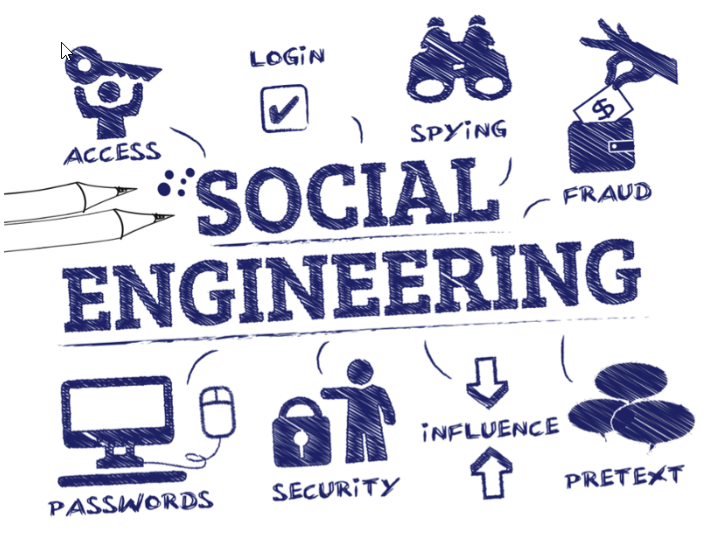
Social engineering is the art of obtaining information that individuals would normally hide or not share, by using attack techniques that exploit the human factor or methods of influencing and persuading people.
The weakest link in information security in an organization is the human factor. No matter how many technical measures are taken, it is not easy to provide security in an environment with an unaware user.
In computer- and technology-based social engineering, a person's information is obtained using technology. While the person is using the computer, a pop-up screen appears saying there is an authorization problem and asking them to log in again. The information is obtained through screens where the user can enter their password and assigned user credentials. Methods carried out using computers and technology to capture personal information are called computer- and technology-based social engineering.
Ways to protect yourself
The basic rules are not to click on links from unknown sources, to remember that banks never ask for passwords or OTPs, and to verify through official channels.
Using multi-factor authentication makes it harder to take over the account even if the password is stolen. Organizations can run regular phishing simulations and training for employees.
By reporting a suspicious message to the relevant institution, you can help protect other users as well.