Chargeback is the process of refunding the amount paid to the relevant credit card when the goods or services that should have been received in return for a credit card payment are not received, or when transactions not made by the cardholder are identified. It is translated into Turkish as "ters ibraz" (reversal of presentment).
Visa Merchant Purchase Inquiry (VMPI) allows an unusual transaction identified on a cardholder's statement to be evaluated and checked in real time before a chargeback is filed, helping prevent potential chargeback processes.
Essentially, VMPI allows the merchant and the card-issuing bank to communicate with each other before any serious action is taken. This is beneficial not only for these two parties, but also for acquirers and processors.
VMPI gives the merchant the opportunity to provide all the necessary information about the transaction in real time through a CRM or payment gateway.
More than 2.6 million personal chargeback requests were received for transactions made with Visa cards in 2015. Chargebacks were filed by cardholders who saw transactions on their statements that they had not made. This figure represents an increase of more than 13% in chargebacks since 2014. 20% of all these chargebacks are related to digital and electronic product purchases.
The ever-increasing volume of digital shopping transactions in particular is also causing an increase in the number of credit card disputes. For many websites, dealing with chargebacks costs more than the price of the product.
For this reason, merchants should adopt a proactive approach to prevent disputes from arising when a transaction is not recognized. Digital products are certainly profitable for merchants due to their volume potential, but they also carry a greater potential for problems.
So how does VMPI work?
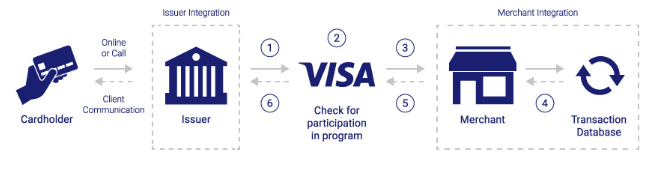
VMPI is a direct connection between the merchant platform's transaction database and the card-issuing banks using the Visa platform. The process allows merchants to share information seamlessly with card-issuing banks.
VMPI includes the following steps:
- The cardholder contacts their bank regarding a suspicious transaction, and card-bank details are obtained through Visa Resolution Online (VROL).
- Visa verifies whether the merchant is registered for VMPI.
- Visa sends a message to the merchant for additional information.
- The merchant provides additional data such as order details, tracking, and refund information.
- The merchant responds to the card-issuing bank in near real time.
- Visa provides data to the issuer, which verifies the details with the cardholder.
Transaction Services is now registered for VMPI and can help merchants resolve potential disputes and chargebacks more efficiently than ever. This feature is also crucial for merchants selling products and services online and through other digital platforms.