
Credit Card
What does credit card limit allocation mean?
A credit card is a card whose limit the bank sets after evaluating the customer against criteria such as income, payment history, and credit bureau score.
Search
700 articles found
Credit Card
A credit card is a card whose limit the bank sets after evaluating the customer against criteria such as income, payment history, and credit bureau score.

Payment Systems
The Banking Regulation and Supervision Agency (BRSA) had prepared a draft communiqué on the remote identity verification methods banks can use. According to the communiqué published in today's Official Gazette, the practice enters into force on May 1.

Online & Authorization
Account-to-account (A2A) payments can be described as making a payment by transferring money from one bank account to another. Though similar to wire transfer/EFT, combining the transfer with the payment creates a seamless experience.
ATM
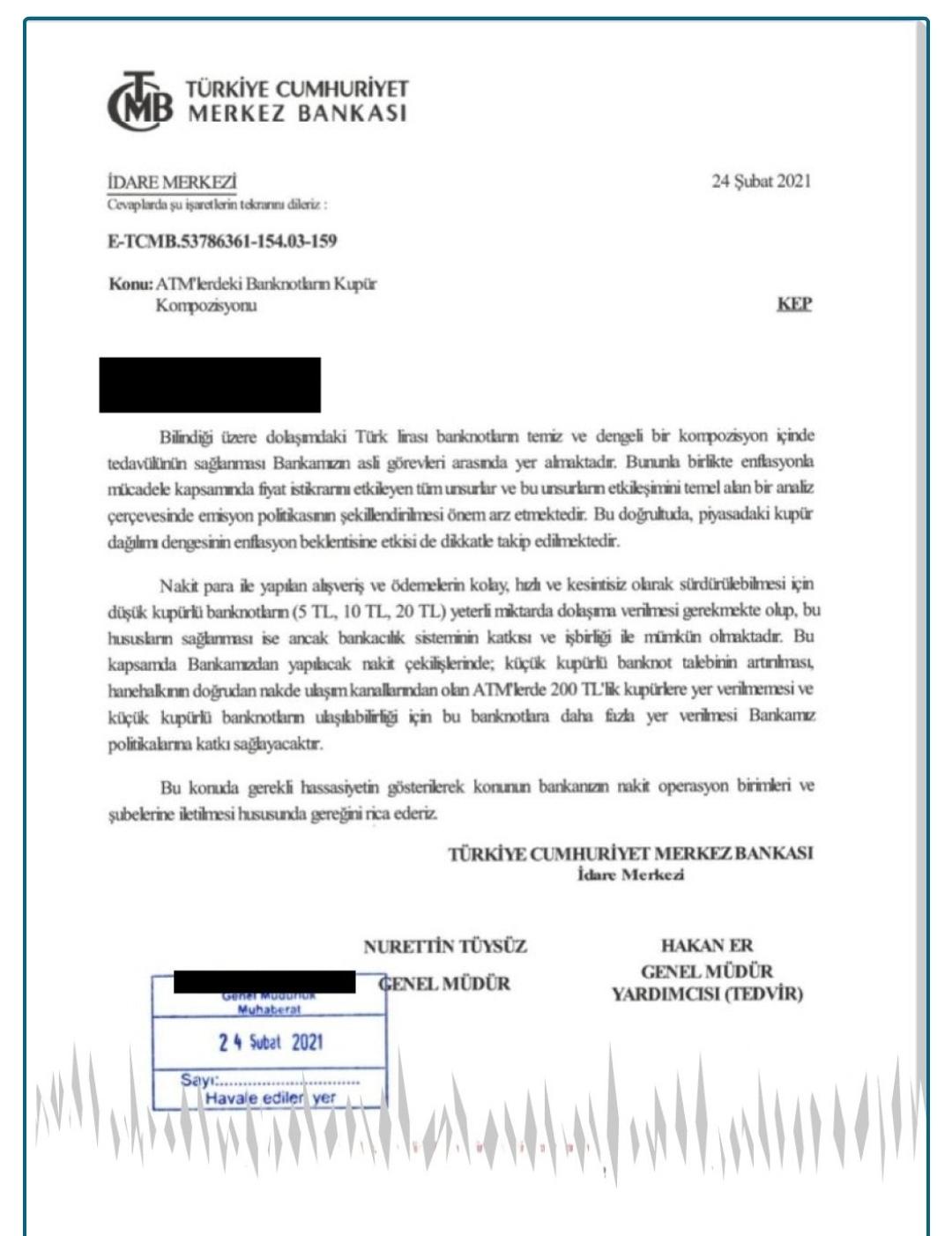
In a letter to banks as part of the fight against inflation, the CBRT asked them to stock small-denomination banknotes in ATMs instead of 200 TL notes. Is this a ban or a recommendation, and what are the operational consequences for ATMs and banks?

FAST
The Instant and Continuous Transfer of Funds (FAST) System lets customers send payment instructions 24/7 through bank systems, independent of EFT. This article explains what Easy Address is, how to register one and how transfers work.

Merchant & POS
The Central Bank of the Republic of Turkey has capped the commission banks charge merchants on credit card purchases, effective for transactions after November 1, 2019. What does this mean for cardholders and banks?

Credit Card
An installment is when a credit card transaction is split into a fixed number of monthly payments to the bank. For example, splitting a 100 TL purchase into 5 installments means paying the bank 20 TL per month until the full amount is paid off.

Merchant & POS
Not Onus is a payment systems term meaning "Not On Us": a situation where the card-issuing bank and the POS/ATM (acquiring) bank differ. Such transactions are settled through clearing between the two banks.

Merchant & POS
In the payment systems glossary, some terms are essential, including Onus. Onus literally means "on us" and refers to cases where the card-issuing bank and the POS/ATM bank are the same, meaning no clearing commission applies.

Merchant & POS
The batch number is kept on the POS, incremented by 1 at each end of day, used to transfer transactions to the merchant account and for reconciliation. It's tracked on both the POS and the bank's system.

Merchant & POS
A POS is a functional device with its own dedicated software, customized according to the authorization system of the bank it is connected to, that accepts credit or debit cards. So, banks abroad launch dozens of new card products every day…

ISO 8583
F32 - ACQUIRING INSTITUTION IDENTIFICATION CODE: the 11-digit acquirer bank ID. The values it can take for domestic transactions and by card brand include Visa, MasterCard, UnionPay, Discover and JCB formats.