Skip to content

Search

"Authorization"

316 articles found

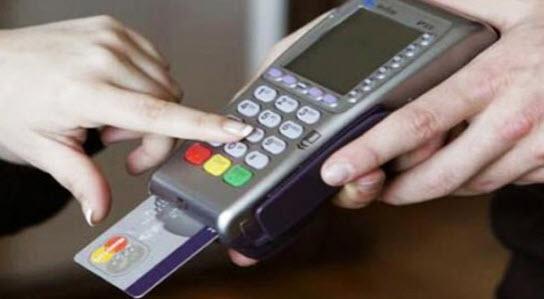
POS terminal processing an EMV chip card transaction

Credit Card

Application Interchange Profile (AIP)

The Application Interchange Profile indicates the application functions supported by the card. The AIP values and their descriptions are given below. Where is the AIP found? The AIP is a 2-byte piece of data stored on the card, carried under EMV tag 82.

Illustration of ISO 8583 message format

ISO 8583

ISO 8583 Field Descriptions (F44)

DE 44 - ADDITIONAL RESPONSE DATA is used to provide other supplementary data that may be needed in authorization, as a response to the authorization message. The Card Authentication Results Code is sent in position 9, and the CAVV Result Code is sent in position 15.

ISO 8583 field 35 Track 2 data

ISO 8583

ISO 8583 Field Descriptions (F35)

The card's Track 2 data is carried in this field. Track 2 data contains information such as the card number, expiry date and service code.

Diagram of ISO 8583 Field 3 Processing Code structure

ISO 8583

ISO 8583 Field Descriptions (F3)

Field 3, Processing Code, is the field that shows what type of transaction is being performed and is critical for authorization. A Sale from POS differs from a Cash Withdrawal at an ATM.

Illustration of ISO 8583 message format

ISO 8583

ISO 8583 Field Descriptions (F35)

F35 TRACK-2 DATA: The values printed to the card's Track 2 data in ISO 7813 format, including field separators and start/end sentinels, but excluding LRC (Longitudinal Redundancy Check) characters. It is 37 characters long.

Illustration representing a credit-linked debit card

Debit Card

What Is a Credit-Linked Debit Card?

Some banks offer their customers a debit card product backed by an individual or corporate credit facility. How do these products work? First, these cards are printed as unembossed (no-name) cards and delivered by courier to branch staff. A credit application…

Diagram illustrating the POS batch upload reconciliation process

Merchant & POS

What is Batch Upload?

When a transaction is made through a POS, it is recorded both on the POS itself and in the acquiring bank's authorization system. At batch close, the POS sends all its transactions to the bank, which reconciles them against its own records.

Illustration showing the difference between a cancellation and a refund transaction

Merchant & POS

What Is a Cancellation (Void) and a Refund?

Credit card transactions made via POS sometimes need to be reversed. These are called a cancellation (void) or a refund. What's the difference, and when does each apply?

Photo illustrating a point-of-sale multiple installment sale transaction

Merchant & POS

What is a Multiple Installment Sale?

This can occur at companies selling products from different sectors. For example, you enter a shopping mall and buy a refrigerator for 3000 TL, a dishwasher for 2000 TL, and an iron for 1000 TL, each under a different installment campaign.