Skip to content

Search

"card status"

75 articles found

Illustration of recurring payments and automatic card collection for subscription businesses

Merchant & POS

Key Points to Watch for in Recurring Payments

Winning customers is one of the most important things in business, but keeping them satisfied matters just as much. If you collect payments at regular intervals, such as monthly, these tips will help you improve the success rate of recurring collections.
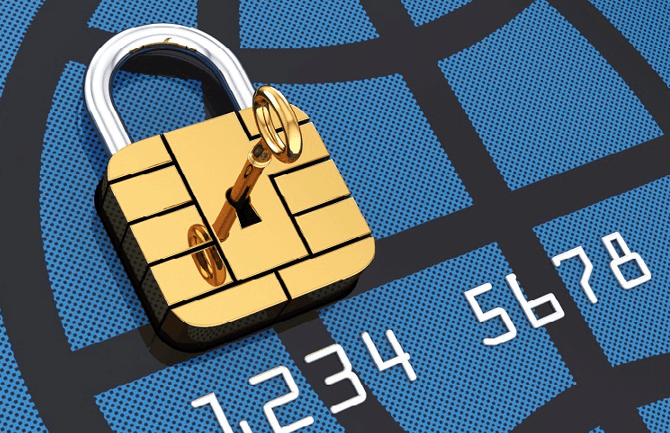
PIN try counter on chip cards

Credit Card

What Is the PIN Try Count?

The PIN Try Count is the maximum number of failed offline PIN verifications that can be made with the card. Banks usually keep both the consecutive wrong PIN count and the maximum wrong PIN count.

Diagram illustrating the stages a credit card goes through from application to delivery

Credit Card

What stages does a credit card go through before reaching the customer?

Credit cards are undoubtedly the most important payment tool for most of us when shopping. So what stages does a credit card or debit card go through before it reaches our pocket? The customer submits a card application request, and the process continues from there.

Diagram of the Command APDU structure fields: CLA, INS, P1, P2, Lc, Data Field, Le

Online & Authorization

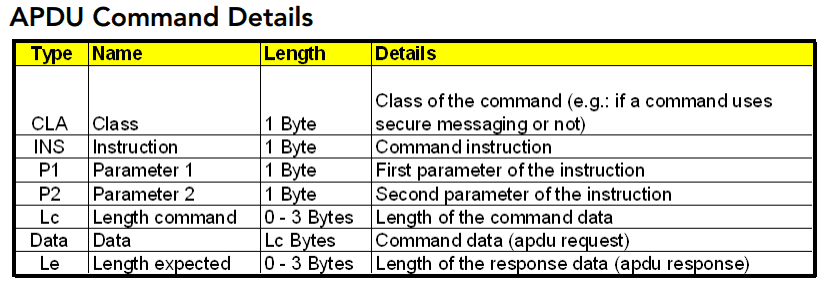
What is an APDU (Application Protocol Data Unit) Command?

An APDU is an application-level protocol defined in ISO 7816-4 and used between a smart card and a POS, ATM, etc. There are two types of APDU: Command APDU and Response APDU. The structure of the APDU is given below.

Illustration explaining the concept of the first online transaction after a card PIN change

Merchant & POS

What Does First Online Transaction Mean?

In payment systems, an online transaction means the transaction is sent to the card or POS/ATM bank at the moment it occurs, and required checks are obtained from that system. So does every transaction happen online? Of course not. Especially with contactless...

Diagram illustrating the structure of Track2 data on a card's magnetic stripe

Credit Card

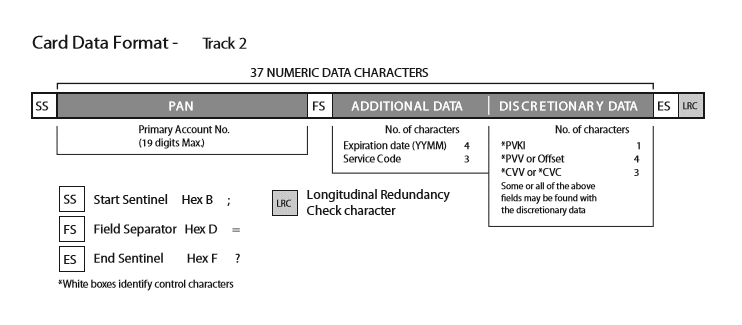
What Is Track2?

A special data set printed on a card's magnetic stripe, containing the card information required for authorization when the card is used physically. It consists of 40 numeric characters. The Track2 field structure includes several data fields such as length and description.

EMV Lower Consecutive Offline Limit 9F14 illustration

EMV

What Is the Lower Consecutive Offline Limit?

The Lower Consecutive Offline Limit is the maximum number of consecutive offline transactions allowed by the ICC application, as set by the issuer, on a terminal capable of going online. It is sent in tag 9F14.

ATM screen prompting a credit card cash withdrawal transaction

Credit Card

Can I withdraw cash from an ATM with my credit card?

You can withdraw cash from an ATM using your credit card by accessing your account. The prerequisite is that a current account must be linked to your card. If not, only limited functions are available.

Table of merchant sectors where offline transactions are restricted

Merchant & POS

In Which Sectors Can Offline Transactions Not Be Performed?

An offline transaction is one approved by the card and the POS themselves, without going to any system (the card's bank or the POS's bank), when a chip card transaction is made at a POS. For this reason, some sectors considered risky are restricted.

Illustration of a point-of-sale terminal checking a card against a warning list

Merchant & POS

What is the Combined Warning List (BUL)?

The Combined Warning List (BUL) lists card numbers the issuer wants blocked (lost, stolen, counterfeit, etc.), which acquiring merchants check within certain limits, at their own risk, when online authorization cannot be obtained.