Combined Warning List (BUL):
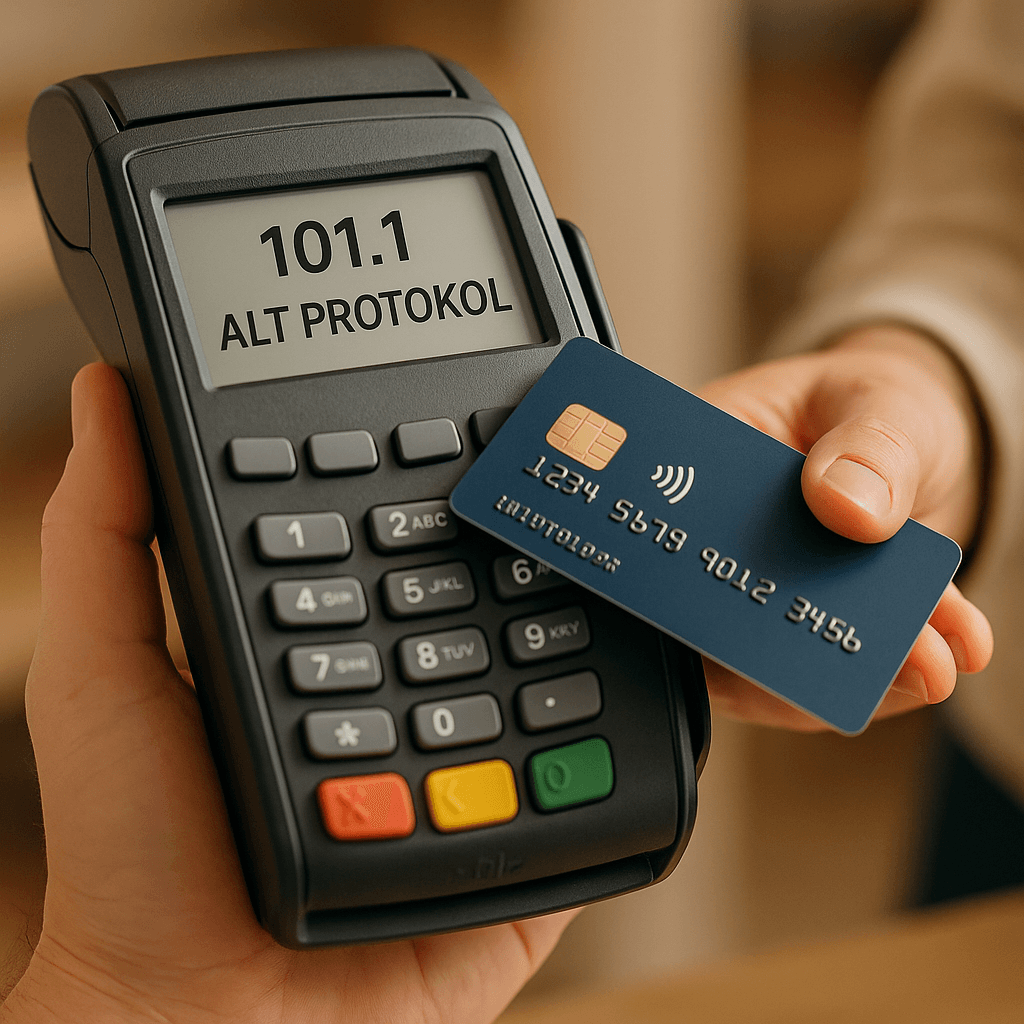
A file containing a list of card numbers that the issuing member (the issuer bank) wants to block from use (lost, stolen, counterfeit cards, etc.). Acquiring members check this list, at their own risk, to approve transactions within certain limits when online authorization cannot be obtained, and on offline-operating "Limited Amount Terminals," the card number is checked against this list up to the maximum transaction amount of 55 TL.
Why is the BUL necessary?
Under normal conditions, a card transaction goes online to the card-issuing bank, and the bank checks the card's status in real time. However, when there is a communication problem, or on terminals operating offline, this check cannot be performed. The BUL is a list created to prevent the use of cards known to be lost, stolen, or counterfeit in these situations.
How does it work?
Card-issuing banks report the card numbers they want blocked to the list. The list is updated periodically and made available to acquiring members. When a terminal or member bank cannot obtain online approval for a transaction, it checks the card number against this list. If the card appears on the list, the transaction is declined.
The decision to approve a transaction based on the list is at the acquiring member's own risk. If a problem later arises with a transaction that passed the list check, the acquiring party bears that risk. For this reason, such approvals are limited to specific amount limits.
The EMV equivalent
In EMV card transactions, the technical equivalent of this approach is the terminal's check of an "exception file" (warning list). If the card appears on the terminal's list, the corresponding bit in the first byte of the TVR is set, and the transaction is evaluated based on this information. International card schemes also publish their own warning lists for a similar purpose.