The Hidden Side of the Payments World
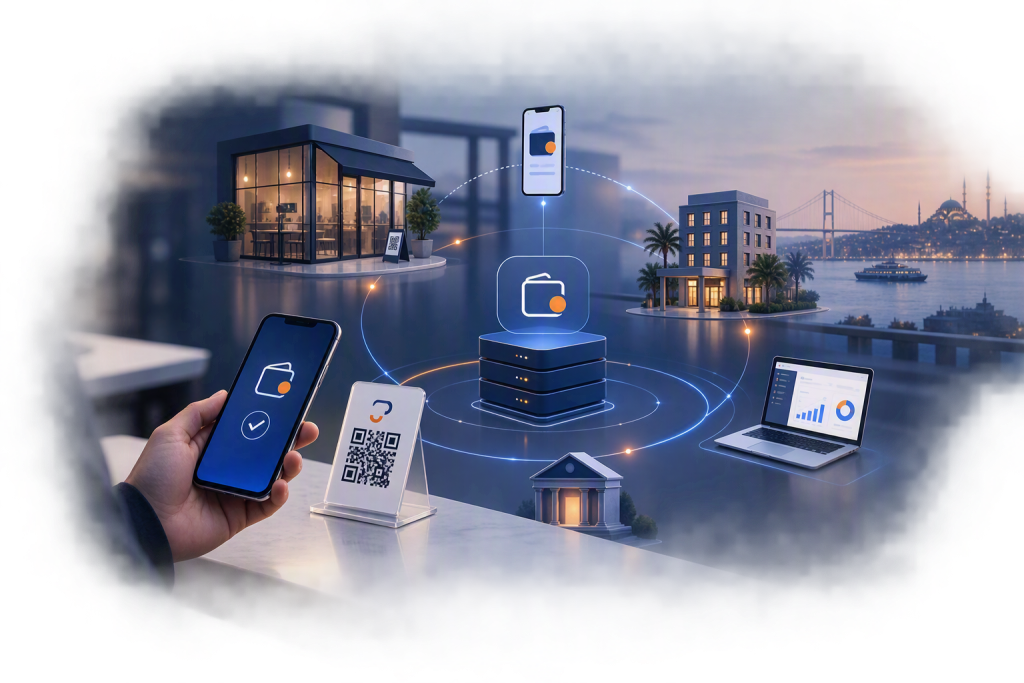
The words a person working in the payment systems industry hears most over a career are probably Visa, Mastercard, POS, Debit Card, Virtual POS, Acquiring and Card Issuing.
Frankly, my own career did not unfold very differently from that journey.
Banks, card schemes, POS infrastructures, merchants and payment networks have been at the center of the payment systems world for years. That is why the picture that forms in most of our minds when payments come up is also quite similar.
There is a cardholder.
There is a bank that issued the card.
There is a merchant that accepts the card.
In between sits Visa, Mastercard or a similar card scheme.
The card is presented, the transaction is approved and the payment is completed.
For many people who have worked in the industry for a long time, the payment systems world is often shaped within this frame.
But as I worked on different projects over the years, I noticed an interesting thing.
The millions of payments made around the world every day actually look nothing like this model.
Think of a municipality’s transit card, for example.
Think of a meal card system.
Think of a university campus card.
Think of an airline’s loyalty wallet.
Or the payment app that a large retail chain developed for its own customers…
In a significant share of these systems, there is no Visa.
There is no Mastercard.
In some cases, there is not even a bank directly involved.
Yet users still make payments.
Businesses still collect funds.
Millions of transactions are completed smoothly.
So how is this possible?
This is where one of the most interesting areas of the payment systems world comes in: closed-loop payment systems.
What Is a Closed-Loop Payment System, Really?
One of the most common misunderstandings I encounter when closed-loop payment systems come up is that these structures are seen only as private card systems.
In fact, the subject is much bigger than that.
Because what defines a closed-loop system is not the card.
It could be a card.
It could be a QR code.
It could be a mobile app.
It could be NFC tags.
It could be wearable devices.
It could be prepaid accounts.
It could even be different technologies we are not using yet today.
The real question is not which instrument is used.
The real question is which network the payment is processed in.
Most of the time, the only thing visible to the user is tapping a card or scanning a QR code.
But the architecture running in the background can be completely different.
For example, when you pay with a transit card on public transport in Istanbul, the transaction is not routed over the Visa or Mastercard network.
Similarly, in many meal card applications, different rules and different financial networks operate in the background.
Although the experience looks the same from the user’s perspective, the system architecture is entirely different.
For this reason, people who want to understand closed-loop payment systems first need to stop thinking about cards, POS devices or QR codes.
The real focus should be the network itself.
Because what makes a system closed-loop is not the payment instrument, but the owner and the governance model of the payment network.
The Real Difference Between Open-Loop and Closed-Loop
One of the biggest misconceptions I have heard in the industry for years is describing closed-loop systems as “systems without Visa.”
This is actually a rather incomplete view.
Because the real difference is not the logo being used.
The real difference is the governance model.
In open-loop systems, the rules of the network are defined by the card schemes.
Transaction formats…
Messaging standards…
Certification processes…
Dispute management…
Chargeback mechanisms…
Fraud principles…
Participant models…
They operate largely within the rules set by the card schemes.
In closed-loop structures, the situation is completely different.
The owner of the network sets the rules.
This is exactly where the strongest aspect of the system emerges.
You can define different rules for a transit system.
You can create different commission models for a meal card network.
You can set special transaction limits for certain product groups.
You can embed loyalty programs directly into the payment mechanism.
You can redesign settlement periods according to the needs of the sector.
In short, if you own the network, you can write the rules of the game too.
But at exactly this point, a critical question emerges.
Who will manage the operational capabilities that Visa and Mastercard have developed over decades?
Who will manage risk?
Who will run dispute processes?
Who will fight fraud?
Who will handle reconciliation?
Who will manage liquidity?
What Is the Real Product of a Payment System?
If the biggest advantage of closed-loop payment systems is control, their biggest challenge is also that all of the control rests with you.
The second major misconception I notice when closed-loop payment systems are discussed is the belief that value is created at the point of payment acceptance.
I see this approach often, especially in teams that have worked in the POS world for a long time.
Because what is visible is the POS device.
What is visible is the QR code.
What is visible is the mobile app.
But in reality, value is not created here.
When we look at successful payment systems today, we see that the real value is produced in the invisible layer.
The POS device can change.
The QR code can change.
The mobile app can change.
Even the customer experience can be completely redesigned.
But when the financial recording layer at the center of the system changes, the entire ecosystem is affected.
This is why, in modern payment architectures, the truly critical product is often not the screen the customer sees.
The real product is the financial operating system running in the background.
So what are the core components of this operating system?
- Merchant Management
- Settlement Engine
- Ledger Infrastructure
- Commission Management
- Reconciliation Processes
- Risk and Fraud Layer
- Payment Orchestration
- Liquidity Management
The common thread I have seen across many payment projects over the years is this:
The QR codes, cards or mobile apps that users see are often just the visible face of the project.
But the real value of the system works behind the screen.
Just like an iceberg.
The visible part makes up the customer experience.
The invisible part is the financial infrastructure.
And most of the time, the real complexity starts exactly here.
Conclusion
At first glance, closed-loop payment systems may look like just an alternative payment method.
Yet when the subject is examined in a little more depth, it becomes clear that this is much more than a payment acceptance solution.
What is actually being built here is not a card system, a QR platform or a mobile app.
What is being built here is a financial network whose rules can be defined, that can manage financial movements, perform settlement and build its own economy.
Perhaps for this reason, when evaluating closed-loop payment systems, the first question to ask is:
“Which card is being used?”
not,
“Who sets the rules of this network?”
it should be.
Because the element that truly shapes the future of payment systems is not the cards in use, but the architecture of the network and the owner of the network.



