Why Do Closed-Loop Payment Systems Want to Grow?
Why does a coffee chain set up its own loyalty program?
Why does a payment app keep trying to add new services even though it can already perform the basic payment function?
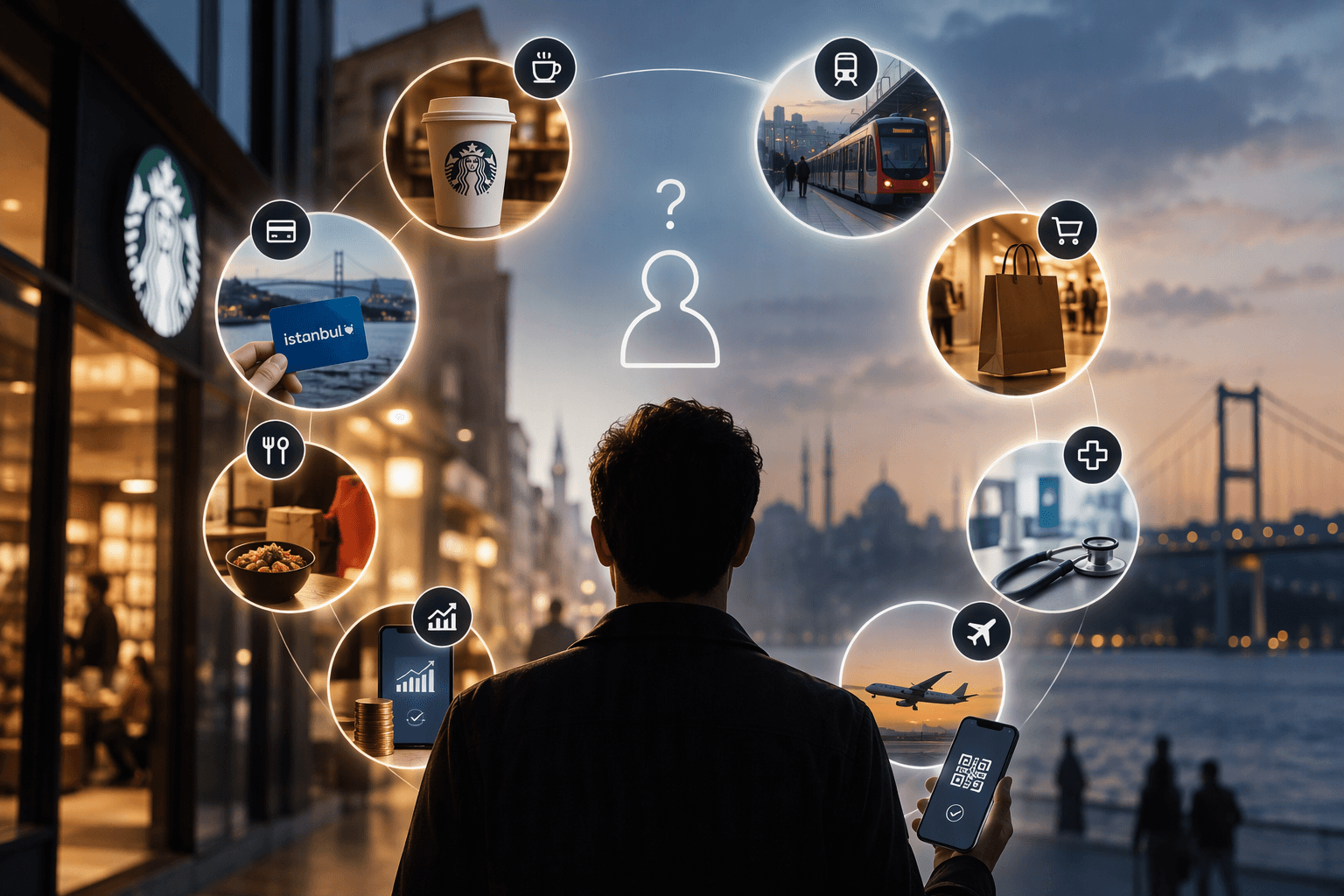
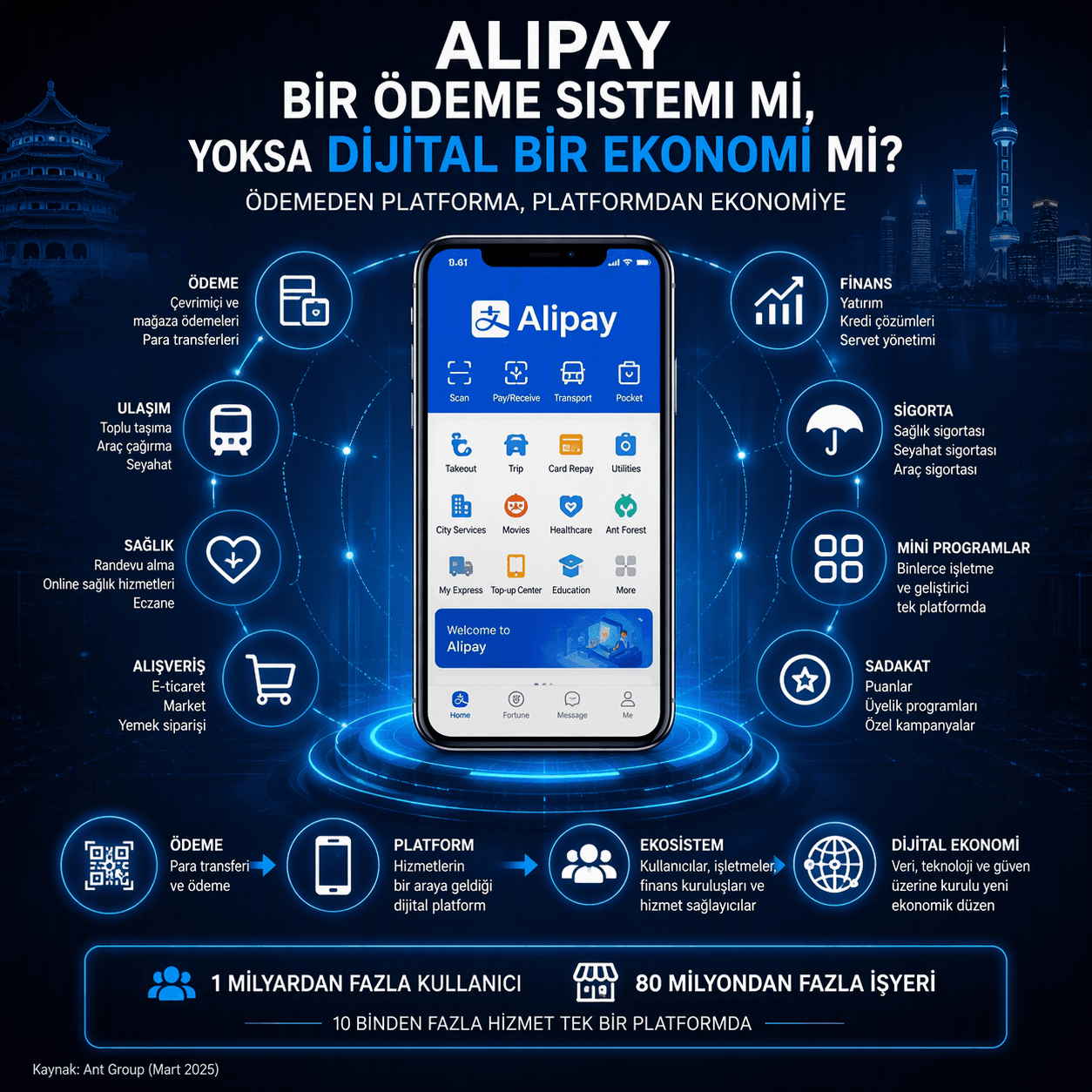
In the previous two posts of the series, we looked at the Starbucks and Alipay examples, which seem quite different from each other. While Starbucks built a brand-centric structure that tries to keep its customers within its own app and loyalty program, Alipay had turned into a platform-centric ecosystem that brings together businesses, developers, and everyday life services around the payment service.
When we look a little closer, we can see that the two examples have far more in common than assumed. One may sell coffee and the other may offer digital payment services; but in both examples, the relationship with the customer is not defined by a single transaction completed at the checkout. Payment remains important, but over time it stops being the ultimate goal and becomes part of the longer-term relationship that the company wants to build with the customer. The question to answer at this point is why successful closed-loop systems go through this transformation.
Does a payment transaction end the relationship or start it?
In a classic shopping experience, the customer selects the product, pays, and leaves the merchant. The transaction is completed successfully, but whether a lasting relationship with the customer has been established often remains unclear.
Closed-loop structures, on the other hand, do not want this relationship to end at the moment of payment. They aim for the customer to come back, use their balance, earn points, and keep staying within the ecosystem. Seen this way, payment stops being the last step of the customer journey and becomes one of the starting points of the next interaction.
Starbucks is one of the best-known examples of this. According to the company’s announcement dated January 28, 2025, the 90-day active membership of the Starbucks Rewards program in the US had reached 34.6 million, and US Starbucks Card loads in the same quarter had reached USD 3.5 billion.[1]
Millions of users experience payment, ordering, points, and promotions within the same app; each time they return to the app, they continue their relationship with the brand a little more. For Starbucks, the value lies not only in the coffee sold but also in the customer coming back.
Why is loyalty the first layer of growth?
Loyalty programs are often regarded as promotional tools that earn customers points or discounts. In closed-loop systems, however, their function is broader than that.
The customer loads a balance, makes a payment, earns points, and comes back to use the benefit they earned. When this cycle works, the company does not merely increase transaction volume; it also builds a habit that makes it less attractive for the customer to switch to another app, another payment instrument, or another brand.
But loyalty is not built just by handing out points. The app needs to be easy to use, the payment needs to complete smoothly, and the benefit offered needs to produce real value from the user’s perspective. Otherwise, while the number of members grows, the relationship with the customer may not become stronger to the same extent.
For this reason, the real value of loyalty programs lies not in the rewards they distribute but in users finding a reason to come back.
Does making more transactions really create a more valuable system?
Every time a customer uses the app, they leave behind more than just a completed payment. Information such as the time and amount of the transaction, the service used, and the response to a promotion forms a data layer that helps in understanding customer behavior.
When this data is processed within an appropriate consent and security framework, the payment system turns from a technical infrastructure that completes the transaction into a feedback mechanism that feeds product and campaign decisions.
So why does this matter? Because the answers to questions such as which services the customer uses, which promotions they are interested in, how often they return, and at which point they drift away from the system start to become visible.
However, as data grows, the customer relationship does not automatically get stronger. As the amount of information collected grows, the responsibility regarding security, privacy, and transparency grows to the same extent. For this reason, the real value of data emerges not in how much of it is collected but in how meaningful and useful an experience it can return to the customer.
Why are new services constantly added to a payment system?
When a closed-loop system succeeds in a particular area, the next stage of growth is often the addition of new services.
At Starbucks, payment, ordering, and loyalty had been combined in the same app. At Alipay, payment met transportation, healthcare, and financial services on the same platform.
One of the tools supporting Alipay’s expansion is the mini program model. Ant Group states that Alipay offers product and service APIs to more than 12 thousand digital service providers.[2] The Alipay Mini Program Platform also clearly states the purpose of this model: to increase new user acquisition, daily active usage, and time spent in the app.[3]
According to Ant Group’s announcement dated June 30, 2025, the annual transaction volume of merchant-operated mini programs increased by 39 percent in 2024 compared with the previous year.[4]
This increase does not mean only that new features were added. It shows that businesses are moving their services onto the platform and that a measurable economic activity has formed. For the user, more services create more reasons to return to the app, while for the business, more users make joining the platform attractive. At this point, growth turns into a structure in which users and businesses feed each other.
Does all growth produce the same value?
Adding new features to an app is relatively easy. The real question is whether this actually produces more value from the user’s perspective.
Gathering disconnected services under the same menu does not automatically turn an app into a super app; on the contrary, it can complicate the user experience. Similarly, an increase in the number of users is not, on its own, proof of a sustainable ecosystem.
How often users return to the app, which services they actually use, and whether businesses can generate economic value on the platform should also be evaluated. A system whose user base is growing but whose usage frequency is not increasing to the same extent may look big. But its relationship with the user may not be as strong as assumed.
What is the invisible side of growth?
When the growth of closed-loop systems is discussed, apps, QR codes, and campaigns often take center stage. Yet growth has a far less visible counterpart on the financial and operational side.
As transaction volume grows, ledger records, merchant receivables, commission calculations, settlement processes, reconciliation controls, and risk rules grow as well. The layer the customer sees is simple: they open the app, scan the QR code, and the payment is completed.
But financial accuracy is not created on this screen. It is created in invisible layers, such as which account the transaction is reflected in, how much the merchant receivable is, how the commission is calculated, and when the settlement takes place.
For this reason, growth is not just a matter of marketing and customer acquisition; it is also a matter of architectural resilience, ledger integrity, and operational capacity. If the layers carrying financial truth do not develop at the same pace as the customer experience grows, the system can become fragile on the inside even if it looks successful from the outside.
What should we look at in terms of Turkey?
The first question that institutions wanting to build a closed-loop structure in Turkey need to answer should not be how many users they will reach.
First, it should be defined which recurring need the system will solve. Why will the user use this payment instrument a second time? Why will the merchant join this network? Will the financial recording, settlement, and reconciliation layers be able to carry the growing transaction volume without errors?
Focusing only on user acquisition before these questions are clarified can result in a large but weakly connected structure. In closed-loop systems, growth is as much about infrastructure design as it is about customer acquisition. As the number of users grows, ledger integrity, settlement capacity, and reconciliation processes need to develop to the same extent.
Otherwise, while the visible side of the system grows, the layers carrying financial reality may fall behind.
Why do closed-loop systems really grow?
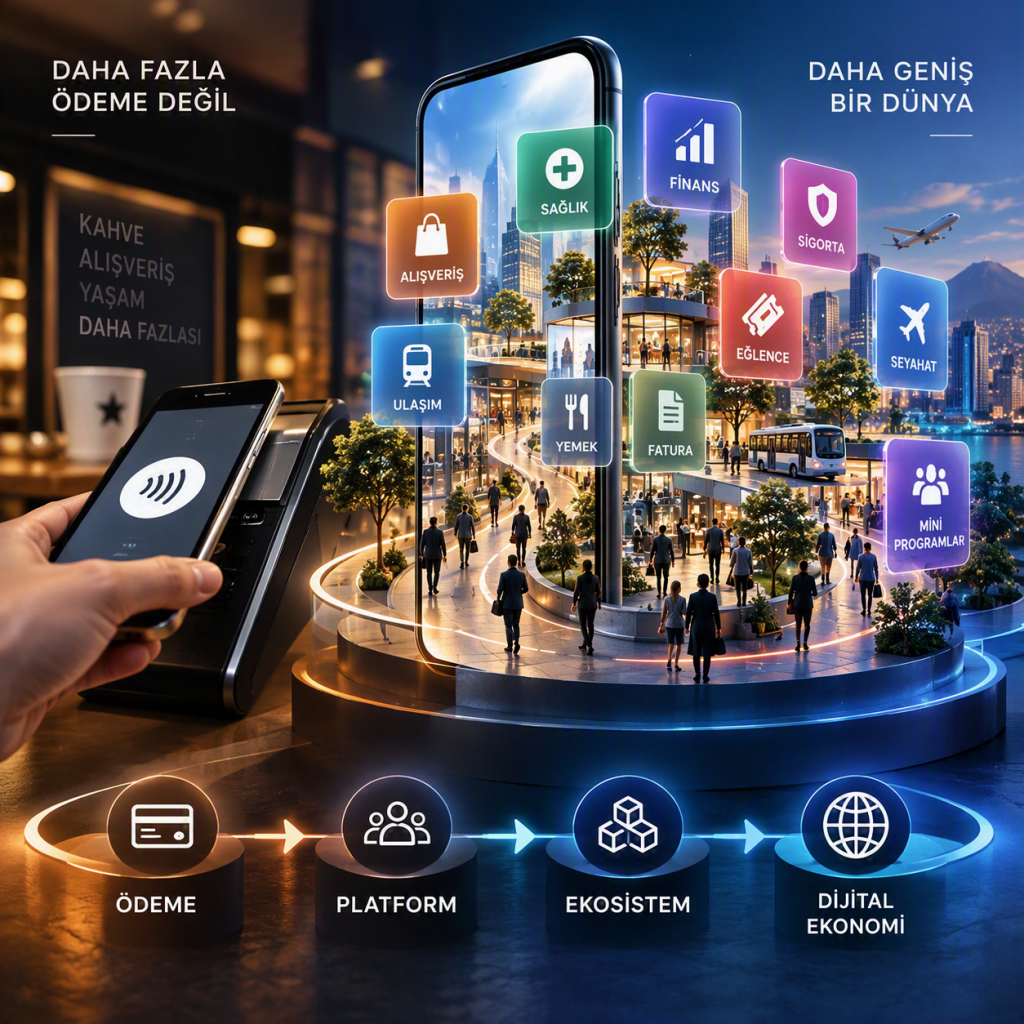
Returning to the question at the beginning of the post, what both Starbucks and Alipay were after was not just receiving more payments.
Starbucks wanted the customer to come back to the store. Alipay built a structure where users and businesses could meet more of their needs on the same platform. One grew through loyalty and habit, while the other grew through a service network. In both models, payment was the starting point of growth, but over time it became part of a broader relationship.
This is why successful closed-loop systems do not chase only more transactions. They try to build users who return more often and an ecosystem that can produce sustainable value on its own.
Perhaps the common trait of successful closed-loop systems is not that they want to receive more payments, but that they want to become the natural choice for the user’s next transaction as well. Because when a user starts returning to the same system every day, they are no longer just making payments. They are also preferring a certain experience, building a habit, and over time becoming part of that ecosystem.
That is what Starbucks was after. What Alipay was after was largely the same.
For this reason, it is not enough to explain the growth of closed-loop payment systems only by the increase in transaction volume. The real matter is the expansion of the place they take in the customer’s daily life over time.
When the system grows at this scale, we face another question that we need to answer in the final post of the series:
Whose ecosystem does the customer stay in?
I will examine this question in the next and final post of the series.
Footnotes
[1] Starbucks Corporation, Starbucks Reports Q1 Fiscal Year 2025 Results, January 28, 2025. Data stating that the US Starbucks Rewards program reached 34.6 million 90-day active members and that US Starbucks Card loads reached USD 3.5 billion in the same quarter. investor.starbucks.com
[2] Ant Group, Company Profile. Information that Alipay offers product and service APIs to more than 12 thousand digital service providers. antgroup.com
[3] Alipay, Mini Program Development Platform. Statements on the goals of the mini program model: increasing new user acquisition, daily active usage, and time spent in the app. miniprogram.alipayplus.com
[4] Ant Group, 2024 Sustainability Report Highlights, June 30, 2025. Data stating that the annual transaction volume of merchant-operated mini programs grew by 39 percent in 2024. antgroup.com