Is Alipay a Payment System or a Digital Economy?
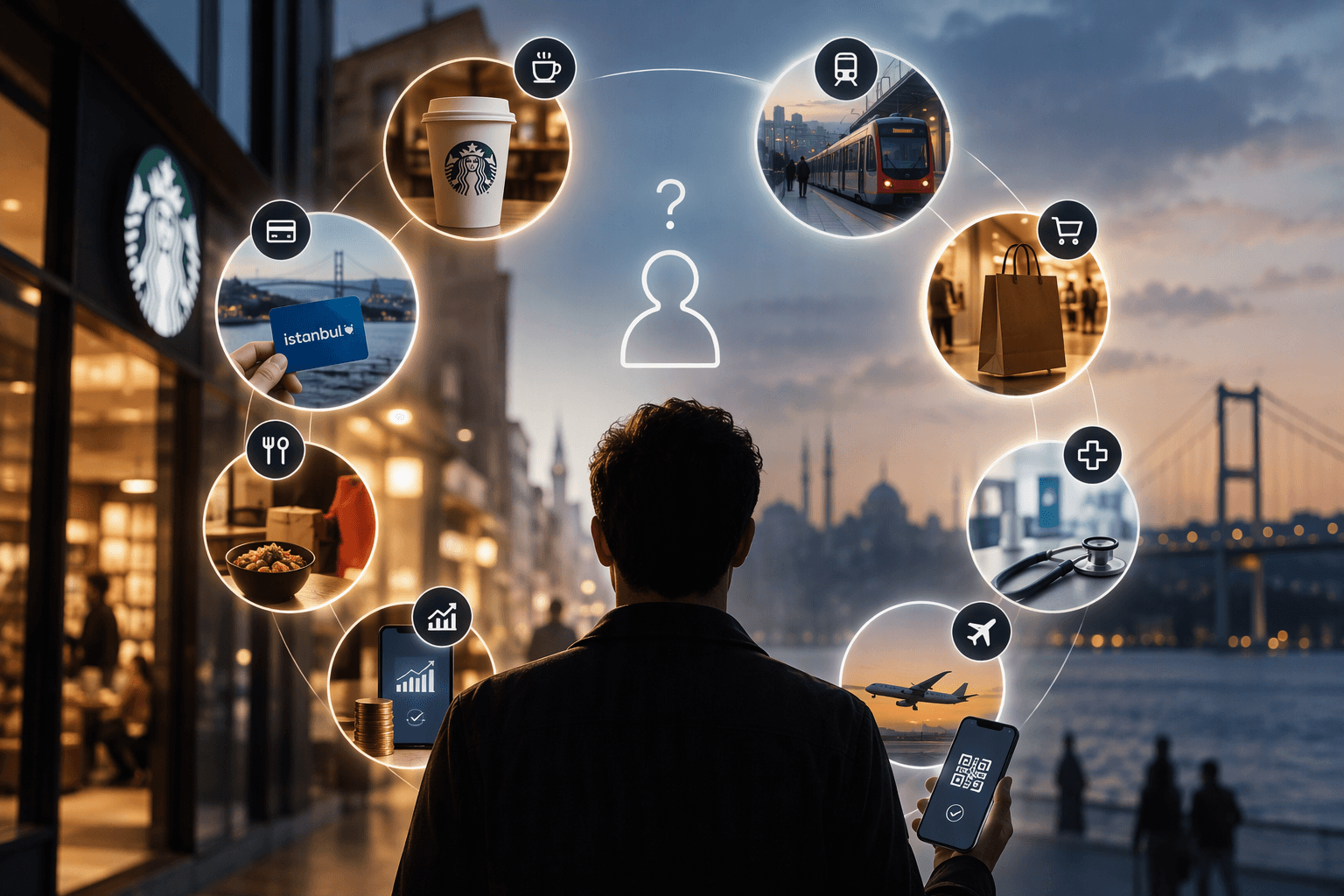
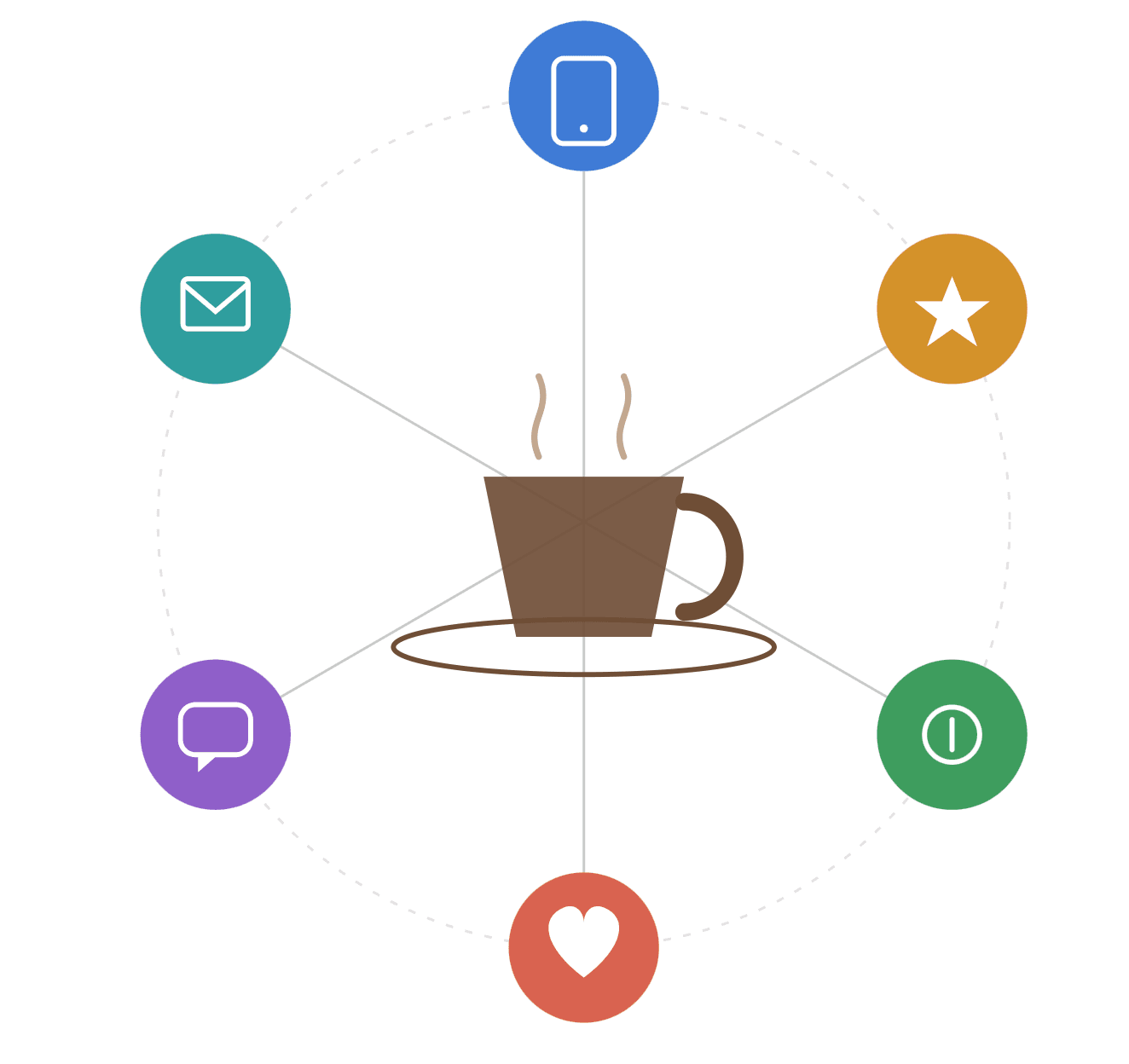
In the previous post, we talked about how payment systems can evolve into a different structure over time, using Starbucks as an example. At first, the goal seemed to be making the customer’s payment easier. As the system grew, loyalty programs kicked in, a data layer emerged that helped understand customer behavior, and the payment app gradually settled at the center of the relationship with the brand.
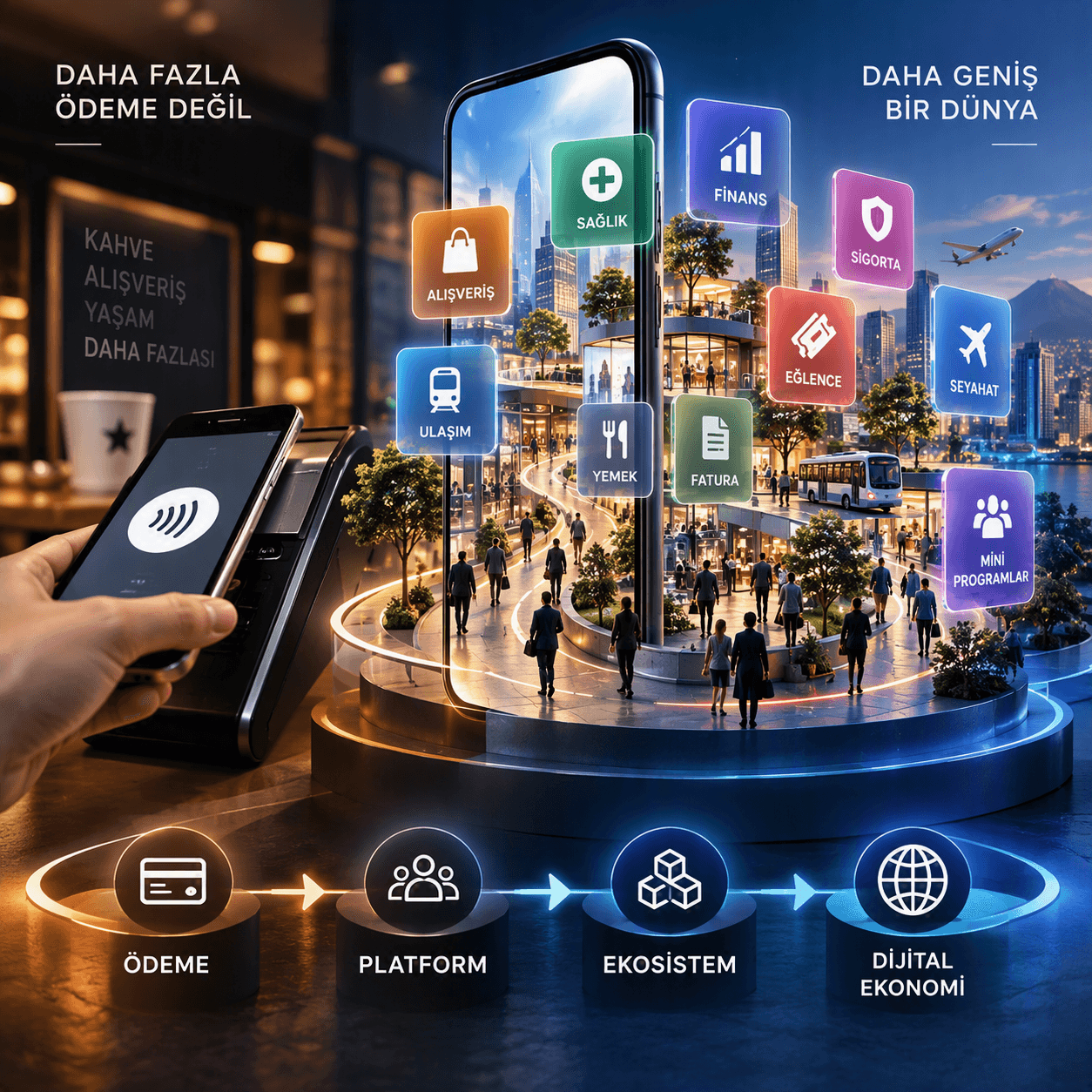
However impressive the Starbucks example may be, we are ultimately talking about an ecosystem built by a single brand for its own customers. So what happens if the same approach goes beyond the boundaries of a single brand? If a payment app starts to offer the products of thousands of different service providers within the same structure, do we still describe it as a payment app?
This time, let us turn our direction to China and Alipay.
What does Alipay actually do?
For many people hearing about Alipay for the first time, a fairly simple definition forms: “China’s PayPal.” At first glance, this definition seems reasonable. Alipay can be used to pay for online shopping, QR codes can be used in physical stores, and money can be transferred between individuals.
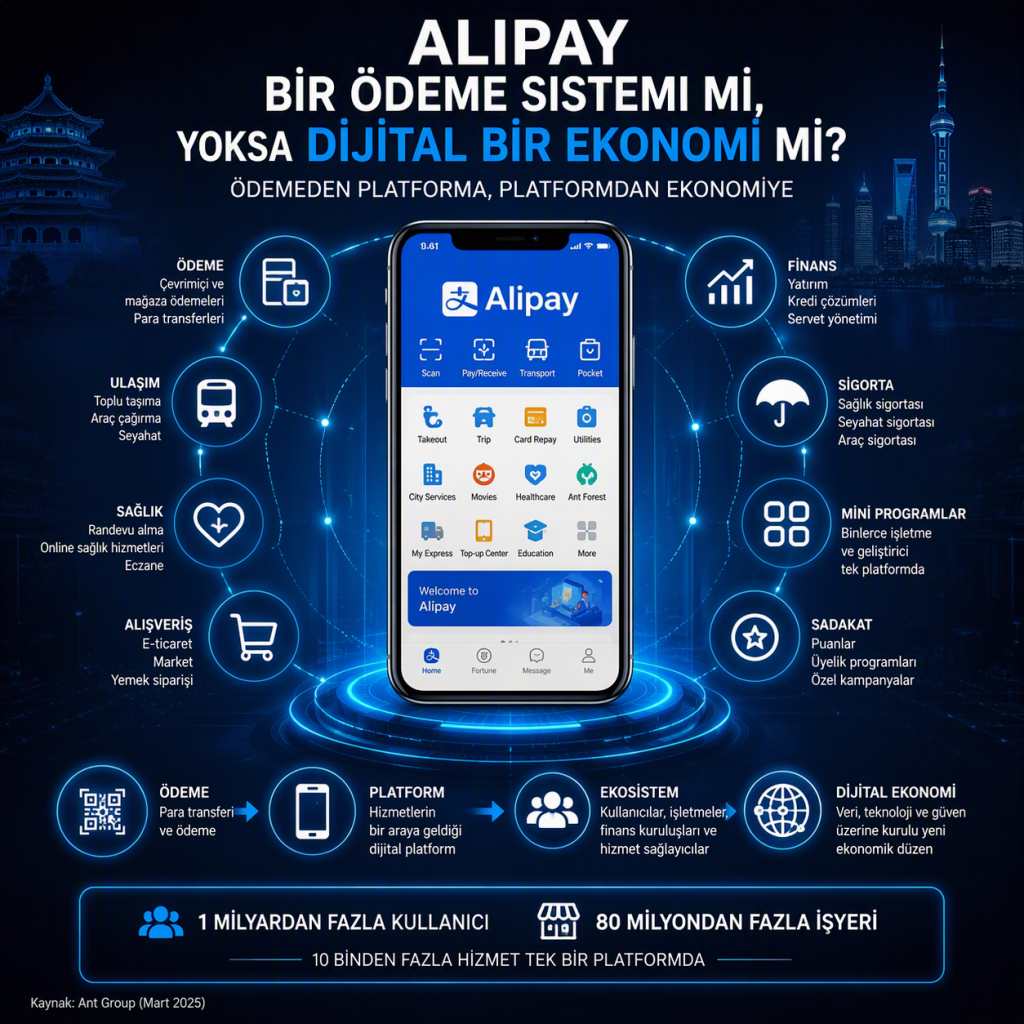
However, Alipay was founded in 2004 as an e-commerce escrow account to build trust between online buyers and sellers, and over time it has turned into a super app that brings everyday life services together on a single platform.[1]
One data point is enough to show the scale: according to Ant Group’s latest disclosures, Alipay provides payment services to more than one billion users and 80 million merchants.[2] Through Alipay, online and in-store payments can be made, bills can be paid, transit and public services can be accessed, and health-related transactions can be carried out.
In a structure at this scale, payment works less like the final product and more like the entry gate that brings the user into the ecosystem.
When does a payment app turn into a super app?
Let us think about a user’s daily life. In the morning they board public transport, during the day they pay a bill, go shopping, and in the evening make a travel reservation. They do all of this with the same digital identity, within the same app. The user may have entered the system for the first time in order to make a payment, but the reason they stay in the app is no longer just payment.
One of the main tools for this is the mini program model. Mini programs allow third-party developers to offer services inside Alipay without building a separate mobile app.[3] Instead of waiting for the user to download a new app, a business can bring its service directly into Alipay, which the customer already uses.
This is a bigger commercial shift than we might think. According to Ant Group’s data, the annual transaction volume of mini programs managed by merchants grew 39 percent in 2024 compared with the previous year.[4] This rate shows that mini programs have moved beyond being a supporting feature and have become a real area of economic activity.
Can payment be the gateway to financial services?
Alipay’s transformation is not limited to everyday life services. Ant Group supports more than 2,000 financial institutions in China in areas such as consumer finance, wealth management and insurance with its technology and analytics capabilities.[5] It would not be accurate to say that all of these services are offered directly from Alipay’s balance sheet; Ant Group positions itself as a technology layer supporting financial institutions.
In classic banking, the bank produces the product, offers it to the customer and manages the relationship through its own channel. In the platform model, the financial product becomes accessible from within an app that the customer already uses in daily life. Here we see a strong example of what we today call embedded finance: the user does not search for the financial product; the product embeds itself into the experience where the user already is.
Alipay grew; what did Ant Group turn into?
Alipay’s payment function became, over time, the starting point for Ant Group building a much broader technology structure. The group no longer defines itself only through payments; digital connectivity, healthcare, financial service infrastructure and enterprise technologies are among its areas of activity.
Ant Group and its affiliates state that they serve more than 100 million SMEs through digital payment and financial innovations.[4] Payment is still one of the system’s most important entry gates. But the data generated after payment, business connections and the technology infrastructure allow the group to operate across a much broader area.
Alipay Tap! is a new example of this shift: it brings the payment experience and customer membership and loyalty relationship together at the same touchpoint.[4] The approach we saw in the Starbucks example reappears here at a much broader platform level.
What is the real difference between Starbucks and Alipay?
The structure Starbucks built was brand-centric: the user stayed in the Starbucks ecosystem for coffee, loyalty and payment. On the Alipay side, we see a platform-centric structure. Alipay does not offer only its own products; it brings financial institutions, businesses and developers together on the same platform. As scale grows, the app looks less like a payment instrument and more like a digital marketplace where different players come together.
Although the scale of the two models differs, they share common ground: both see payment not as the end of the customer relationship but as its beginning.
Is Alipay a closed-loop payment system?
This is one of the hardest questions of the series. Describing Alipay as closed-loop in the classic sense would be incomplete; Ant Group positions Alipay as an open digital payment platform, and the system works together with many businesses and financial institutions.[5] On the other hand, the user experience is quite integrated: when accessing services belonging to different providers, the user mostly stays within the same app and the same identity.
For this reason, instead of splitting Alipay into closed or open, it is more accurate to see it as an ecosystem that brings different providers together within its own architecture. Because what is closed is not always the payment network — the user’s relationship with the app, the platform where data is collected and the distribution channel through which businesses reach customers can also be kept under control. Explaining closed-loop only through how a transaction is routed is not enough; one also needs to look at who controls the commercial relationship.
The difference between Alipay and Alipay+
Alipay is the consumer app that brings users in China together. Alipay+ is the cross-border infrastructure run by Ant International that connects digital wallets and merchants in different countries. It would therefore be wrong to use figures belonging to Alipay+ as if they were Alipay’s own figures.
Ant International’s data shows that the Alipay+ network has today turned into a global infrastructure bringing digital wallets and banking apps together with a wide merchant network worldwide.[6][7] This is not a global copy of the super app model that Alipay developed in China; it is a connectivity layer that enables different wallets and national QR systems to work together. On one side there is the super app approach that keeps the user in a single app, on the other the interoperability approach — and in the Ant ecosystem the two live side by side.
What picture emerges for Turkey?
Alipay’s development took place under conditions specific to China; the same model would not be repeated one-to-one in Turkey. But there are conclusions that can be drawn for digital wallets, banking apps and the fintech ecosystem in Turkey. The spread of QR payments in recent years shows that the payment experience is starting to merge with different services.[8]
This does not mean a super app model is forming in Turkey. Today many institutions can add a payment feature to their apps; what is harder is building an ecosystem around payment that offers users lasting value. Adding a feature to a wallet does not automatically turn it into a super app — what matters is that these services form a meaningful whole for the user and produce sustainable value for businesses.
When does a payment system turn into a digital economy?
In the Alipay example, we are no longer discussing only how a payment is made; we are examining how users, businesses and financial institutions meet on the same platform. After a while, the platform’s value emerges not from the payment volume flowing through it, but from the size of the relationships among the parties it connects.
A structure founded in 2004 to build trust between buyer and seller now provides payment services to more than one billion users and 80 million merchants, showing how payment systems can change scope over time.[2]
In the next post, I will examine how the roles of banks, card schemes and regulators change as these ecosystems grow. Because as platforms settle into the center of daily life, the subject stops being just payment convenience; it extends to much harder topics such as data ownership, financial access and platform power.
At some point, what we are discussing stops being payment. It turns into an economy.
Footnotes
[1] Ant Group, What Is Alipay, and How Does It Work?, March 26, 2025.
[2] Ant Group, Digital Payment, current corporate page.
[3] Alipay, Mini Program Development Platform.
[4] Ant Group, 2024 Sustainability Report Highlights, June 30, 2025.
[5] Ant Group, Company Profile and History.
[6] Ant International, More Than 90 Million Global Merchants Leverage Alipay+, February 3, 2025.
[7] Ant International, Alipay+ Launches World’s First Smart Glasses-Embedded Payment Solution, June 18, 2025.
[8] Presidency of the Republic of Turkey Investment and Finance Office and Startups.Watch, The State of Turkish Fintech Ecosystem 2025, April 6, 2026.