Whose Ecosystem Does the Customer Stay In?
When I started this series, my aim was to explain closed-loop payment systems. We were going to talk about cards, we were going to talk about QR payments, and we were going to examine prepaid balances and the financial structures behind these systems. Up to a point, that is exactly what we did.
But as the posts progressed, I noticed something interesting.
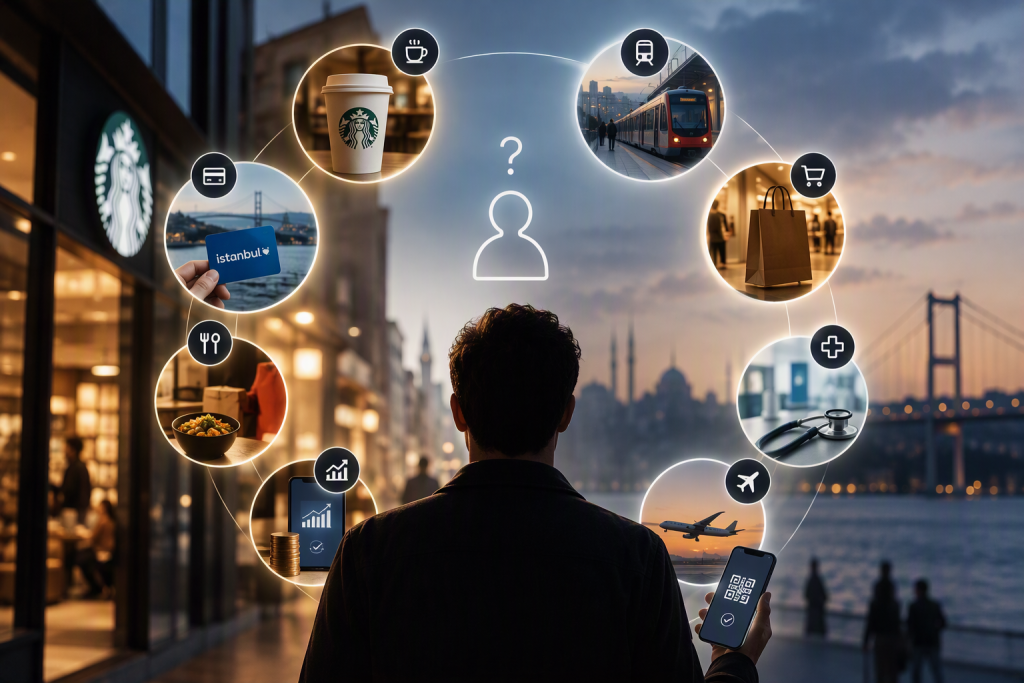
No matter how different the examples we examined looked from each other, they ended up at the same question. Istanbulkart, Starbucks, Alipay, or another model… They all used different instruments, met different needs, and were built on different business models. Even so, they all had a common goal:
Getting the user to come back again.
Perhaps that is why the point we have reached at the end of the series is more about customer relationships than payment technologies.
Because when a user reopens the same app, uses the same card again, or keeps staying within the same platform, the reason is often not just the ease of payment. Knowingly or not, the user prefers a certain experience, develops certain habits, and over time becomes a natural part of that ecosystem.
For this reason, the question we need to answer at the end of the series is not about technology, cards, or QR codes; it is about who manages the relationship established with the customer.
In other words:
Whose ecosystem does the customer stay in?
Whose product is payment, really?
A customer shops at a supermarket, uses their credit card, and the payment is completed within a few seconds.
For many years, banks were largely at the center of this story. The card belonged to the bank, the customer relationship was established through the bank, and the visible face of the financial experience was often the bank.
Today the picture is different.
Many users may not remember which bank the card they use belongs to. In contrast, they remember much more clearly the app they shop with, the loyalty program they are a member of, or the platform they place orders on. Because from the customer’s perspective, value is no longer created only at the moment the transaction takes place. The experience before the transaction, the ease during the transaction, and the relationship that continues after the transaction matter at least as much as the payment.
For this reason, competition in the payment world is increasingly shifting from who carries out the transaction to who manages the relationship established with the customer.
Is it the banks that are changing, or the customer relationship?
At this point, one of the comments we often hear is that banks are losing their importance.
In my opinion, the transformation taking place is not exactly this.
Banks are still at the center of the financial system. Accounts are held at banks, a significant part of the financial infrastructure is operated by banks, and most of risk management is still their responsibility.
What is changing is the layer at which the customer builds a relationship.
In the past, the bank was largely the center of the customer experience. Today, digital wallets, marketplaces, loyalty systems, retail apps, and various platforms are becoming more visible in the customer’s daily life.
So the issue is not that banks are losing their importance. The issue is which brand and which platform take up more space in the customer’s daily life.
What did Starbucks and Alipay have in common?
Throughout the series, we talked about Starbucks and Alipay at length.
At first glance, there are big differences between these two examples. One sells coffee, the other offers digital payment services. One is shaped around a particular brand, the other is a huge platform that brings together millions of users and businesses.
But when we look a little closer, we can see that both are trying to solve the same problem.
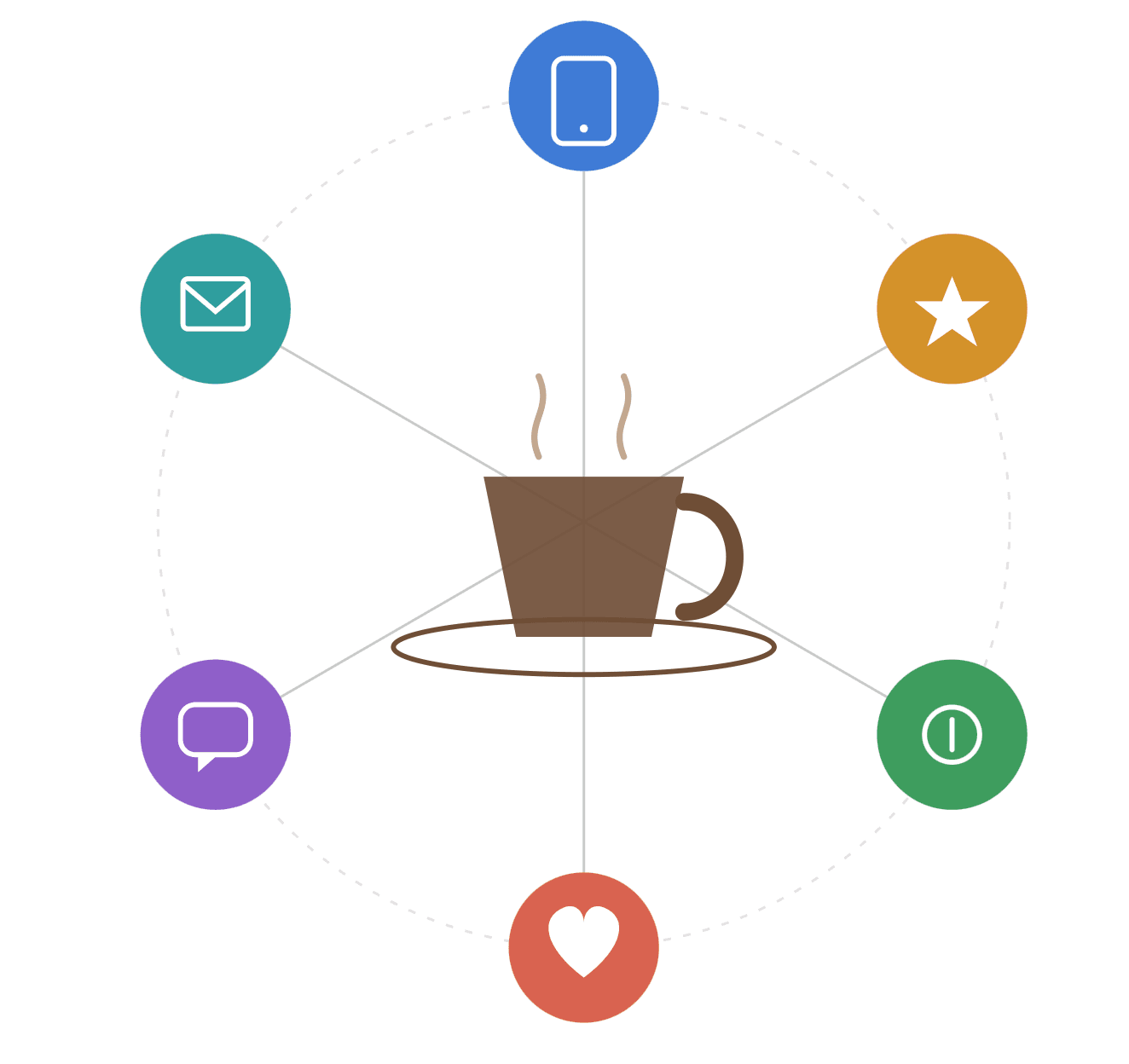
Starbucks wants its customer to come back tomorrow. It aims for them to use its mobile app, track their points, and continue their relationship with the brand.
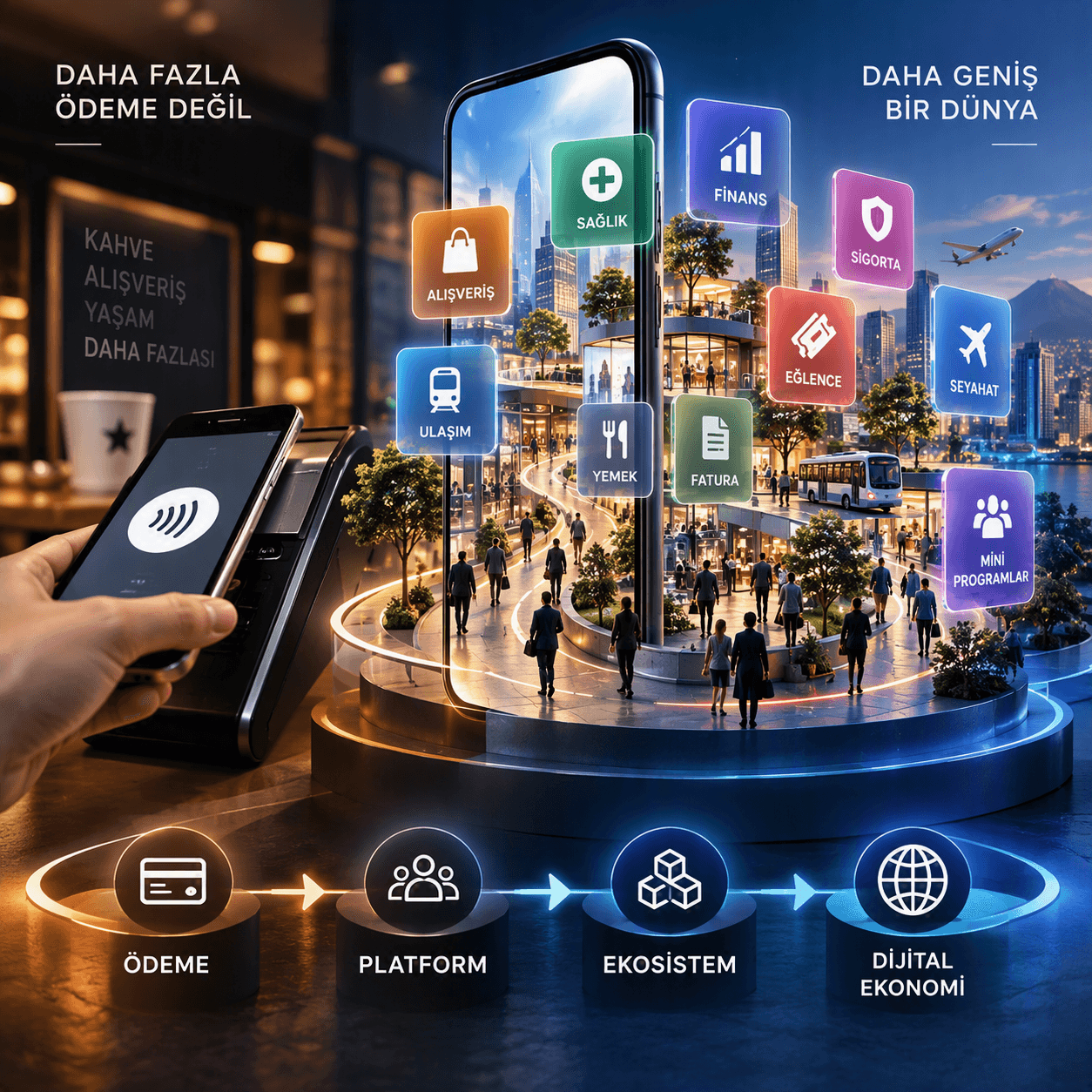
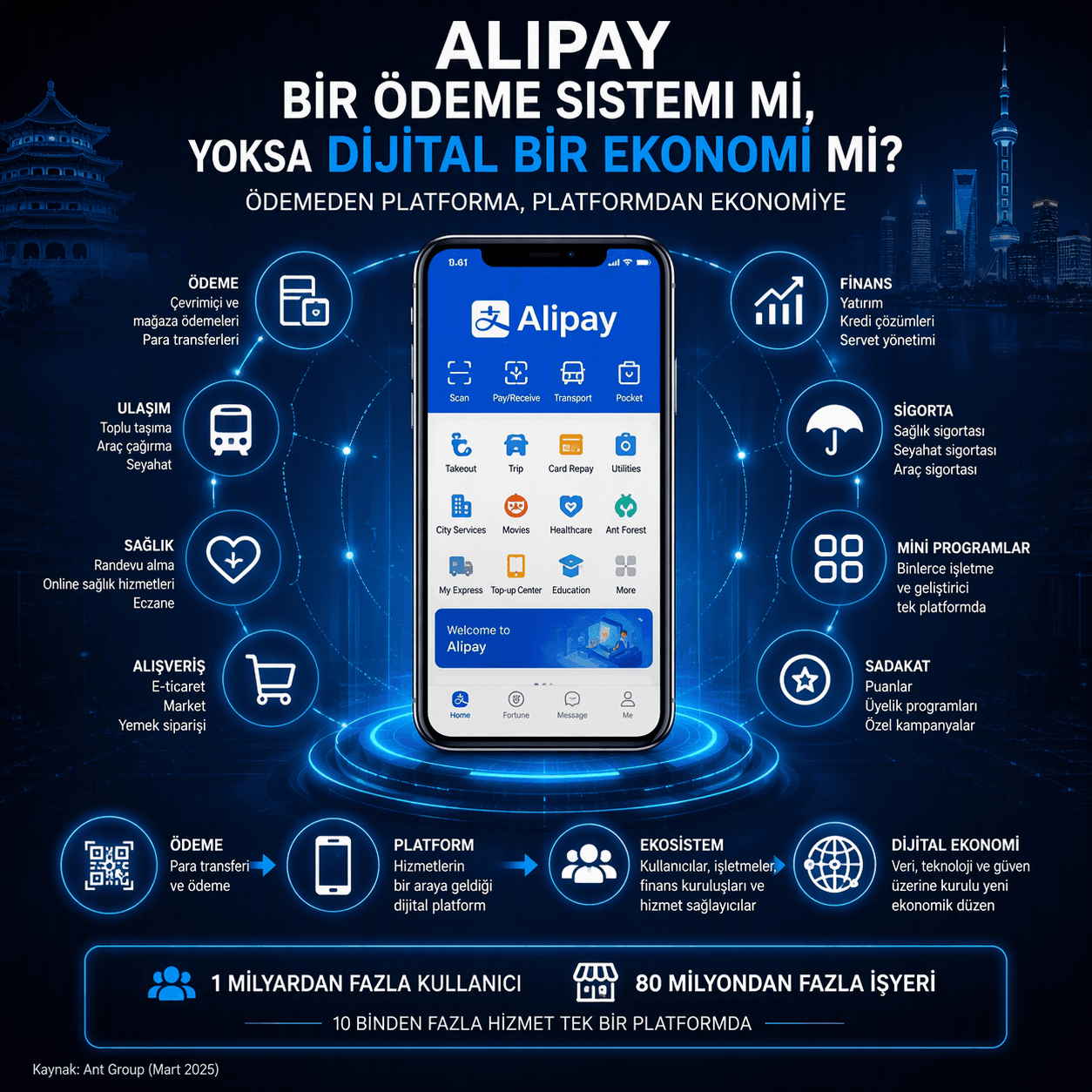
Alipay, on the other hand, aims to let users meet their different needs within the same platform. This is why payment, financial services, transportation, healthcare, and digital services become parts of the same ecosystem.
Although the instruments differ, the goal is the same:
Gaining a larger place in the user’s life.
For this reason, looking at either example only as a payment system falls short. Because the real value emerges in why the customer comes back again.
Where does the real power of closed-loop systems emerge?
At the beginning of the series, we were more interested in operational and technical questions.
Where is the money held?
How is reconciliation done?
How do settlement processes work?
These questions were important and they still are today.
But by the end of the series, we can see another truth more clearly.
The factor that determines the success of a system is not only the technology it has. Why the user comes back becomes at least as important as the technology.
Because technology can spread over time, be imitated, and be standardized.
In contrast, copying user habits is much harder.
If a user has started spending a certain part of their daily life within your ecosystem, they are no longer just making payments. They are also preferring the experience you offer, becoming part of the relationship network you have built, and over time continuing to choose you among the alternatives.
For this reason, the real power of successful closed-loop systems often emerges not in the payment infrastructure but in the customer relationship.
What is the real question for Turkey?
When payment systems are discussed in Turkey, we often hold technology-centered debates.
Card?
QR?
Digital wallet?
FAST?
Of course, all of these are important.
But in my opinion, there is a more important question:
Why should a user return to the same system a second time?
Why should they reopen the same app?
Why should they keep staying within the same ecosystem?
If there are no strong answers to these questions, even the most advanced technology may not be enough on its own. Because while technology is becoming more and more accessible, the customer relationship is becoming more and more valuable.
In the coming years, banks, fintech companies, digital wallets, retail apps, and new players that have not yet emerged appear set to compete for the same thing:
Gaining a lasting place in the customer’s daily life.
Closing the series
Throughout this series, we talked about cards, QR payments, prepaid balances, ledger structures, Istanbulkart, Starbucks, and Alipay.
But all of these examples converge on the same point.
The real purpose of closed-loop payment systems is not just to receive payments; it is to build a stronger, longer-lasting, and recurring relationship with the user.
Sometimes this relationship is built through a loyalty program, sometimes it takes shape through a transit card, and sometimes it grows through digital platforms that bring together millions of users and businesses. The instruments change, the technologies change, the business models change; but the goal stays the same:
Gaining a larger place in the user’s life.
I said this in the previous post, and I want to repeat it as I close this series: Perhaps the common trait of successful closed-loop systems is not that they want to receive more payments, but that they want to become the natural choice for the user’s next transaction as well. Because when a user starts returning to the same system every day, they are no longer just making payments. They are also preferring a certain experience, developing a habit, and over time becoming part of that ecosystem.
For this reason, beyond a certain point, competition does not take place between payment systems.
It takes place between ecosystems.
And perhaps the most important question of the coming years will not be this:
Who carries out the most transactions?
but this:
Whose ecosystem does the customer stay in?
When I started writing this series, I was trying to explain closed-loop payment systems.
Looking back today, I see that I was actually explaining customer relationships.
Perhaps the whole story was about this from the very beginning.