Is Starbucks Really Selling Coffee, or Building an Ecosystem?
In the previous post, we discussed an interesting topic through Istanbulkart.
Once contactless bank cards and EMV-based payment instruments started to be used in transit systems, we saw that the line between closed-loop and open-loop systems is not as clear as we might think. On one side there were systems that have users carry their own card, and on the other there were structures where users can enter the system with the bank cards they already have. Looking a little more closely, we began to realize that the subject is related not only to the technology in use, but also to the problem the institutions are trying to solve.
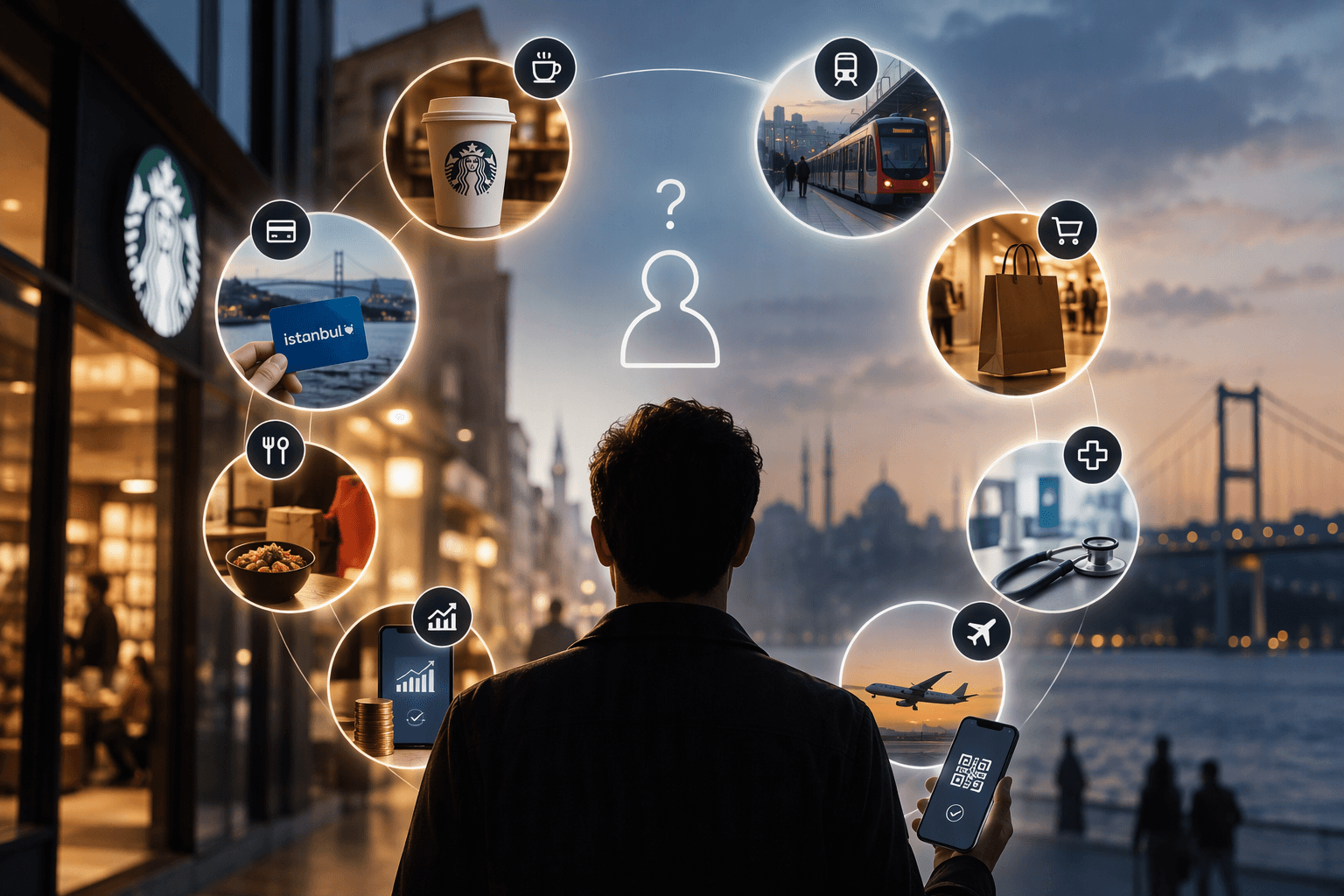
In this post, we are turning our direction from transit to coffee. Because while transit systems try to make it as easy as possible for users to enter the system, some companies follow a different approach. They try to pull their customers into their own apps, keep investing in loyalty programs, and keep users inside their own ecosystems as much as possible.
One of the best-known examples of this is Starbucks.
What business is Starbucks really in?
This question may sound a bit meaningless at first. Of course Starbucks sells coffee, and we are talking about a large coffee chain with stores all over the world.
But sometimes, to understand a company, you need to look less at the product it sells and more at the relationship it builds with its customers.
Today, when you go to any Starbucks store, you can pay with a credit card or a contactless card, and in supported markets you can use digital wallets such as Apple Pay. Starbucks does not force its customers to use only its own payment instrument.
So why does it invest so much in getting millions of people to use the Starbucks app? Why does it keep trying to grow its Rewards program? Why does it want customers to order in the app, collect points, and make the app part of their daily routine?
This is where the real questions emerge. Because what we are discussing is no longer just how the payment is made, but how the bond with the customer is sustained after the payment.
What picture do we see when we look at the subject a little more closely?
According to figures announced in January 2026, the Starbucks Rewards program has reached more than 35 million 90-day active members in the US. Rewards members accounted for roughly 60 percent of revenue at company-operated stores in the US in fiscal year 2025, and their spending exceeded 13 billion dollars. Starbucks announcement on the Rewards program, January 2026
After these numbers, the subject turns into understanding not just a loyalty program, but a much larger economic structure.
Why would a coffee chain invest so much in pulling its customers into its own app?
Because this is not merely a program that hands out points in return for purchases. It is a powerful ecosystem that manages the customer's payment behavior, shopping frequency and bond with the brand within the same structure.
Why would a coffee chain want to manage its customers' balances?
A user loads a certain amount of money into the Starbucks app, buys their coffee from that balance, earns points as they shop, and from time to time benefits from campaigns made just for them. From the point of view of a single user, all of this looks quite ordinary. But when we consider that the same behavior is repeated by millions of people, what emerges is no longer just a loyalty program but a much larger economic structure.
According to the figures the company has shared, in the first quarter of fiscal year 2025 alone, the amount loaded onto Starbucks cards in the US reached 3.5 billion dollars. As of March 30, 2025, the combined total of stored value card balances (that is, prepaid card balances) and deferred revenue liabilities tied to the loyalty program stood at roughly 1.85 billion dollars, of which about 1.7 billion dollars consisted of current liabilities. Starbucks fiscal year 2025 first quarter results Starbucks stored value card and loyalty program liabilities
One can't help asking this question:
Why would a coffee chain want the money to enter its own ecosystem in advance, instead of waiting for the moment the customer pays?
Of course, there is no single answer to this question. But when we look at the subject from a financial angle, some conclusions are quite clear.
So why does Starbucks invest so much in all of this?
What we have said so far explains why Starbucks steers its customers toward the app. But when we start looking at the subject from a financial angle, other dimensions of the business model emerge as well.
Working capital advantage
Balances that customers have loaded but not yet spent appear as a liability on Starbucks' balance sheet until the product or service is delivered. Because this structure brings money into the system before the product or service is provided, it gives the company a significant working capital advantage, pre-financed by its customers.
Of course, it would not be right to treat these balances directly like bank deposits. Starbucks is not a bank, and user balances do not have the character of classic deposits. Even so, the fact that the customer pays before consuming creates a different financial structure in the company's favor in terms of cash flow and working capital. Starbucks stored value card and loyalty program liabilities
Unspent balance revenue
There is another dimension to this. Not all balances loaded by users are always spent; some cards are forgotten, some small balances are left unused, and some accounts see no activity for a long time.
These balances, which are called "breakage" in financial reports and are expected never to be used, can be recognized as revenue under certain accounting rules. In Starbucks' fiscal year 2025 reports, total breakage revenue associated with company-operated and licensed stores appears to be above 200 million dollars. Starbucks stored value card and loyalty program footnotes Starbucks fiscal year 2025 results
This figure alone shows how important prepaid systems can be, not only for the customer experience but also for a company's financial results.
Managing payment costs
We need to be a little careful here. Starbucks does not publicly disclose the payment cost advantage that prepaid balances give it, so we have no calculated or reported figure for the exact savings.
That said, from a payment systems perspective, a different economic structure emerges. When a customer loads a balance into their Starbucks account in a single transaction, the card transaction takes place at the load stage. The small-value coffee purchases that follow can then be completed within Starbucks' own ecosystem.
This makes it possible that acquiring costs, card scheme fees and other transaction costs tied to the card ecosystem are not incurred again on every coffee purchase, or are incurred at much more limited levels. Because Starbucks does not publicly share the financial size of this effect, it would not be right to give an exact savings figure. But it can safely be said that this structure has the potential to be one of the model's economic advantages.
Data and the customer relationship
Perhaps the most valuable side of the model emerges here.
For Starbucks, an anonymous card transaction often represents just a sale. A transaction made through the app, however, produces far more information than the completion of the payment. Many data points arise at the same time: the store where the transaction took place, the product purchased, the time of the purchase, the segment the customer belongs to, and how the customer responds to campaigns.
Over time, this data can turn into personalized offers, campaign design, product decisions and decision mechanisms aimed at understanding customer behavior.
Starbucks also states in its financial reports that its cards and loyalty programs are designed not only to offer customers an easy payment method and to support gifting, but also to increase how often cardholders visit stores. Although payment seems at first glance to be at the center of the system, one of the real goals of the business model is to increase customer engagement and visit frequency.
Is paying the same as being part of an ecosystem?
We actually need to pause for a moment and think about the answers to these questions: What happens when a customer pays with a credit card, and what changes when the same customer pays through the app? Once the customer has received their coffee, does the relationship with the brand end, or does it begin right at that point?
Looking at the Starbucks example, we see that the second option is much stronger. Because a customer who uses the app does not just pay; they earn points in return for their spending, they are included in campaigns, they see offers made just for them, and certain behaviors are rewarded. Over time, often without noticing, they start to build a stronger bond with the brand.
Answering these questions becomes important:
Is building a payment system the same as building a loyalty ecosystem?
Is a user valuable only because they pay, or because they keep coming back and stay inside the ecosystem?
Are Istanbulkart and Starbucks really opposites?
Going back to the Istanbulkart example, at first glance we might think the two structures are heading in completely different directions. Istanbulkart's priority is to let more people join the system easily, whereas Starbucks' priority is for the users who enter the system to build a stronger relationship with the brand and to keep staying inside the ecosystem.
But when we look a little more closely, we see that the two structures have important things in common. Both systems can use prepaid balance logic, both establish a repeated interaction with the user, and both make the payment experience one of the key parts of their business model.
The fundamental difference emerges in the purpose for which this relationship is built. On the transit side, the priority is to increase access to the service and widespread use, while on the Starbucks side, strengthening customer loyalty and repeat purchase behavior comes to the fore.
For this reason, evaluating closed-loop payment systems from a technology perspective alone is often not enough. Even though the card, app or payment infrastructure in use matters, it is often the business model that determines the direction of the system and the economic value it will create.
In the first post of the series, we discussed what closed-loop payment systems are, in the second we looked at the invisible architecture, and in the third we evaluated the systems we use in daily life through Istanbulkart. Although in this post we turned our direction from transit to coffee, what we were really talking about was neither transit nor coffee.
What we were talking about was whether institutions see payment systems merely as technical structures that collect money, or turn them into strategic tools that generate loyalty, data, customer engagement and financial value.
The Starbucks example shows that payment systems can sometimes play a much bigger role than they appear to. Although the goal seems at first to be just accepting payments, as the system grows, loyalty programs come into play, a powerful data layer forms that helps understand customer behavior, and the balances users load in advance become an important financial resource for the company. After a while, what we are discussing stops being merely an app that accepts payments and becomes an ecosystem at the center of the relationship with the customer.
Is an institution's value measured by the number of payments it processes, or by the size of the ecosystem it has built and its power to keep its users in that ecosystem?
In the next post, I will examine this question a little.
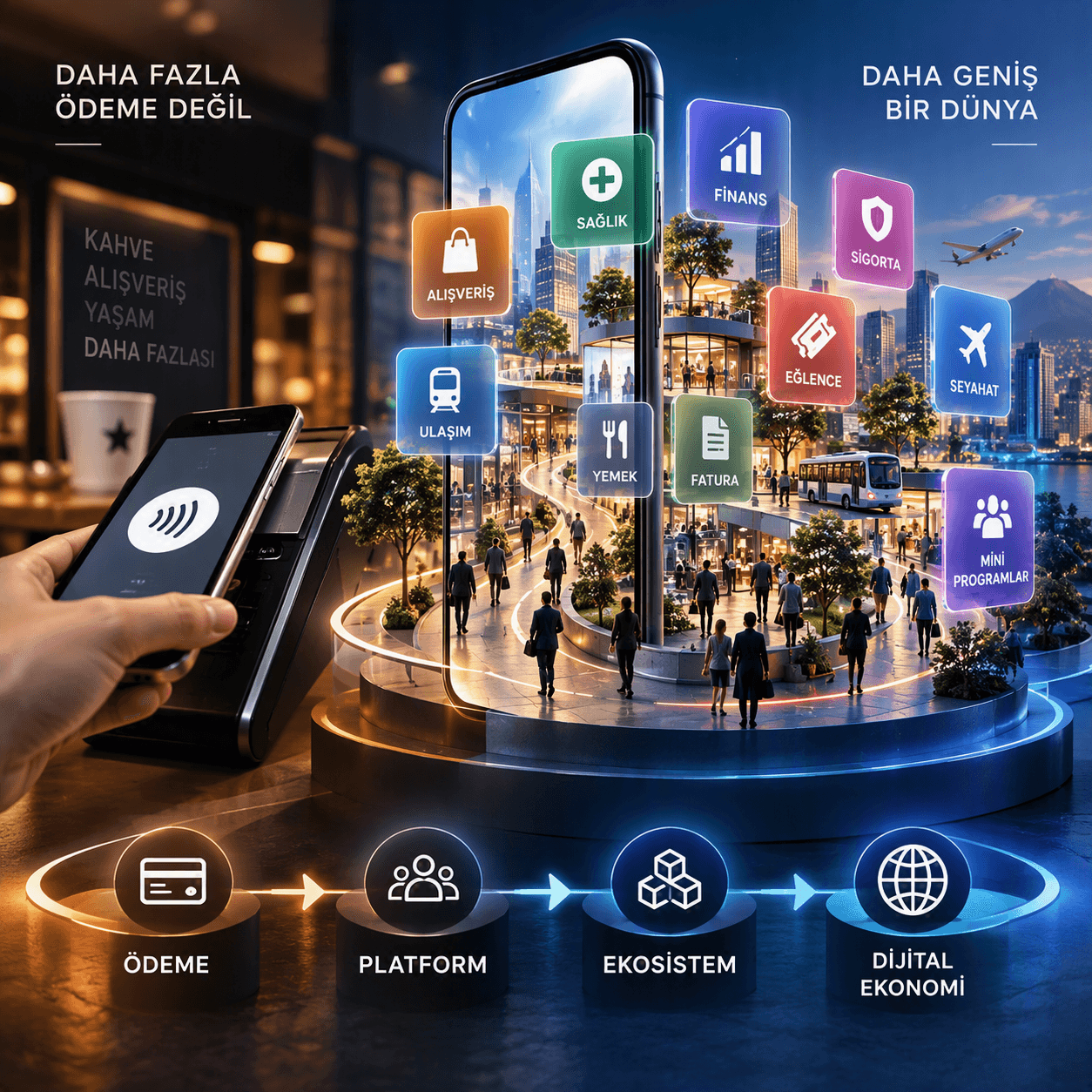
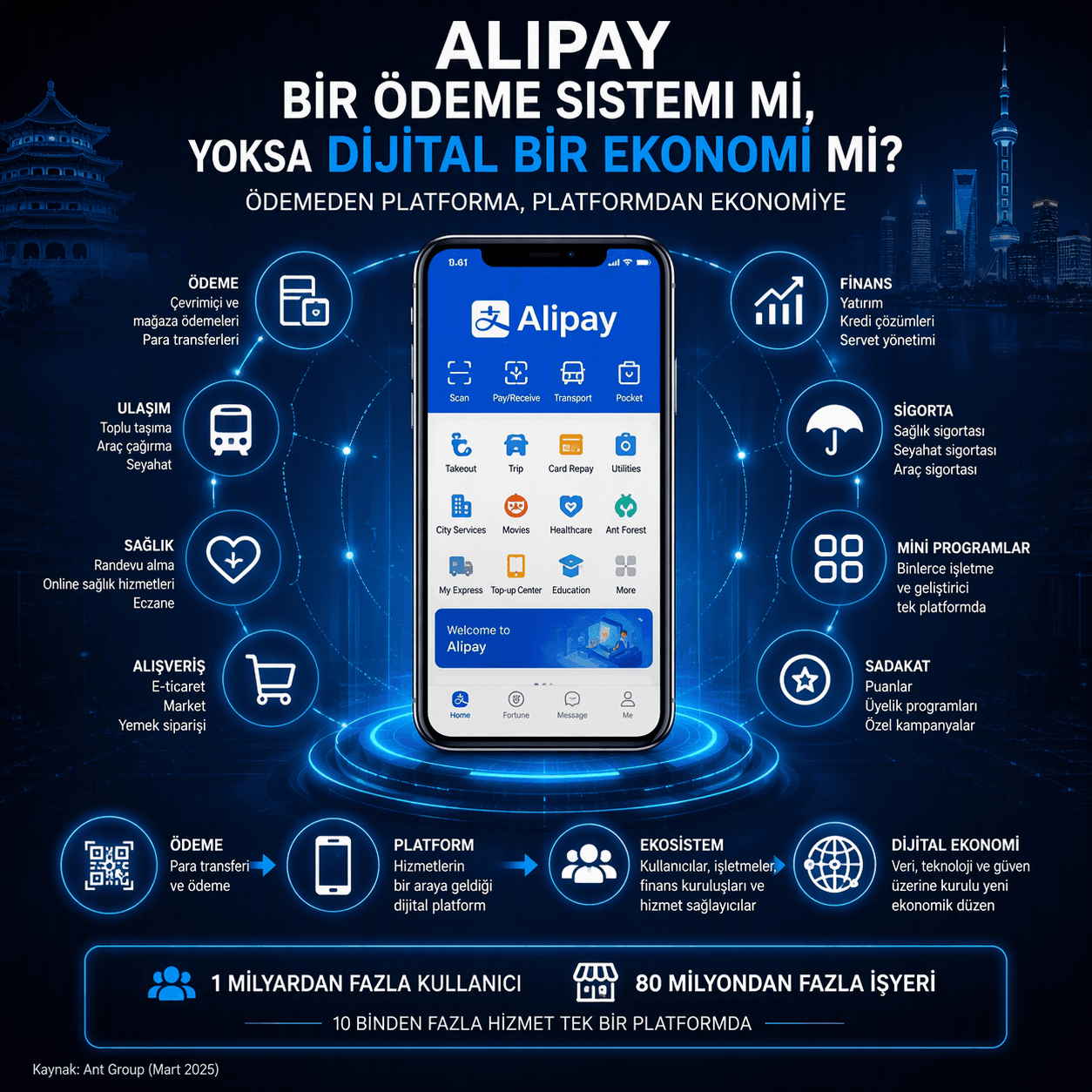
Because when we look at Alipay and WeChat Pay, we are no longer dealing with systems that merely make payments, but with huge digital economies built around payment. In my view, this is exactly the point where we truly begin to understand closed-loop payment systems.
Because at some point, what we are discussing stops being payment and turns into economy.