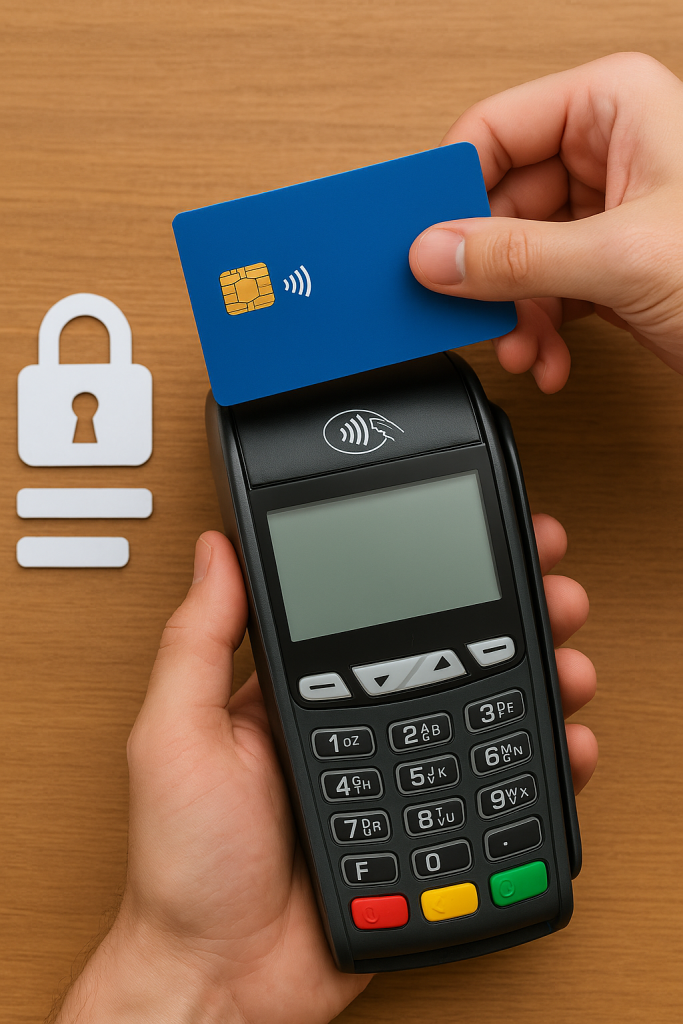
Contactless payment has significantly improved the user experience in terms of speed and convenience. However, one of the issues cardholders raise most often is that the contactless transaction limit is fixed. So, while this limit can vary from bank to bank, can it also be managed dynamically on a per-customer basis?
Current Situation: The Fixed Limit Approach
In Turkey, contactless payment limits have been managed for many years with upper limits set by the CBRT and BKM (Interbank Card Center). Banks accept transactions up to this limit without a PIN (without a CVM). As of 2025, the TRY 1,500 contactless transaction limit applies in the same way to all cardholders.
Although this structure provides operational simplicity, applying the same limit to everyone is restrictive for both security and customer experience across customer segments (for example young users, premium cardholders or high-risk groups).
The Customer-Based Limit Management Approach
The goal of the customer-based contactless limit management approach is to determine a dynamic limit according to the characteristics of the cardholder.
This limit can be personalized by taking parameters such as the following into account:
- Spending habits and risk profile,
- Card type (debit, credit, prepaid),
- Device type (mobile wallet, wearable device, etc.),
- Behavioral data (transaction frequency, location, time window)
In this model, within the same bank one customer's limit could be set at TRY 500 while another customer's limit could be set at TRY 2,000.
Technical and Regulatory Dimension
For this structure to be implemented, some technical and legal infrastructure needs to be in place.
- On the issuer (the card-issuing bank) side, the CVM decision (whether a PIN is required) must be generated dynamically,
- The POS terminal software must support this parameter,
- The CVM limit override function must be actively usable in the Visa and Mastercard contactless kernel structures.
However, the most important element is the regulatory dimension. In Turkey, the contactless limits set by the CBRT and BKM are applied as a nationwide standard. Although banks can partly differentiate the "PIN required / not required" decision in their own systems, managing it dynamically on a per-customer basis is not clearly supported under the current regulations.
Alternative Approach: User Control via the Mobile App
Some banks offer their customers options in the mobile app such as "Turn contactless on/off" or "Lower my contactless limit".
Although this method is not fully customer-based dynamic limit management, it provides a similar personalization experience.
Thanks to this approach:
- The user's sense of security increases,
- Fraud risk decreases,
- Customer loyalty is strengthened.
Looking Ahead: Dynamic CVM Limit
The "Dynamic CVM Limit Management" feature on the post-2026 roadmaps of Visa and Mastercard will bring an important innovation in this area.
With it:
- The issuing bank will be able to decide whether a PIN is required before each transaction based on the customer's current risk score,
- The card profile will be managed in the cloud and become independent of the device,
- The contactless limit will be changeable in real time on a per-customer basis.
This approach is expected to form the foundation of personalized banking and agentic banking models.
Conclusion
As of today, customer-based contactless limit management is technically possible but limited from a regulatory standpoint.
The trend toward personalization in payment systems grows every year. For this reason, it is highly likely that in the near future the contactless limit will evolve into a structure that can be determined automatically according to the customer's risk, behavior and preferences.
The contactless limit will no longer be just a security parameter, but also a competitive element that differentiates the customer experience.



