Skip to content

Search

"cryptogram"

23 articles found

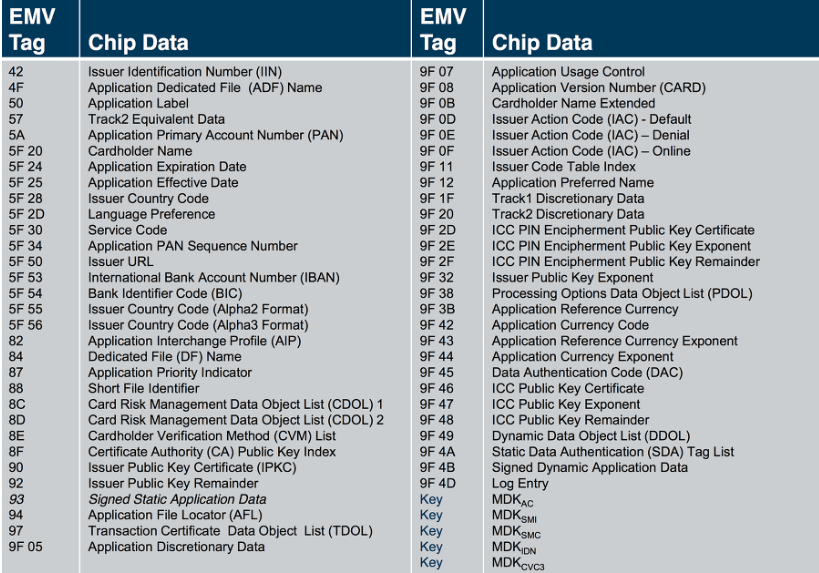
Diagram illustrating the EMV Tag-Length-Value (TLV) data structure used in card transactions

Online & Authorization

What are EMV Tags?

In EMV, data is stored in Tag-Length-Value (TLV) format, and it is carried between the card, the POS terminal, and the authorization system in this same format. This post lists every EMV Tag, its type, and its description.

Diagram showing the components of the External Authenticate command

EMV

What is the External Authenticate Command?

The EXTERNAL AUTHENTICATE command asks the application inside the ICC whether it can verify the cryptogram, and the ICC returns the processing status. Below are the components of the External Authenticate command and what issuer authentication means.

Diagram showing the structure of the Card Verification Results (CVR) data element

Credit Card

CVR (Card Verification Results)

CVR (Card Verification Results) refers to the results of checks performed on the card. In short, it can be described as keeping the card's transaction log. BYTE 1 Bit 8-7: 00 = The second GENERATE AC command returned an AAC cryptogram (decline)...

Diagram comparing the three levels of payment-card tokenization: static, semi-dynamic and dynamic

HCE

What Are the Levels of Tokenization?

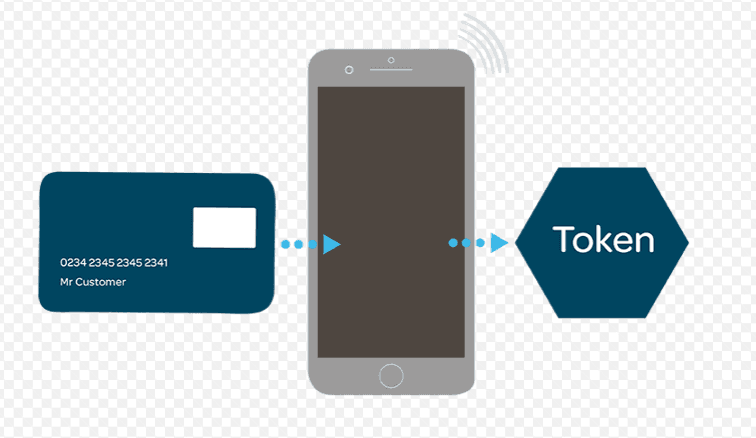
Generating a token from the card number is essential to the security of payments made with mobile devices. The level of tokenization used depends on the need and on how critical the token is. Static tokenization: the token is generated once and stored in a database.

Diagram showing how the iCVV code is generated for EMV chip cards

Credit Card

What Is iCVV? How Is It Generated?

iCVV stands for Integrated Circuit Card Verification Value. To prevent fraud, it is a CVV value generated similarly to the card's track data and stored on the card's chip. Visa uses the term iCVV; MasterCard and American Express use their own equivalents.

Diagram illustrating the TLV (Tag-Length-Value) data structure

Online & Authorization

What is TLV (Tag-Length-Value)?

TLV is a data storage method used to speed up the parsing of data. For example, reading data from a card's chip at a POS and carrying it through authorization uses the TLV structure.

Card skimming and copied card details

Credit Card

What Should I Do If My Card Details Are Copied?

Card copying usually happens with magnetic stripe debit cards. As soon as you notice your card details have been copied, you can close the card, renew it or change its PIN.

Diagram illustrating the ISO 8583 F55 field structure for ICC system related data

ISO 8583

ISO 8583 Field Descriptions (F55)

F55 - INTEGRATED CIRCUIT CARD (ICC) SYSTEM RELATED DATA: the field where EMV data is written on chip cards. It consists of components such as Position, Private Data Subelements, PDS Tag, PDS Length, and PDS Value...

Diagram illustrating ISO 8583 field F23, the card sequence number

ISO 8583

ISO 8583 Field Descriptions (F23)

F23 - CARD SEQUENCE NUMBER: Information used to distinguish cards sharing the same card number. For example, the Card Sequence Number is incremented by 1 when a card is renewed. In an authorization transaction, if the F22 value is '05x'...

Comparison of online and offline token verification in payment transactions

HCE

What Are Transaction-Based (Online/Offline) Token Types?

Token types vary depending on the verification method used in a transaction. In offline transactions, general checks are performed by the mobile app and card reader without any verification in the card system. In online transactions, token verification is sent to and verified by the issuer.

Diagram of the components that make up an HCE transaction token

HCE

What components make up an HCE Token (Transaction Token)?

The token used in HCE transactions contains more than just a new number derived from the card number. It also includes single-use keys, an expiration date, RSA keys and certificates, transaction limits, and an Application Transaction Counter (ATC).