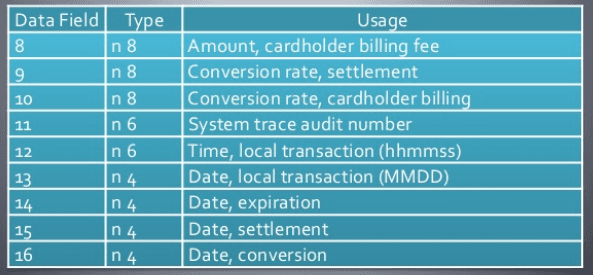
F23 - CARD SEQUENCE NUMBER: This is the information that allows cards linked to the same card number to be distinguished from one another. For example, the Card Sequence Number value is incremented by 1 when a card is renewed.
In an authorization transaction, if the F22 value is '05x' and the 'tag 5F34' value (Application PAN Sequence Number) is populated on the chip, the F23 value must be present in both the authorization message and the clearing data.
Why is it needed?
A single card number can belong to more than one physical card. For example, when a card is renewed, the card number stays the same while a new card is issued. For supplementary cards too, some banks use the same number as the primary card. In this case, the way to distinguish cards that share the same number is the card sequence number (Card Sequence Number). On chip cards, this value is stored on the chip under the 5F34 tag.
Its role in security
The issuing bank calculates the card's encryption key to verify the cryptogram in chip transactions. The card sequence number is used together with the card number when calculating this key. Therefore, if F23 is missing or sent incorrectly, the bank cannot calculate the correct key and the cryptogram verification fails. As a result, the transaction may be declined.
Relationship with F22
F22 (POS Entry Mode) shows how the card data was entered into the terminal. Values starting with 05 indicate that the card was read from the chip. In this case, if the card sequence number exists on the chip, the terminal must send this value in the F23 field. In transactions entered via magnetic stripe or manually, however, the card sequence number cannot be read, so F23 is generally not sent.
Points to consider during integration
F23 must appear in the clearing records with the same value as in the authorization message. Having different values in the authorization and clearing records can cause problems in matching transactions and in dispute processes.