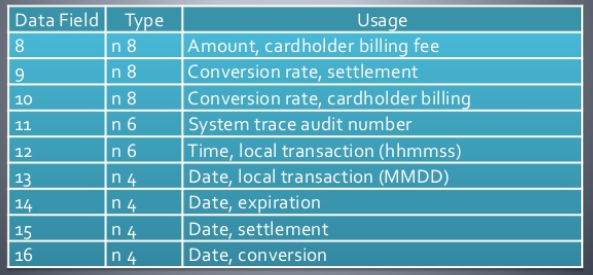
It is a number assigned by the third-party system (ATM or POS) to help uniquely identify a transaction. It is generated in the range 000001 to 999999. In an authorization transaction, each message must have a new STAN; retries use the same STAN as the original message.
In which field is the STAN information sent in the authorization message?
Under the ISO 8583 standard, the STAN information is sent in field DE 11 — SYSTEMS TRACE AUDIT NUMBER.
Who generates the message? Can the card system and the POS system generate the STAN independently?
The STAN information is generated by whoever initiates the message. In payment systems, the party that initiates the message is usually the POS or the ATM. This value is a 6-digit numeric unique value that allows the transaction to be tracked individually. The STAN value is not generated by the issuer.
The difference between STAN and RRN
The STAN is the initiating system's own counter and may restart every day. The RRN, on the other hand, is a longer reference number used to locate a transaction on its own.
When looking up a transaction, the STAN is sufficient only together with the date and terminal information. When handling customer complaints, support teams should take the STAN, RRN, and approval code from the receipt together.
Keep in mind that the counter restarts once it reaches 999999; for this reason, it should not be treated as unique on its own.