Skip to content

Search

"dispute documentation"

22 articles found

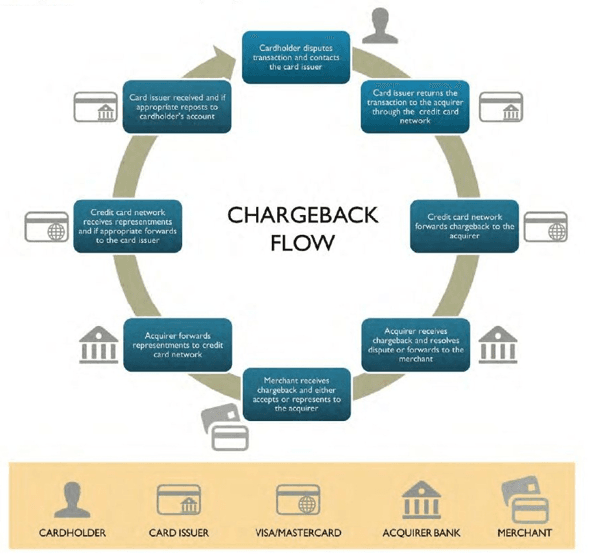
Flowchart showing the chargeback dispute process between cardholder, issuer, and merchant

Chargeback

What is a chargeback?

A chargeback is the process of refunding an amount back to a credit card when goods or services paid for are not received, or when transactions not carried out by the cardholder are identified. It is translated into Turkish as reverse presentment.


Table of Documentation Indicator codes used in second presentment and reversal presentment clearing messages

Clearing

What Is the Documentation Indicator?

The Documentation Indicator is a code carried in the F60 (Additional Data) DE05 field of clearing transactions. Used in second presentment and reversal presentment transactions, it shows whether the supporting document has been sent. This post lists the values and their meanings.

Diagram illustrating the types of chargeback disputes in card payments

Chargeback

What are the chargeback dispute types?

A chargeback is a dispute raised against a card transaction when the cardholder did not make it or does not recall it. The dispute types vary depending on the situation; let's look at them.

Diagram of the Chargeback Document Management System (CDYS) process flow

Credit Card

What is the Chargeback Document Management System (CDYS)?

The Chargeback Document Management System (CDYS) is a system developed by BKM to resolve customer disputes over card payment transactions among BKM members, covering Copy Request, Chargeback, Representment, and related processes.

BKM HİYS dispute and chargeback management workflow

Chargeback

What Is HİYS (Dispute Management System)?

The Dispute Management System (HİYS) is the system used among BKM members to share chargeback transactions and the supporting documents that must accompany them, linked to Domestic Clearing and Settlement System data.

Chart illustrating chargeback dispute time limits

Chargeback

How is the chargeback dispute period calculated?

The chargeback dispute period varies by reason, but it can never exceed 540 days from the date a transaction posted to the card. Within that limit, cardholders generally have up to 120 days to dispute, depending on the type of issue.

Diagram of a good faith request exchanged between issuer and acquirer outside the chargeback process

Chargeback

What Is a Good Faith Request?

A good faith review request is a written request that issuers and acquirers send each other to collect on a transaction when the dispute (chargeback) process cannot be run. The requesting party states its grounds.

Diagram illustrating the appeal stage of the card dispute and chargeback process between issuer, acquirer and card scheme

Payment Systems

What Is an Appeal? What Does It Mean in Payment Systems?

In payment systems, an “appeal” is the process of objecting to the outcome of a transaction dispute. It is usually discussed alongside chargebacks, but it plays a critical role in interbank dispute resolution, when a party asks the card scheme to re-evaluate a concluded decision.

Online mail order payment form being filled out on a laptop

Merchant & POS

What is the risk of mail order transactions for merchants?

Mail order transactions are preferred by cardholders because they only block the card limit by the installment amount, creating a sales opportunity for merchants. But is the remaining balance guaranteed?

Diagram illustrating card fraud and forgery in card payments

Security

What Is Forgery in Card Payments?

Forgery in card payments means transactions made with card details without the cardholder's knowledge, or purchases with counterfeit or stolen cards. Merchants cannot eliminate fraud and chargeback risk, but they should aim to reduce it to reasonable levels.

Illustration of the compliance process between merchant bank and issuer in card payments

Chargeback

What Is Compliance (Regulatory Compliance)?

Compliance means adherence to card scheme rules. Outside chargebacks, it is how a bank that loses money because card payment organization rules were broken recovers that amount from the party that caused the loss.