A chargeback is the process of refunding the amount paid back to the relevant credit card when the goods or services that should have been received in exchange for a credit card payment are not received, or when transactions not carried out by the cardholder are identified. It is translated into Turkish as "ters ibraz" (reverse presentment).
Banks are required to comply with the spending-dispute rules set by Visa, Mastercard, and American Express when handling chargeback requests.
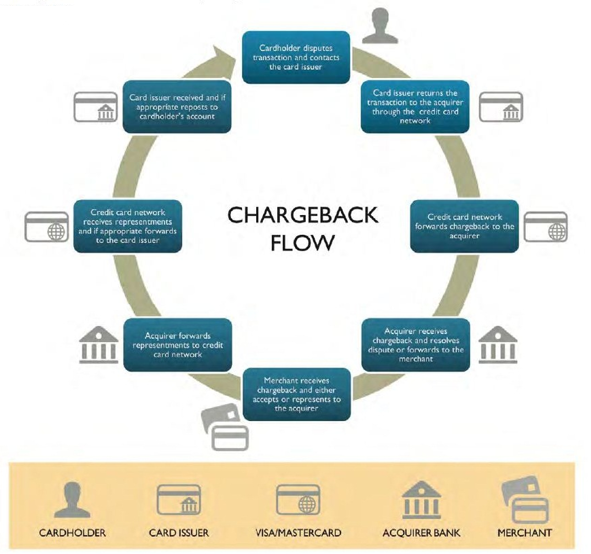
So how does the chargeback process work? Let's go through it step by step:
1- The cardholder reports the spending dispute to their card's bank, along with the reason for the dispute.
2- The card's bank evaluates the cardholder's dispute and forwards it to the bank of the merchant the cardholder had the issue with. (This step is mandatory as part of the process.)
3- The merchant's bank forwards the dispute request it receives to the merchant and requests supporting documents from the merchant regarding the dispute. Following the document request, there are two possible outcomes:
4/A- If the merchant does not send any documents to the merchant's bank within the time allowed, the merchant's bank refunds the disputed transaction amounts to the cardholder's bank, and the dispute file is resolved in the cardholder's favor.
4/B- If the merchant submits, within the time allowed, any document to the merchant's bank that rejects the cardholder's dispute, the merchant's bank forwards these documents to the cardholder's bank and rejects the dispute.
5- So that the cardholder can continue to exercise their right to dispute, the cardholder's bank notifies the cardholder as soon as possible of the rejected dispute, along with the documents sent by the merchant.
6- Once the documents that reach the card's bank rejecting the cardholder's dispute are shared with the cardholder, the process continues according to the cardholder's decision. The cardholder can take one of two actions:
7/A- If the cardholder finds the documents received sufficient and concludes that their dispute is unjustified, they write a petition to the card's bank stating that they do not wish to continue the dispute, or they simply do not respond to the bank.
7/B- If the cardholder does not find the documents rejecting the dispute sufficient and wants to continue the dispute, they must write a petition to the card's bank and explicitly state that they wish to continue the dispute.
8- Upon receiving written instructions from the cardholder to continue the dispute, the bank initiates a different process depending on the card type. For Visa cards, it initiates the Pre-Arbitration process; for Mastercard cards, it initiates the Second Chargeback (Arbitration Chargeback) process.
9- As a result of the second dispute process initiated by the card's bank, the merchant's bank either accepts or rejects the dispute. This process works differently for Visa cards and for Mastercard cards.
10-A- If the transaction was made with a Mastercard-branded card, the merchant cannot reject the second dispute (Second Chargeback) it receives and forward it back to the card's bank. It has two options: accept the dispute, or escalate the dispute file to the Mastercard Arbitration Committee. If the dispute file is escalated to Mastercard, the outcome of the dispute from this point on is decided by the Mastercard Arbitration Committee.
10/B-If the transaction was made with a Visa-branded card, the merchant's bank does not accept the second dispute (the Pre-Arbitration process) it receives and forwards the dispute back to the card's bank. The card's bank escalates the matter to the Visa Arbitration Committee. From this point on, the outcome of the dispute is decided by the Visa Arbitration Committee.