Skip to content

Search

"smart card protocol"

6 articles found

Illustration showing how an Application Identifier (AID) is used in a chip card transaction

EMV

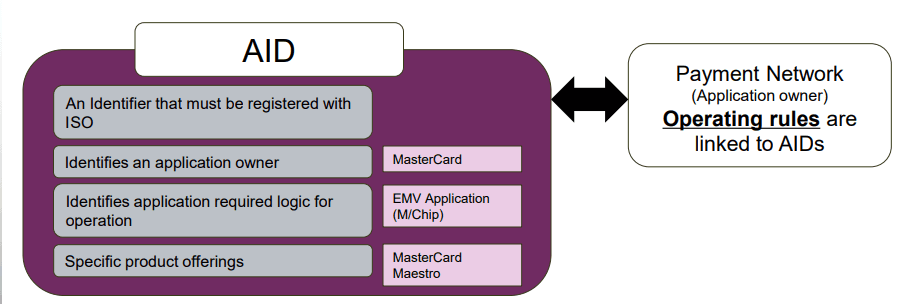
What is an Application Identifier (AID)?

The AID tells the terminal which applications are present on a chip during a POS or ATM transaction. What does the AID do? It lets the terminal determine whether it supports an application on the chip. In Tag 9F06, it is 5-16 digits long.
NFC near field communication ISO/IEC 18092 illustration

Payment Systems

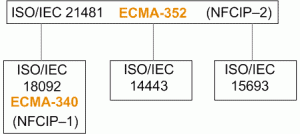
What Is ISO/IEC 18092/ECMA-340?

NFC is a data transfer technology developed by Sony and Philips in late 2002 and adopted as an ISO/IEC standard in 2003. ISO/IEC 18092/ECMA-340 (NFCIP-1) is one of the two globally accepted NFC standards.

Illustration of a smart card chip related to the ISO/IEC 7816 standard

Credit Card

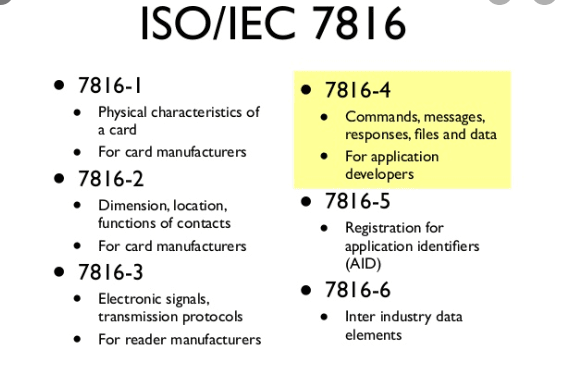
What is ISO/IEC 7816?

ISO/IEC 7816 is an international standard jointly maintained by ISO and IEC, covering contact-based electronic identification cards, especially smart cards. It consists of 15 different parts, each covering a different aspect of smart card technology.

Diagram of the Command APDU structure fields: CLA, INS, P1, P2, Lc, Data Field, Le

Online & Authorization

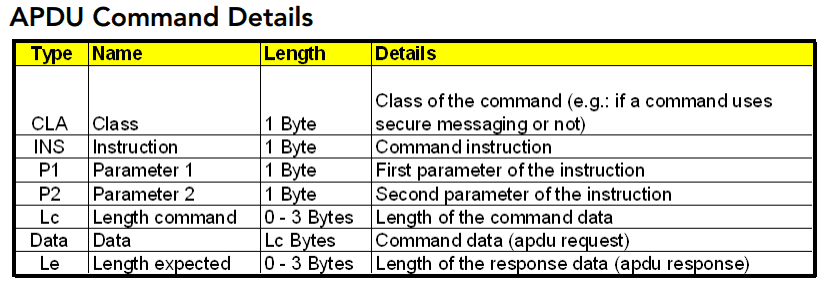
What is an APDU (Application Protocol Data Unit) Command?

An APDU is an application-level protocol defined in ISO 7816-4 and used between a smart card and a POS, ATM, etc. There are two types of APDU: Command APDU and Response APDU. The structure of the APDU is given below.

Diagram illustrating the Remote Key Loading (RKL) process

ATM

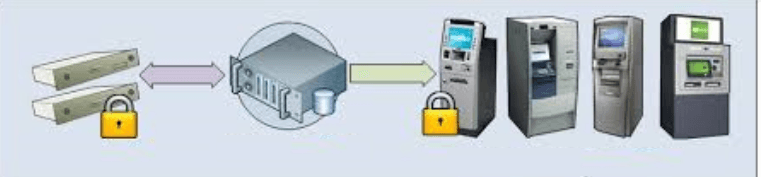
What Is RKL (Remote Key Loading)?

RKL is the process of distributing a TMK (Terminal Master Key) to each terminal from a central point. It is used to remotely load keys onto POS and ATM devices, loading TMKs onto an ATM's keypad or activating them on a POS.

Illustration of an AI-based payment agent making payments automatically on behalf of a user

Payment Systems

What Are AI-Based Payment Agents?

Digitalization keeps changing the speed and shape of payments. AI-based payment agents pay on their own within user-defined limits and rules, completing transactions without the user initiating any action. This post explains how they work and what to watch for.