First, let's explain what Access Security Control means:
Access Security Control (ACS) is the security protocol that the card-issuing bank must maintain under the 3-D Secure protocol in order to support cardholder authentication.
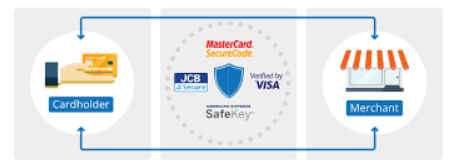
3-D Secure is an XML-based protocol that adds an extra layer of security to online credit card payments. The protocol was implemented by Visa in December 2001 as «Verified by Visa» and was also adopted by Mastercard as «SecureCode». Under the 3-D Secure protocol, every card-issuing bank must maintain an Access Control Server (ACS) to support cardholder authentication.
The list of Approved Scanning Vendor (ACS) companies can be found on the following website:
https://www.pcisecuritystandards.org/assessors_and_solutions/approved_scanning_vendors
A note on the ACS abbreviation
In most sources, the abbreviation ACS is used to mean Access Control Server. This server is the component through which the card-issuing bank carries out 3D Secure authentication. Banks can operate this component themselves or obtain it as a service from a company that provides it.
During authentication, the ACS evaluates the risk score of the transaction; it can let low-risk transactions through frictionlessly, while requesting additional verification, such as SMS or app approval, for high-risk transactions.
When choosing a company, the approval information published by the card scheme and EMVCo, along with support for the current 3D Secure version, should be checked.