Especially with the advancement of technology and changing customer expectations, positive developments have also been taking place in the physical use of credit cards.
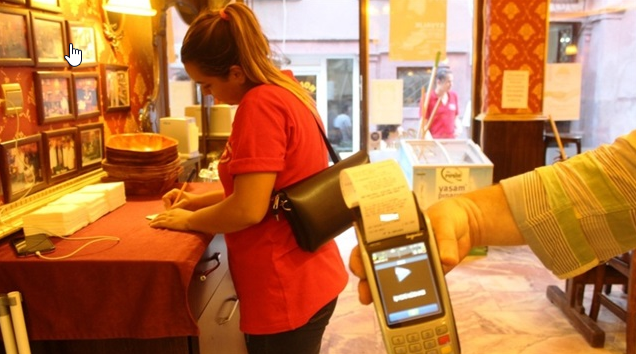
One of these developments is the ability to use credit cards for contactless transactions. With contactless transactions, cardholders gained the opportunity to complete their transactions faster and with fewer steps. Similar to the saying that whoever loves the rose must endure its thorns, despite some security gaps in contactless transactions, users have come to love contactless payments.
According to BKM data, while contactless transactions numbered 88 million in 2017, this figure increased 2.5 times to 213 million in 2018. In light of this data, I think it won't be too hard to predict that contactless transactions will play an even bigger role in our lives in the coming years.
So, as the number of contactless transactions keeps rising, what about the urban-legend-like stories spreading about transactions being made from our wallets - without our knowledge - by a POS device brought close to us while we are traveling on a bus or tram?
Lately, videos about contactless card fraud have been circulating on social media. So what is the truth of the matter, and how secure is a contactless card?
While it is within the realm of possibility for a transaction of up to 250 TL to be made from a card sitting in our wallet by bringing a POS device close to it without our knowledge, it is highly unlikely that this would actually happen in practice.
- First, when a contactless transaction is approved, a beep sound is emitted that the cardholder can hear.
- Second, when a company applies to a bank for a POS device, the bank puts it through a long evaluation process; the company must not be on the termination list, must have a clean record, and must meet the requirements for being issued a POS device. For this reason, no corporate company would stoop to damaging its record for the sake of such small-value transactions.
- Third, representatives of merchants who carry out this kind of transaction risk going to prison and being found guilty under the law, which is a reputational risk no corporate company would want to take.
Moreover, the risk that can arise when the card is physically handed to the merchant representative to carry out the transaction is actually greater.
- Card information being captured because the card is physically handed to the merchant representative (copying, manually capturing card details, etc.)
- Risks such as card information being copied by swiping it through a device set up behind the register are things we may not pay attention to, but they are highly critical, since our card details can be captured and used to carry out high-value transactions from our account.
If, despite everything described above, you still don't feel at ease, RFID-blocking wallets are available. Even though the card kept inside this type of wallet is contactless-enabled, a contactless transaction cannot be made without removing the card from the wallet. These wallets can also be used as an alternative.
Every transaction, whether contact or contactless, is recorded. For this reason, users who use contactless-enabled cards in particular need to check their statements regularly. Whether contactless or not, a responsible consumer should always check their cash if they carry cash, or their card statements if they use a card. Therefore, cardholders should not underestimate small amounts; they should check their statements regularly. If an unusual transaction is encountered, they should contact their bank to get detailed information about it. If the transactions do not belong to the cardholder, banks will carry out the necessary investigations and refund the relevant amount to the cardholder.
In conclusion, although it is technically possible to charge up to 250 TL from a card in our wallet by bringing a POS device close to it, this is a situation that is very unlikely to occur in practice.
So don't throw the baby out with the bathwater. Go ahead and use your card for contactless transactions...