New developments emerge every day in the field of payment systems and digital payments. Of course, government support for such developments is very valuable for removing the obstacles to digitalization and for driving adoption.
Last week, the sub-headings and timeline of the economic reform package, which President Recep Tayyip Erdogan shared with the public, were published by the Ministry of Treasury and Finance.
The economic reforms action plan consists of actions under ten headings:
- public finance,
- price stability,
- the financial sector,
- the current account deficit,
- employment,
- corporate governance,
- promotion of investments,
- facilitation of domestic trade,
- competition,
- market surveillance and
- supervision. These actions are planned to be completed by March 2023.
The plan also includes sub-items that are of close interest to fintechs. These items are:
- Restructuring TROY as a separate company. Target Date: 30 June 2021
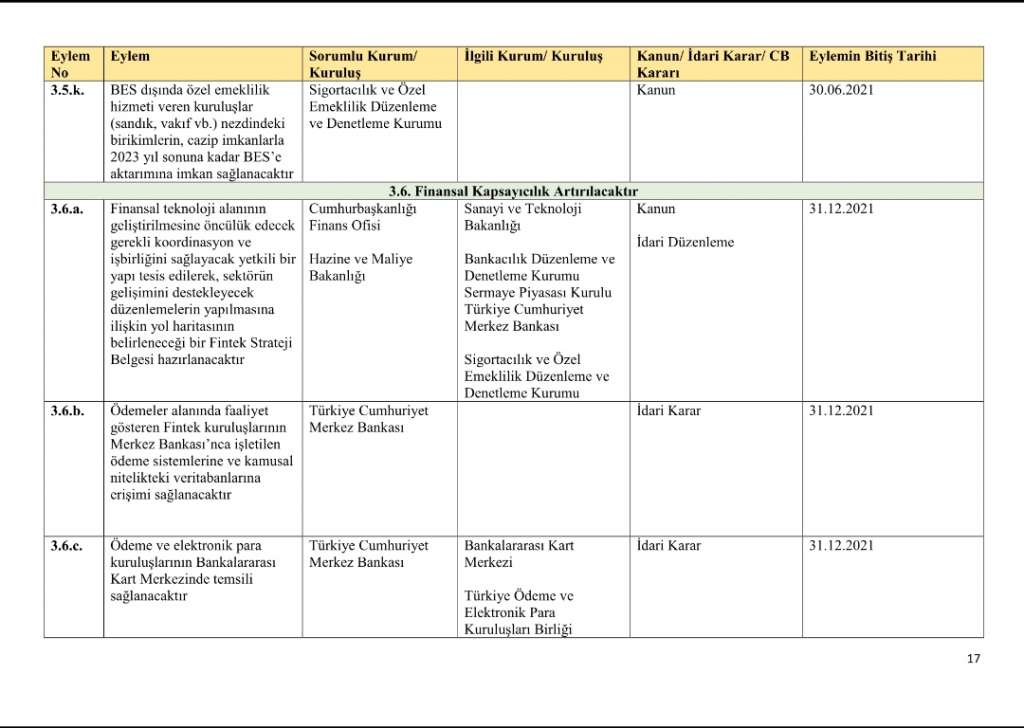
- Ensuring the representation of payment institutions and e-money institutions at BKM (Interbank Card Center). Target Date: 31 December 2021
- Introducing a regulation that allows digital banking licensing. Target Date: 31 December 2021
- Providing fintechs operating in the payments field with access to the payment systems operated by the CBRT and to public-sector databases. Target Date: 31 December 2021
- Reviewing fintech regulations in a way that paves the way for innovation. Target Date: 31 December 2021
- The Central Bank establishing the economic, technological and legal infrastructure of digital money. Target Date: 31 December 2021
It appears that very serious progress will be made over the next few years and that there will be new developments in the digitalization of payment systems. I think it would not be wrong to say that there will be many fintech start-ups in this field and that new players will join the ecosystem.