Until the FAST system was put into use, money transfers were carried out through the EFT structure. Due to evolving technology and changing customer expectations, a new structure called FAST was introduced.
So what are the differences between the EFT and FAST systems?
| EFT | FAST |
| Although transfers between accounts take place within seconds, banks do not commit to a specific time frame for making the money usable in the recipient's account. For this reason, it takes longer for payments to be reflected in accounts. | Payments are expected to reach the account within 2 seconds. Transfers that do not reach the account within 25 seconds are considered invalid. |
| It only operates during business hours. | It operates 24/7. |
| There is no obligation to notify the sender and recipient after the transaction. | There is an obligation to notify the sender and recipient after the transaction. |
Which one should be preferred in which situation?
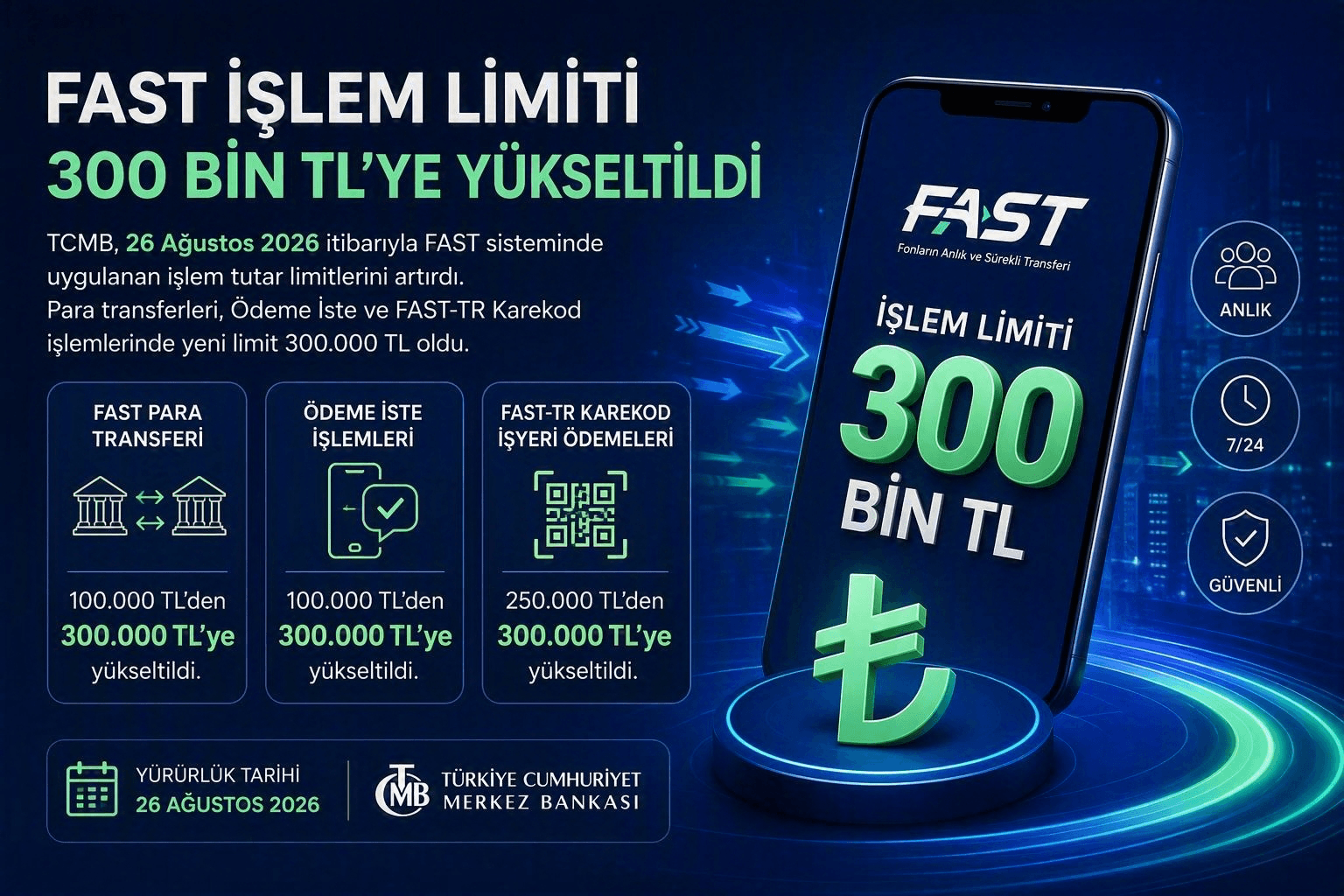
FAST is suitable for small and medium-amount transfers that need to happen instantly, and it operates without any day or time restrictions. EFT, on the other hand, is still widely used for higher-value or corporate payments.
Banks may apply different limit and fee policies for the two methods. From the user's perspective, the most important difference is that with FAST, the money becomes usable in the recipient's account within seconds.
For current limits and fees, the bank's fee schedule and Central Bank announcements should be consulted.