LMK stands for Local Master Key.
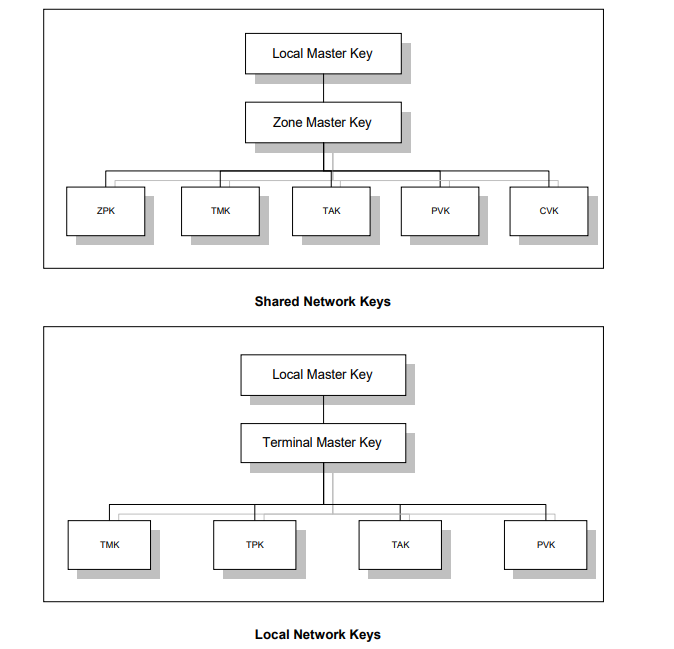
The Local Master Key (LMK) is the HSM's master key, and all other keys used by the institution are secured under this key.
As transaction volume increases, banks typically use multiple HSM devices to reduce the load on individual HSMs. Even when there is more than one HSM, this does not mean there is more than one LMK. A single LMK is used for all HSMs. We can say it is the mother of all keys for each institution.
The LMK is stored securely inside the HSM, which makes unauthorized external access difficult. The LMK is the only key stored in the HSM. LMKs are not used to encrypt data; instead, they are used to encrypt and decrypt other keys as those keys are loaded into or removed from the HSM.
Whenever a key is requested from the HSM, that key is issued under the LMK. This key is known and used only by the HSM. The clear form of the LMK is never kept anywhere outside the HSM. The LMK consists of a DES or TripleDES key set. When the LMK is generated on the HSM, these keys are stored on physical smart cards.
LMKs come in pairs, and an HSM contains several LMK pairs. Different LMK pairs are used to encrypt/decrypt different types of security keys. LMK pairs are identified by two numbers. For example: LMK pair 04-05, LMK pair 14-15, etc.
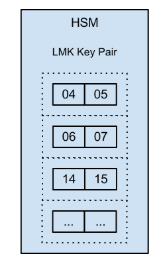
As shown in the image below, all keys are generated and used under the LMK.