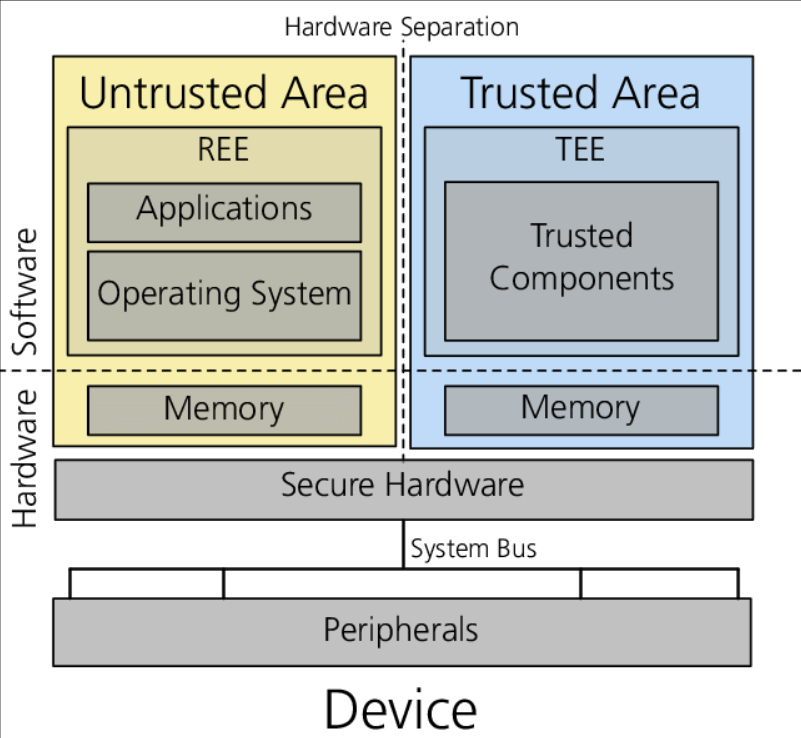
A Trusted Execution Environment (TEE) is an environment where the code being executed and the data being accessed are isolated and protected in terms of confidentiality (no one has access to the data) and integrity (no one can alter the code or its behavior).
We may not realize it, but many devices around us use a Trusted Execution Environment, including smartphones, set-top boxes, video game consoles, and Smart TVs.
What are the use cases of TEE?
TEE would be a good solution for storing and managing device encryption keys that can be used to verify the integrity of the operating system.
TEE is well suited for implementing biometric authentication methods (facial recognition, fingerprint sensor, and voice authorization), and for isolating the resources on a device used to store the biometric algorithm, user credentials, and related data.
TEE can be used in mobile e-commerce applications such as mobile wallets and contactless payments to store and manage credentials and sensitive data.
TEE is also a suitable environment for protecting digitally copyrighted information (books, movies, audio, etc.) on connected devices such as smartphones, tablets, and smart TVs. While digital content is protected using encryption during transmission or transfer, a TEE ensures that the decrypted content is not exposed to the operating system environment, thereby protecting the content on the device even after it has been decrypted.
The growing popularity of connected devices in recent years has caused device manufacturers to deal with security issues more seriously than before. To properly address these issues, a specification has emerged that defines a way to ensure the integrity and confidentiality of data running on an organization that implements this specification.
You can access documents related to TEE via the link below: