The European Payments Initiative (EPI), formerly known as the Pan-European Payment System Initiative (PEPSI), is an ECB-backed payment integration initiative that aims to create a pan-European payment system and interbank network to rival Mastercard and Visa.
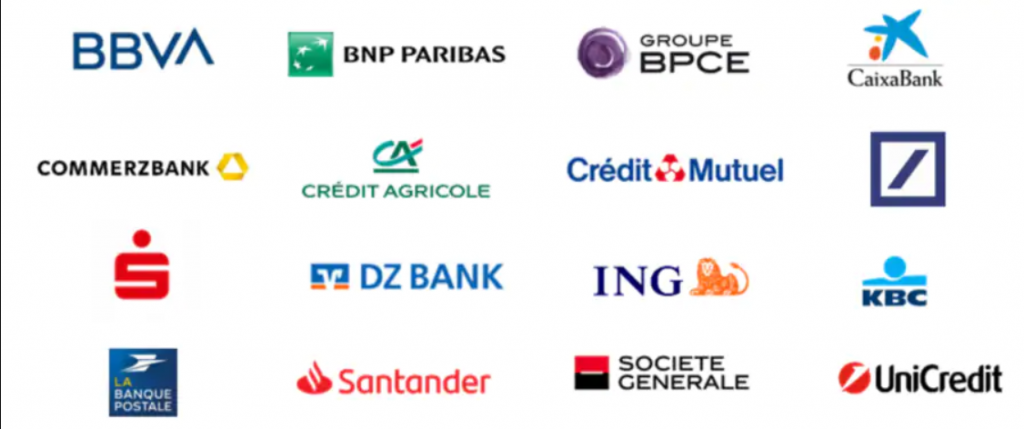
Founding members to date: BBVA, BNP Paribas, BPE Group, CaixaBank, Commerzbank, Crédit Agricole, Crédit Mutuel, Deutsche Bank, Deutscher Sparkassen- und Giroverband, DZ BANK Group, ING, KBC Group, La Banque Postale, Banco Santander, Société Générale, UniCredit
A group of 16 major European banks from five countries (Belgium, France, Germany, the Netherlands and Spain) has paved the way for the future launch of the European Payments Initiative (EPI).
In addition to existing international payment scheme solutions, the solution aims to become a new standard payment method for European consumers and merchants across all types of transactions, including in-store, online, cash withdrawal and peer-to-peer.
EPI's goal is to offer a digital payment solution that can be used anywhere in Europe and to replace the fragmented landscape that still exists today. In doing so, the EPI founders are responding to merchant and consumer communities calling for payment initiatives with a more pan-European approach.
More than 50% of retail payment transactions in Europe are still made in cash today. The EPI solution will bring tangible benefits to European merchants by offering a seamless, competitive and unified payment solution for all of Europe, which will also be available to all European consumers.
In addition, the creation of EPI will support the implementation of the political agenda of both European public institutions and national authorities, in particular by creating a truly European solution in the fields of payments, banking and technology.
Existing digital payment solutions in Europe are fragmented, and European citizens still cannot pay digitally everywhere. Moreover, the Covid-19 crisis underlined the need for a unified European digital payment solution. In this sense, EPI also aims to align banks, merchants and acquirers, the European payment ecosystem and payment service providers, thereby contributing to strengthening the Single Market and the European digital agenda.
The implementation phase is expected to begin through the establishment of an interim company in Brussels, which will produce clear deliverables in the coming weeks, including the completion of the technical and operational roadmap and the launch of implementation work to obtain the best input.
Valdis Dombrovskis, Executive Vice-President of the European Commission, said: “The European payments initiative fits with our claim that European consumers and businesses should have access to fast, efficient and competitive payment solutions. I hope that banks from other countries, innovative European fintechs and other European payment service providers will join the first 16 members and bring their own expertise and assets to this groundbreaking project, making it more innovative and competitive at the global level.”
The Commission has invited European market players, individual banks or banking communities, and third-party payment service providers to apply to EPI and join it as founders.
EPI is now starting its implementation phase and is expected to be fully operational in 2022.
For more information, see the European Central Bank's press release.