TPK is the abbreviation for Terminal PIN Key.
TPK (Terminal PIN Key) is a data encryption key used to encrypt PINs for transmission between a terminal and the terminal's bank (acquirer) within a local network.
We can describe the use of TPK in POS and ATM as follows:
In transactions performed via POS or ATM, the POS device encrypts the PIN information under the TPK and sends it for verification.
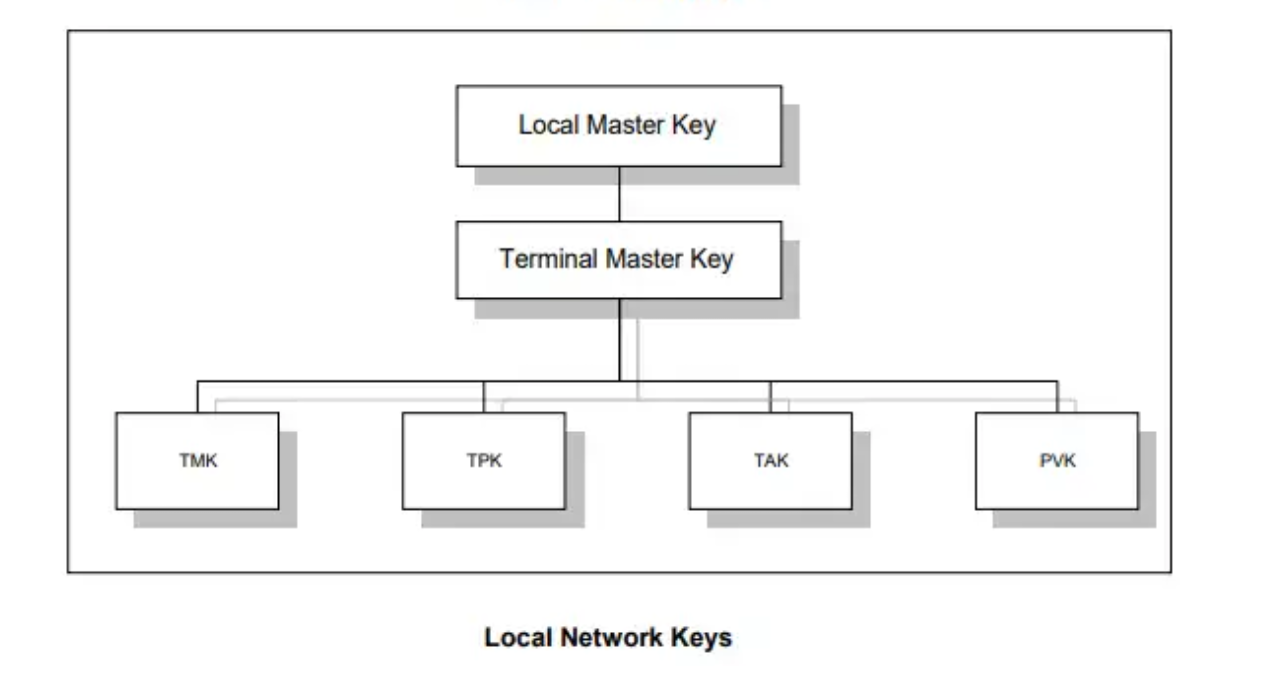
During transfer operations, the TPK is encrypted under the TMK; in local storage, it is encrypted under one of the LMK pairs.
The hierarchy of the TPK with other keys is shown in the diagram below.
The role of the PIN entry device
The TPK is stored inside the secure PIN entry device (PIN pad) within the POS or ATM. When the cardholder enters the PIN, it is encrypted inside this unit. This way, the PIN never reaches the device's main software or screen in cleartext.
PIN pad security
PIN entry devices must be certified according to the PCI PTS standard. These devices automatically erase the keys stored inside them if an attempt is made to open or tamper with them. This way, even if the device is seized, the TPK cannot be obtained.
TPK exchange
The TPK is regularly updated through key exchange operations performed between the terminal and the bank. The new TPK is sent encrypted under the terminal's TMK. The terminal decrypts the new key inside the PIN pad and stores it there.
Difference from DUKPT
In the TPK method, the terminal uses the same key for a certain period of time. In the DUKPT (Derived Unique Key Per Transaction) method, however, a different key is derived from the master key for each transaction. DUKPT is preferred especially in environments with a large number of terminals because it reduces the need for key exchange and protects other transactions even if the key for one transaction is compromised.