Skip to content

Search

"Merchant & POS"

176 articles found

Diagram explaining the MCC merchant category code field in ISO 8583 messages

ISO 8583

ISO 8583 Field Descriptions (F18)

F18-MERCHANT TYPE: This is the merchant's category code (MCC) information. It must contain values from the Mastercard or Visa MCC Code list. It is a 4-digit numeric value. For ATM transactions, MCC code 6011 should be sent. The role of MCC in authorization...
UnionPay logo

Merchant & POS

What Is UnionPay?

UnionPay International (UPI) is a China UnionPay subsidiary founded in November 2012. Together with more than 1,000 institutions worldwide, UPI provides international card acceptance in 160 countries and card issuance in more than 40 countries and regions.

Diagram of basic payment systems terminology including issuer, acquirer, and authorization

Payment Systems

Basic Terms Used in Payment Systems

Although many important terms are used in payment systems, the expressions below are its cornerstones — the ABCs of payment systems, so to speak. Issuer: the credit card company, usually a bank, that issues the card and tracks debt, credit, bonus points, and other services for the customer.

Illustration representing credit card fraud and online payment security risks

Fraud

What is Fraud? What are the Types of Fraud?

With the growth of credit and debit card usage and rising e-commerce transaction volumes, there has been a serious increase in exploiting user negligence to harm customers. Fraud means using someone else's card at a merchant or ATM to gain unjust profit.

Credit cards inside an open wallet

Merchant & POS

Who is liable for a transaction made without a PIN?

Almost all of us carry at least one credit card. Imagine losing your wallet with all your cards inside, and someone with bad intentions finding it and using the cards without a PIN. Who bears the responsibility?

Diagram showing the pre-authorization closing process flow on a POS terminal

Merchant & POS

What Is Pre-Authorization Closing?

Pre-authorization closing turns a pre-authorized transaction into a financial one, posting it to the merchant and cardholder accounts. See how amounts and available limit are affected.

Diagram illustrating the ISO 8583 field 32 structure

ISO 8583

ISO 8583 Field Descriptions (F32)

F32 - ACQUIRING INSTITUTION IDENTIFICATION CODE: the 11-digit acquirer bank ID. The values it can take for domestic transactions and by card brand include Visa, MasterCard, UnionPay, Discover and JCB formats.

New BIN card product launch process

Credit Card

What Happens When a Product Is Launched Under a New BIN?

When banks launch a new card product, they can do it under an existing BIN or a new one. A new BIN requires much more work: BKM announces it, every bank defines it and every POS has to download it.

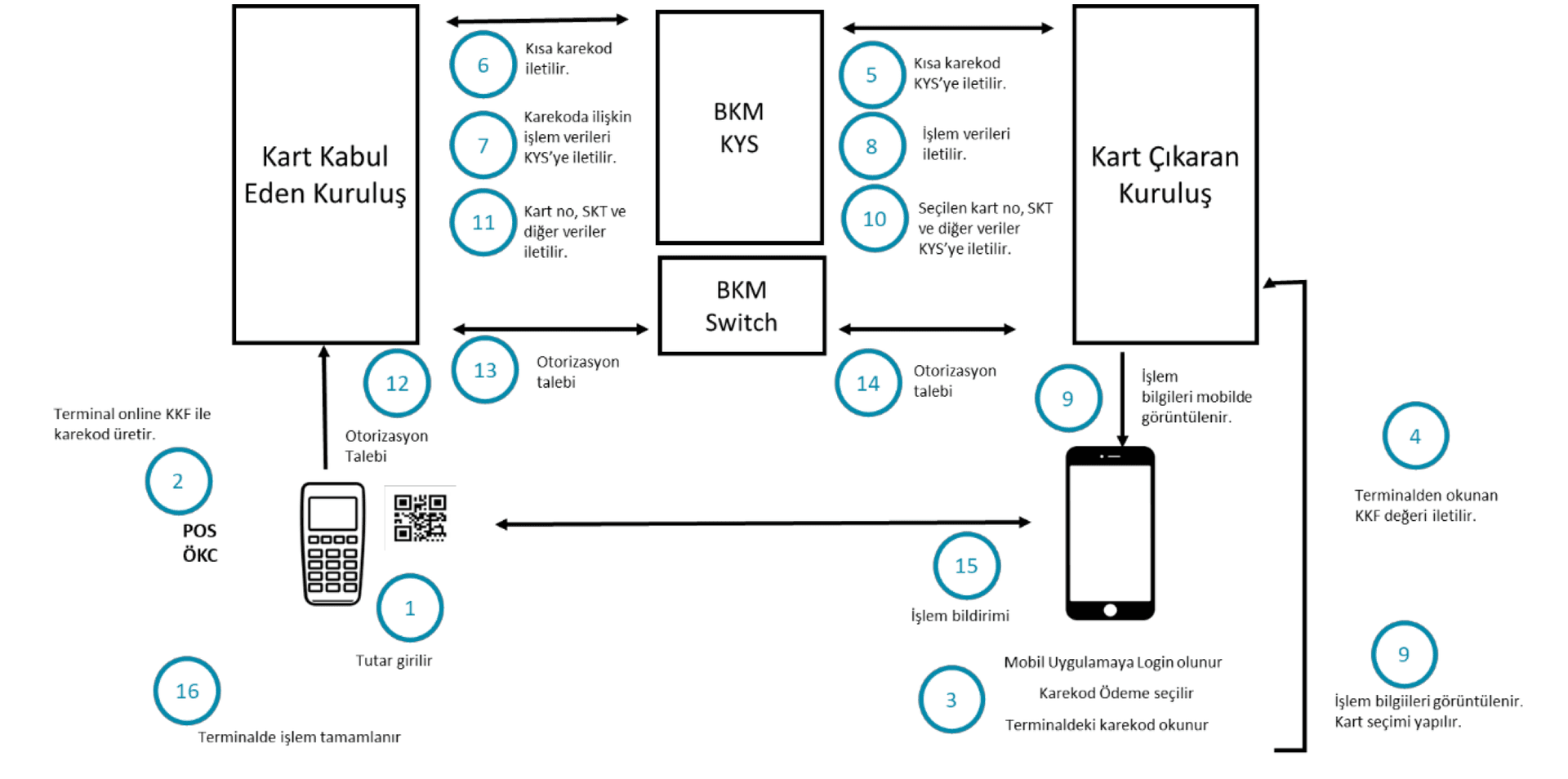
Diagram of the TR QR Code payment flow between cardholder, issuer, BKM and acquirer

Payment Systems

Why Am I Getting an Error When I Try to Pay with a TR QR Code?

In payment or cash withdrawal transactions, the TR QR Code is generated by the POS or ATM. The card issuing bank must build its systems to read and act on this code. Errors usually stem from mishandling the long and short QR code flows, which are explained here.

Diagram showing how pre-authorization blocks a card's available limit

Credit Card

Which Cards Can Be Used for Pre-Authorization?

Pre-authorization reduces the merchant's risk by blocking part of the card's limit for a set period. Since a credit card has a defined limit, an amount can be blocked against it. ATM cards and prepaid debit cards have no such limit to block.

Credit card installment payment illustration

Credit Card

What Is Installment Payment?

Installment payment means dividing a product's price into a set number of equal amounts. For example, if a 100 TL product is bought in 5 installments, the cardholder pays 20 TL a month for 5 months, totaling 100 TL.