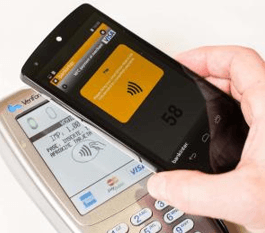
HCE
What Is the ISO/IEC 14443 Standard?
An international standard that defines proximity cards used in Near Field Communication (NFC) and the protocols used to communicate with them. It has 4 parts; Part 4 covers NFC and HCE operations.
Search
190 articles found
HCE
An international standard that defines proximity cards used in Near Field Communication (NFC) and the protocols used to communicate with them. It has 4 parts; Part 4 covers NFC and HCE operations.

Payment Systems
The configuration area in POS applications holds terminal number, merchant number, IP, port, APN and phone number information needed for POS setup, and can be managed manually or centrally.

Payment Systems
In card payment transactions made via a physical POS device, entering the card's PIN keeps the transaction secure, while in virtual POS transactions, security is provided through the 3D Secure flow. Are 3D Secure payment methods standardized? There are 3 different 3D Secure models.

Payment System Institutions
BKM (Interbank Card Center) was founded in 1990 to clear and reconcile credit and debit card payments. This post covers its public collection solutions: contactless transport in Konya, SGK premium payments and e-Government gateway fees.

Payment Systems
Below is information on the products found in the Visa and MasterCard systems and their associated product codes, listed under Product ID (cardProductId).

Laws & Regulations
The purpose of this Law is to protect competition by preventing agreements, decisions and practices that restrict competition in goods and services markets, and the abuse of dominance by dominant undertakings.

Laws & Regulations
No. Bitcoin is not issued by any public or private institution and has no guaranteed backing, so it is not considered electronic money under Law No. 6493 and cannot be supervised under that Law.

Laws & Regulations
Under Article 13 of Law No. 6493, payment services can be provided by banks, electronic money institutions, payment institutions and PTT. Anyone else is prohibited from offering them.
HSM & Security
TMK stands for Terminal Master Key, a key-encrypting key distributed manually or automatically under a previously established TMK. It is used to distribute data encryption keys to an ATM or POS terminal within a local network.
HSM & Security
ZPK, also known as the PIN Protection Key, is a data encryption key that is distributed automatically and used to encrypt PINs. It is also referred to as the 'Working Key'. This key allows PIN information to be carried securely across the network.