
Merchant & POS
What Is an MCC Code Used For?
Since the MCC code is a merchant's category code, it's critical for the checks performed during merchant onboarding and authorization, including campaigns and restrictions.
Search
108 articles found
Merchant & POS
Since the MCC code is a merchant's category code, it's critical for the checks performed during merchant onboarding and authorization, including campaigns and restrictions.
Merchant & POS
The Combined Warning List (BUL) lists card numbers the issuer wants blocked (lost, stolen, counterfeit, etc.), which acquiring merchants check within certain limits, at their own risk, when online authorization cannot be obtained.
Merchant & POS
3D Secure is short for Three Domain Secure (Issuer Domain, the Interoperability Domain and the Acquirer Domain), used to increase security in online transactions. Known to cardholders as 3D Secure, these systems are given unique names by payment schemes (MasterCard, Visa, etc.).

Chargeback
A chargeback is the refund of an amount paid by credit card to the cardholder's card when the purchased goods or services were not received, or when a transaction was not actually carried out by the cardholder.
Merchant & POS
BKM TechPOS is an infrastructure through which card acquirers and POS/cash register manufacturers can interoperate via BKM, letting all participating banks provide card acceptance services on a single device.
Credit Card
In the standard authorization flow, the transaction is initiated by the acquirer (POS bank) and forwarded to the issuer (card-issuing institution). The process is completed once the issuer responds. However, this isn't always possible; when the issuer fails to respond, BKM steps in...

Payment Systems
In payment systems, an “appeal” is the process of objecting to the outcome of a transaction dispute. It is usually discussed alongside chargebacks, but it plays a critical role in interbank dispute resolution, when a party asks the card scheme to re-evaluate a concluded decision.
Payment Systems
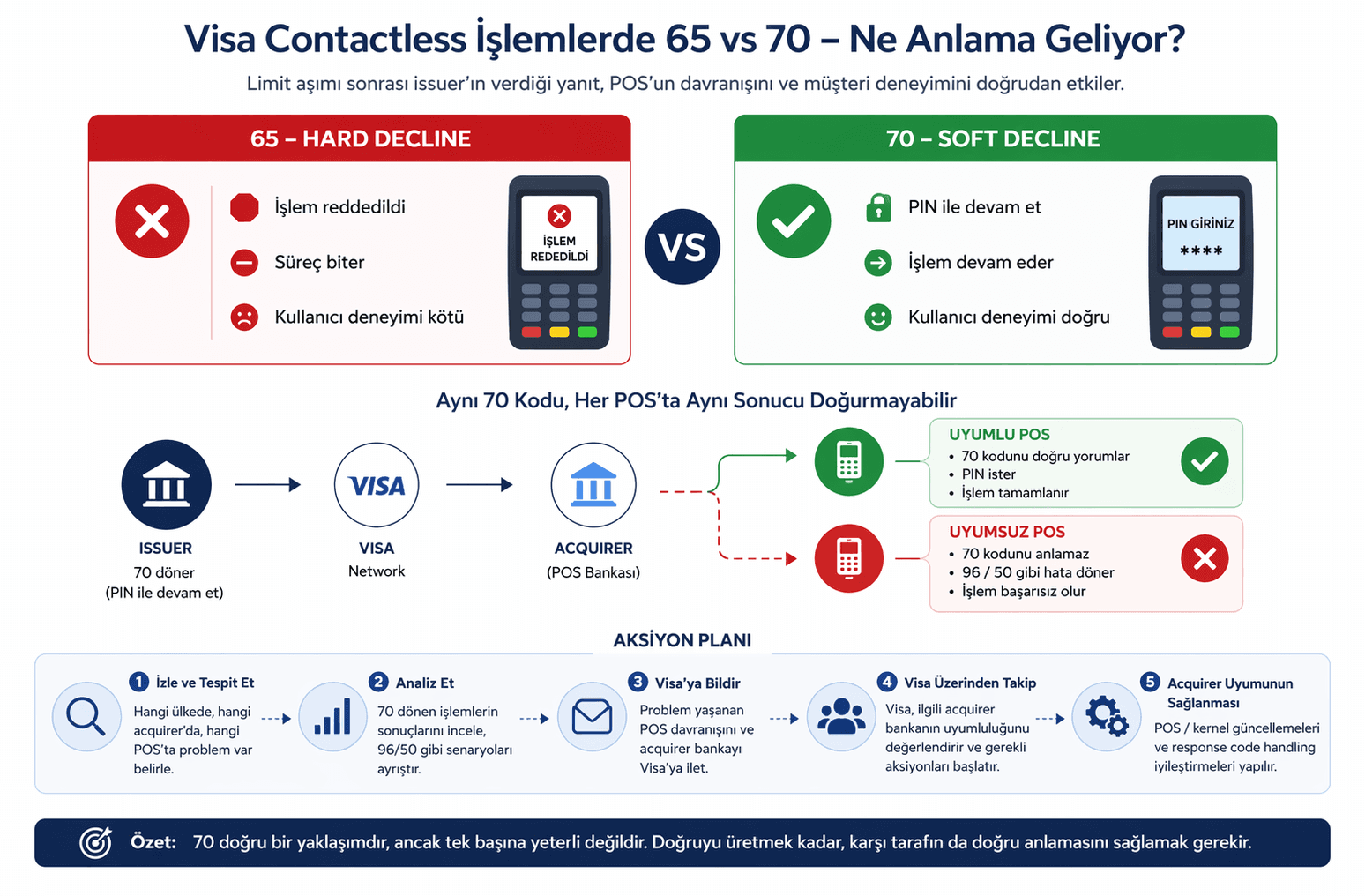
After switching to response code 70 for contactless limit-exceeded cases, we found that some overseas POS devices and acquirers did not handle it as expected. This post covers why the problem lies in the ecosystem and how to address it.
Credit Card
An installment transaction splits a payment into a set number of installments reflected on the cardholder's statement, when the card and POS bank are the same. For example, a 1000 TL transaction in 5 installments reflects 200 TL per statement period, starting from the first one.

Chargeback
A good faith review request is a written request that issuers and acquirers send each other to collect on a transaction when the dispute (chargeback) process cannot be run. The requesting party states its grounds.
Merchant & POS
When a chip card transaction is made at a POS, it may be approved by the card and the POS alone, without reaching any system (issuer or acquirer). When do the issuer and acquirer find out about it?
Merchant & POS
On-Us Leakage is a term used in the world of payment systems. On-us means the card-issuing bank and the POS-acquiring bank are the same. So what does on-us leakage mean in this context?