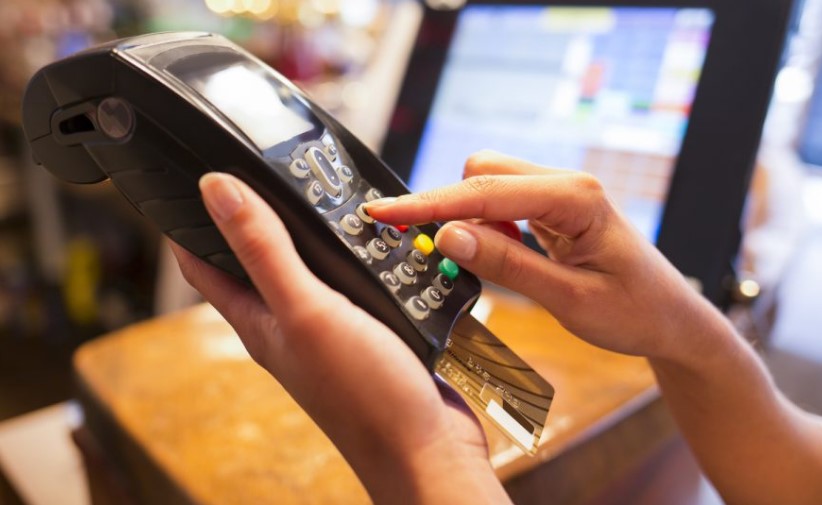
On-Us Leakage is a term used in the world of payment systems.
The term on-us refers to a situation where the card-issuing bank and the POS-acquiring bank are the same.
So what does on-us leakage mean in this context?
Banks earn the most profit when transactions are made with their own cards on their own POS terminals, because they do not pay a clearing commission on such transactions. Banking principles require increasing profitability, or identifying factors that reduce profitability, in order to prevent possible leakage.
A merchant can sign agreements with more than one bank and obtain POS terminals from those banks. Of course, the agreements between the merchant and the banks may also differ. For example, some banks may charge a 3% commission on non-installment transactions, while others may charge 2.7%. Merchants naturally tend to process transactions through the bank that charges them the lowest commission. At the same time, whenever a transaction is made with any card, the merchant is obliged to first check whether it has a POS device issued by that card's bank, and to route the transaction through the card-issuing bank's POS.
Transactions by merchants who disregard this and process them through the POS of a bank that charges a lower commission, instead of the card-issuing bank's POS, are called ‘On-Us Leakage’.
So how does the bank detect on-us leakage?
When banks set up a merchant, they send the merchant information to BKM (the Interbank Card Center). Based on the information sent, BKM generates a BKM ID and sends it to the POS-acquiring bank. All merchants with the same national ID/tax ID (TCKN/VKN) located in the same province are given the same BKM ID, regardless of the bank. For example, when POS terminals are installed on behalf of both Bank Y and Bank Z at a specific store location of X Ltd. in Istanbul, BKM assigns the same BKM ID.
Transactions that pass through a POS belonging to a bank other than the card-issuing bank arrive at the card-issuing bank via the clearing file. A check is made to see whether there is an active merchant (POS) using the BKM ID information found in this clearing data. If there is an active merchant, it is included in the On-Us Leakage report.
So how do banks take action in this situation?
First of all, the action taken may vary depending on the number of such transactions. If there is only one such transaction, it is likely either an erroneous transaction or the result of using another bank's POS because the transaction could not be completed at that moment due to a system issue. If the merchant has intentionally used another bank's POS;
- The bank may issue a warning to the merchant.
- The bank may terminate its relationship with the merchant.
- The bank may place the merchant under monitoring for a certain period.