Skip to content

Search

"card authentication"

50 articles found

Illustration of a phone scam call impersonating a bank

Security

We're Calling From the Bank, Your Account Has Been Compromised...

Fraud cases where scammers pose as bank staff or other institution employees to obtain citizens' banking information have increased significantly recently. Interestingly, the new fraud trend closely mirrors the steps of a genuine banking procedure.
Payment terminal screen displaying the Application Label of a card

Credit Card

What Is Application Label?

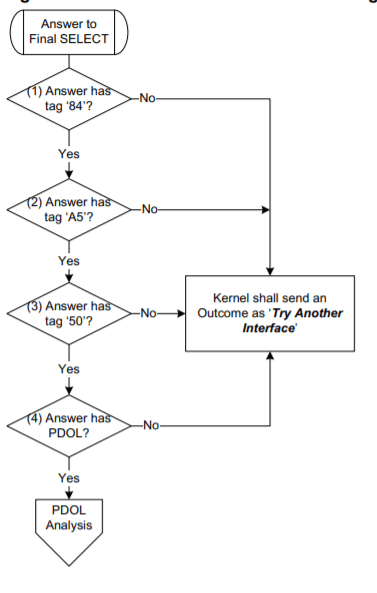
A mandatory alphanumeric field, 1-16 characters, sent in tag 50 of EMV transactions, representing a name related to the card application's AID in the ADF.

Diagram showing 3D Secure, Half 3D Secure, and Non-3D Secure transaction flows based on VERes and PARes response codes

Payment Systems

What is a Half 3D Secure transaction?

A Half 3D Secure transaction is, in short, the term used when the merchant supports 3D Secure but the card does not. Can such transactions occur as 3D Secure/Half Secure when the merchant does not support 3D Secure? A transaction started without the 3D process is treated as Non-Secure.

Diagram explaining 3D Secure, Half 3D, and Non 3D e-commerce transaction levels

Merchant & POS

What is an E-commerce Transaction?

E-Commerce can briefly be described as the sale and purchase of products over the internet, a term used since 1969. Virtual POS operates behind e-commerce transactions, which take place at different levels: Non 3D, Half 3D, and Full 3D Secure.

Diagram showing the Terminal Authentication Key (TAK) concept

HSM & Security

What is TAK (Terminal Authentication Key)?

TAK stands for Terminal Authentication Key. It is the data encryption key used to generate and verify a Message Authentication Code (MAC) for data communication between a terminal and the acquirer within a local network.

Illustration representing payment instruments such as cards and mobile devices

Payment Institutions & E-Money

What is a payment instrument?

Law No. 6493 on Payment and Securities Settlement Systems, Payment Services and Electronic Money Institutions defines a payment instrument as a personalized device such as a card, mobile phone, or password.

Diagram illustrating TCR (Transaction Record Component) packets used in payment clearing and settlement files

Payment Systems

What Is TCR (Transaction Record Component)?

TCR stands for Transaction Record Component, the packets that carry transaction information in a clearing system. Transaction types in a clearing file are distinguished by transaction code and usage code values, and this data is sent inside TCR packets.

MasterCard Identity Check logo and authentication illustration

Security

What is MasterCard Identity Check?

Payment security is very important in payment systems. To increase security, transactions require additional information such as PINs and passwords. Remembering which information to use, and keeping it in mind without forgetting…

Diagram illustrating the appeal stage of the card dispute and chargeback process between issuer, acquirer and card scheme

Payment Systems

What Is an Appeal? What Does It Mean in Payment Systems?

In payment systems, an “appeal” is the process of objecting to the outcome of a transaction dispute. It is usually discussed alongside chargebacks, but it plays a critical role in interbank dispute resolution, when a party asks the card scheme to re-evaluate a concluded decision.

Illustration of an AI-based payment agent making payments automatically on behalf of a user

Payment Systems

What Are AI-Based Payment Agents?

Digitalization keeps changing the speed and shape of payments. AI-based payment agents pay on their own within user-defined limits and rules, completing transactions without the user initiating any action. This post explains how they work and what to watch for.

Conceptual illustration of competing players vying for power in agentic commerce

General

Agentic Commerce Series – Part 6

Who will win in Agentic Commerce? Owning the customer used to be a huge advantage. Once an agent starts deciding on the customer's behalf, where does the real power move to?

ISO 8583 field 64 message authentication code

ISO 8583

ISO 8583 Field Descriptions (F64)

F64 — Message Authentication Code (MAC): verifies the origin and text of the message between the sender and the receiver.