Skip to content

Search

"3D Secure"

60 articles found

Diagram explaining 3D Secure, Half 3D, and Non 3D e-commerce transaction levels

Merchant & POS

What is an E-commerce Transaction?

E-Commerce can briefly be described as the sale and purchase of products over the internet, a term used since 1969. Virtual POS operates behind e-commerce transactions, which take place at different levels: Non 3D, Half 3D, and Full 3D Secure.
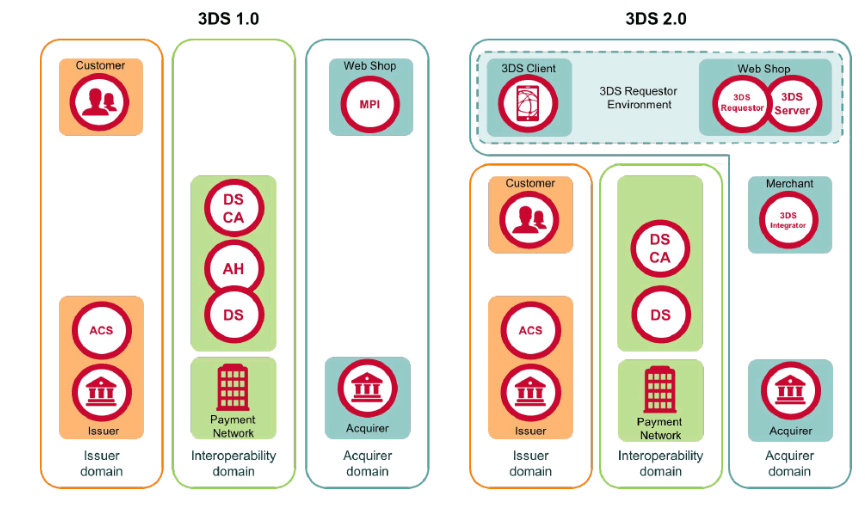
Diagram showing 3D Secure, Half 3D Secure, and Non-3D Secure transaction flows based on VERes and PARes response codes

Payment Systems

What is a Half 3D Secure transaction?

A Half 3D Secure transaction is, in short, the term used when the merchant supports 3D Secure but the card does not. Can such transactions occur as 3D Secure/Half Secure when the merchant does not support 3D Secure? A transaction started without the 3D process is treated as Non-Secure.

Architecture of 3DS 1.0 compared with 3DS 2.0, showing the issuer, interoperability and acquirer domains

Security

What Is 3D Secure 2.0?

Before 3D Secure 2.0, let's explain what 3D Secure is. 3D Secure is a two-layer payment authentication system that protects both the cardholder and the merchant in online payments. First released by Visa in 1999, it was later adopted by other card schemes…

Diagram illustrating how a transaction's 3D Secure authentication level is determined

3D Secure

How is a transaction's 3D Secure level determined?

Especially with the growth of the internet, credit card transactions have started shifting from physical POS terminals to virtual POS terminals. In virtual transactions, the 3D Secure structure is used instead of the card PIN entered in physical transactions. So how is a transaction's…

Illustration of a 3D Secure payment verification screen

Merchant & POS

What is a 3D Secure transaction?

In e-commerce transactions, the system developed to increase transaction security for payments made with credit and debit cards is called 3D Secure. When paying with 3D Secure, a special payment screen provided by the banks appears on the user's screen.

Diagram comparing the 3D, 3D Pay, and 3D Pay Hosting payment models

Payment Systems

What are the 3D Secure Payment Models?

In card payment transactions made via a physical POS device, entering the card's PIN keeps the transaction secure, while in virtual POS transactions, security is provided through the 3D Secure flow. Are 3D Secure payment methods standardized? There are 3 different 3D Secure models.

Diagram showing the Issuer Domain, Interoperability Domain and Acquirer Domain in 3D Secure

Merchant & POS

What are Payment Scheme 3D Secure systems?

3D Secure is short for Three Domain Secure (Issuer Domain, the Interoperability Domain and the Acquirer Domain), used to increase security in online transactions. Known to cardholders as 3D Secure, these systems are given unique names by payment schemes (MasterCard, Visa, etc.).

Diagram showing Electronic Commerce Indicator values used in 3D Secure transactions

Online & Authorization

What is the Electronic Commerce Indicator (ECI)?

Electronic Commerce Indicator (ECI) is a 2-digit value generated by payment schemes (Visa, MasterCard, etc.) in 3D Secure transactions to determine the transaction's security level (Full 3D Secure, Half 3D Secure, Non 3D Secure), and it varies by payment scheme.

Illustration of a payment card used for online shopping

Debit Card

Can You Shop Online with an ATM Card?

When we think of online shopping, we usually picture paying with a credit card. But can customers without a credit card, only an ATM card, shop online? Of course they can — you don't need a credit card to enjoy the convenience of e-commerce.

Table of CAVV result codes and what they mean for merchants

Merchant & POS

What is CAVV? What is AAV?

CAVV and AAV are verification codes used in 3D Secure transactions to ensure transaction integrity and security. CAVV is used by Visa, while AAV is used by Mastercard.