Skip to content

Search

"Encryption Keys"

38 articles found

Diagram illustrating the relationship between KEK and DEK encryption keys

HSM & Security

What is KEK (Key Encryption Key)?

KEK (Key Encryption Key) is an encryption key used to encrypt the DEK (Data Encryption Key) and decrypt the encrypted DEK. The relationship between KEK and DEK: in encryption systems, keys are managed in a layered structure.
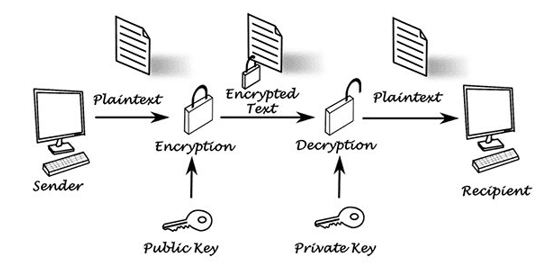
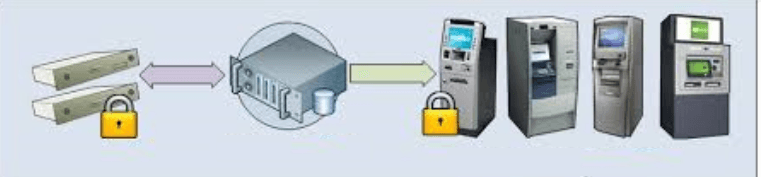
Diagram of PIN Encryption Key (PEK) structure

HSM & Security

What is PEK (Pin Encryption Key)?

PEK is the abbreviation for Pin Encryption Key. The role of PEK is to encrypt PINs. There are two types of PEK: TPK (Terminal Pin Key) and ZWK (Zone Working Key).

Diagram showing how a Message Encryption Key (MEK) is used to encrypt and transmit a message

Merchant & POS

What Is Message Encryption Key (MEK)?

MEK stands for Message Encryption Key, a randomly generated or static key used to encrypt message content and ensure its secure transmission between parties.

Diagram of symmetric key types used in payment systems

HSM & Security

Types of Symmetric Keys

In the world of payment systems, keys and their uses are important for transferring information from one place to another, storing information, and securing authorization and scripting steps. Key types are divided into six categories based on their purpose.

Zone Working Key PIN encryption between banks

HSM & Security

What Is ZWK (Zone Working Key)?

ZWK stands for Zone Working Key. It encrypts the PIN so that it can travel securely between different financial institutions, such as the acquiring bank and the issuing bank.

Diagram illustrating the Remote Key Loading (RKL) process

ATM

What Is RKL (Remote Key Loading)?

RKL is the process of distributing a TMK (Terminal Master Key) to each terminal from a central point. It is used to remotely load keys onto POS and ATM devices, loading TMKs onto an ATM's keypad or activating them on a POS.

Diagram illustrating the structure of ISO 8583 Field 53, PIN Encryption Control Information

Online & Authorization

ISO 8583 Field Descriptions (F53)

F53 - PIN Encryption Control Information. When online PIN data is present, sending the F53 value is mandatory, except when DUKPT information is carried in Field 63, Tag 01. F53 consists of the following components.

Illustration for a glossary of cryptocurrency terms such as Bitcoin, blockchain and mining

Cryptocurrency

What Are the Terms Used in the Cryptocurrency World?

Cryptocurrencies are becoming part of everyday life and are expected to compete seriously with card payments. This glossary explains the key crypto terms, from address, altcoin and arbitrage to halving, mining, proof of stake and stop-loss.

ISO 8583 field 52 PIN data encrypted PIN block

ISO 8583

ISO 8583 Field Descriptions (F52)

DE 52 — Personal Identification Number (PIN) Data: the field that holds the PIN data. PIN verification is carried out based on this field.

Illustration of a Terminal Master Key (TMK) securing a payment terminal

HSM & Security

What is TMK (Terminal Master Key)?

TMK stands for Terminal Master Key, a key-encrypting key distributed manually or automatically under a previously established TMK. It is used to distribute data encryption keys to an ATM or POS terminal within a local network.

Diagram illustrating Terminal PIN Key (TPK) usage in POS and ATM devices

HSM & Security

What is TPK (Terminal PIN Key)?

TPK stands for Terminal PIN Key. It is a data encryption key used to encrypt PINs for transmission between a terminal and the terminal's bank (acquirer) within a local network. Learn how TPK is used in POS and ATM devices.

Diagram of HSM use case areas in security and payment systems

HSM & Security

What Is an HSM? What Is It Used For?

HSM, short for Hardware Security Module, is specialized security hardware built to store sensitive cryptographic keys in a physical environment and to perform cryptographic operations in the most secure way.