Skip to content

Search

"cardholder name"

59 articles found

Table of AVS response codes by card scheme, showing address and postal code match results

Payment Systems

What Are the AVS Codes by Card Scheme?

The Address Verification Service (AVS) is a fraud prevention system that, when used effectively, can help limit fraud and chargebacks. This post lists the AVS response codes used by AMEX, Mastercard and Visa, with a description of each.
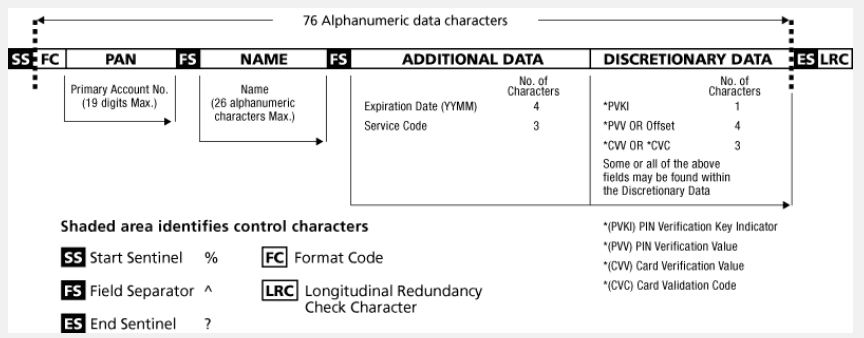

Diagram illustrating the Track 1 data structure and field layout on a magnetic stripe card

Credit Card

What is Track 1?

Track 1 is a special data set encoded on a card's magnetic stripe that contains the card information required for authorization when the card is used physically. It includes the cardholder name, card number, and expiration date.

American Express chargeback reason codes list from the Chargeback and Exception Processing Guide

Chargeback

What Are the American Express Chargeback Reason Codes?

Chargeback reason codes vary by card scheme. The Amex chargeback reason codes and their descriptions are listed below: American Express Chargeback Reason Codes A01 The charge you submitted did not receive a valid authorization approval code for the amount...

Diagram of the ISO 8583 field F45 Track 1 data structure

ISO 8583

ISO 8583 Field Descriptions (F45)

F45 (TRACK-1 DAT) carries the Track 1 data of the card in ISO 7813 format, including field separators and start and end sentinels but excluding the LRC character. It is 76 characters long.

Diagram illustrating the EMV Tag-Length-Value (TLV) data structure used in card transactions

Online & Authorization

What are EMV Tags?

In EMV, data is stored in Tag-Length-Value (TLV) format, and it is carried between the card, the POS terminal, and the authorization system in this same format. This post lists every EMV Tag, its type, and its description.

Business debit card used by corporate customers for ATM transactions

Credit Card

Can Business Customers Be Issued an ATM Card?

Business customers can be issued an ATM card, known as a Business Debit Card. The cardholder must be the person authorized to act legally on behalf of the company, since the card operates on company accounts.

Diagram illustrating the ISO 8583 F42 card acceptor identification code field

ISO 8583

ISO 8583 Field Descriptions (F42)

F42 - CARD ACCEPTOR IDENTIFICATION CODE: the merchant number of the terminal where a transaction took place. It is a 15-character alphanumeric value. Transactions are settled to the merchant's account based on the merchant number in this field.

Example of a 3D Secure verification screen displaying a Personal Assurance Message

Security

What is PAM (Personal Assurance Message)?

PAM (Personal Assurance Message) is a message that users set up for 3D Secure transactions. It appears on the password screen during checkout and confirms to the user that the screen truly comes from their own bank.

Illustration representing credit card loyalty points and rewards

Merchant & POS

What are Loyalty Points?

Loyalty points are promotional rewards banks give customers for credit card transactions, tracked on a card/customer basis. Banks charge merchants a commission on POS transactions, and some share part of that commission with cardholders as points.

Card refund receipt standards illustration

Merchant & POS

What Are the Standards for Refund Receipts?

Cardholders may request a refund through the merchant for POS transactions due to wrong deliveries, returned goods and similar reasons. Here is the information a refund receipt must contain, including extra fields for e-commerce.

Diagram illustrating the retrieval request process in card transactions

Chargeback

What is a Retrieval Request?

A chargeback is when cardholders dispute a transaction made without their knowledge through their card-issuing bank. So what does a Retrieval Request mean? It is essentially a document request related to transactions a cardholder does not recognize on their statement.