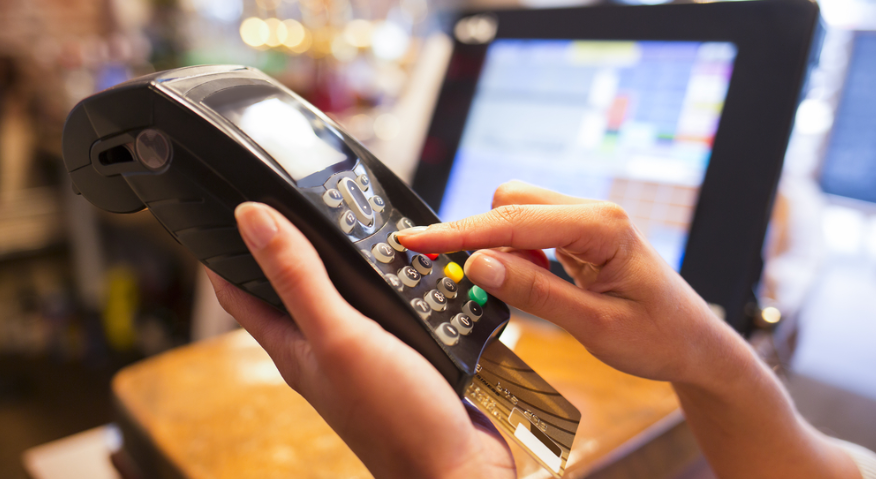
Today, as credit cards shift from physical to virtual use, a similar move has come from the POS side. We have begun to see mobile phones being used as POS devices becoming a serious rival to physical POS terminals. This development looks set to significantly change the habits of both merchants and us, the cardholders.
From this point on in the article, the use of a mobile phone as a POS device will be referred to as Digital POS.
So how can mobile phones be used as POS devices?
To use a mobile phone as a POS device, a corporate company or sole proprietorship must have signed a merchant agreement with the bank, and the bank's app must be installed on the mobile phone.
Can I process POS transactions through both a physical POS device and a mobile phone at the same time in my company?
Of course you can. Transactions made through both POS channels accumulate in the same account and are transferred to the customer's account.
Are Digital POS transactions secure?
The transaction security of Digital POS systems is maintained at the highest level. For this reason, transactions can be carried out securely.
What are the credit card payment features of Digital POS systems?
With smartphones, payments can be accepted from all credit cards, independent of time and location, through channels such as QR codes and SMS.
What are the advantages of Digital POS systems?
- It frees businesses from many costs and issues such as installation, device cost, inventory cost (for example, receipt roll cost), technical service, and connectivity problems.
- It reduces banks' operational costs.
- Banks pass on the reduced costs to merchants as lower commission rates.
- It makes it possible for more than one user to process transactions through a single POS device. (For example, for a single POS device given to a pizza company, separate user accounts can be opened for each delivery person so that transactions can be processed through the same POS.)
- Using a POS device is particularly difficult for companies that collect payment at the door. Problems can arise when more than one payment needs to be taken at the same time with a single POS device. Digital POS provides a radical solution to this problem.
What must banks do to offer the Digital POS application to their customers?
Banks need to have adapted their infrastructure to next-generation payment methods and to have designed the application required for mobile phones to be used as POS devices.
So, can transactions be processed through mobile phones instead of OKC (Odeme Kaydedici Cihaz / Fiscal Cash Register) POS devices?
Currently, transactions can be processed through Digital POS applications only for POS devices other than OKC POS. Regulatory changes may also be required for OKC POS devices to be used as Digital POS.
Does Digital POS provide a solution for POS devices used as Shared POS at a merchant?
For Digital POS to be used as a shared POS, integration between banks is required. Currently, banks provide Digital POS services separately. We can say that there is still a long way to go for a shared POS.
Considering the advantages and disadvantages listed above, Digital POS provides very significant convenience for banks, merchants, and cardholders alike. For this reason, it does not seem far off for Digital POS to spread rapidly and come into widespread use in the field.
It looks like physical POS devices will also be affected by digitalization. Although there is still a long way to go with Digital POS, it is very clear that the coming days will be quite eventful in terms of POS systems. Are you ready for the eventful days ahead? :)



