F124-PRIVATE ADDITIONAL DATA: Contains additional information specific to the transaction.
For example;
- Information such as Card Update Failure Code and Status in the 0382 message)
- KKPT (Card-to-Card Money Transfer transaction): the customer's full name
- In 3D Secure transactions: the customer's full name
- In the Private Network Management Information field, it contains the Working Key and Key Check Value.
Private use areas
In the ISO 8583 standard, certain fields are reserved for "private use." The content of these fields is not defined by the standard. The network or institution using the field determines its content based on its own needs. F124 is one of these fields. For this reason, the content of F124 can vary from one network to another, and even from one transaction type to another within the same network.
Structure within the message
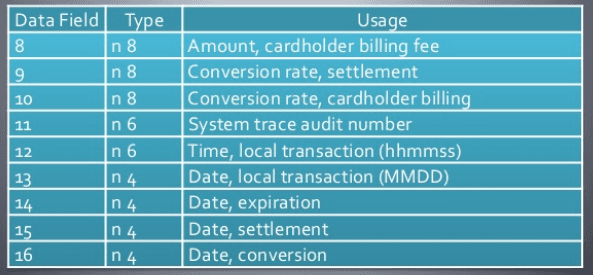
F124 is a variable-length field. The length of the content is sent at the start of the field, followed by the content. The field is generally divided into subfields in order to carry multiple pieces of information. The order and length of the subfields, and which transactions they will be populated for, are defined in the relevant network's message specification.
What the examples above have in common
As seen in the examples above, F124 is used to carry information that has no equivalent in the standard fields. The status codes in card update messages, the full name information in money transfers, and the encryption keys in key exchange messages are all pieces of information that cannot be placed directly in standard fields but are necessary to complete the transaction.
Points to watch during integration
Since F124 can carry sensitive information such as the cardholder's name or encryption keys, this field's content must be masked when logged. Also, since the field's content varies from network to network, if the same integration code is used across different networks, the F124 processing logic must be separately verified for each network.