The term 'Third Party Provider' refers to an authorized online service provider introduced under Open Banking. These are systems that exist outside a customer's relationship with their bank and that mediate the transaction being carried out.
So how many types of third party provider are there?
There are two types of Third Party Provider (TPP):
- PISP - Payment Initiation Service Provider.
- AISP - Account Information Service Provider.
So what are PISP and AISP, and what is the difference between them?
A PISP allows you to make online payments without needing credit or debit card details.
A Payment Initiation Service Provider is a service provider that can initiate a payment transaction on behalf of the customer; in other words, with the customer's consent, it can withdraw money directly from the customer's account. If the customer has more than one account, the account from which the money will be deducted can be selected.
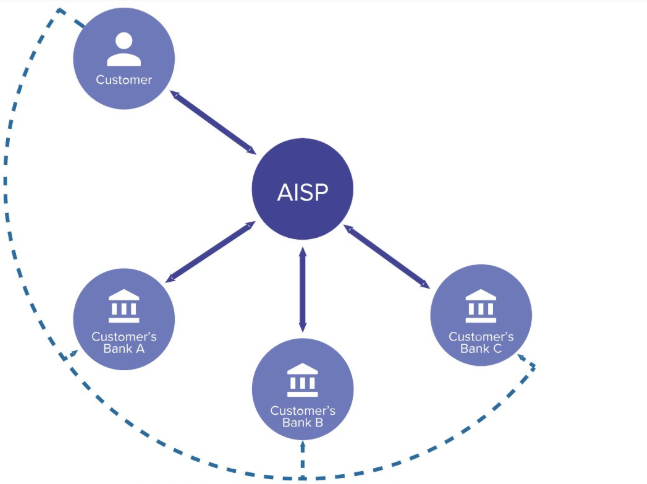
An AISP is a service provider that, with the customer's consent, retrieves bank account and other information, making it easier and more convenient for the customer to carry out transactions.
Digital Account Access serves as the foundation of many innovative banking and FinTech services. In most cases, this is carried out by Account Information Service Providers, which, on behalf of customers, provide information from online bank accounts to other banks and third party providers.