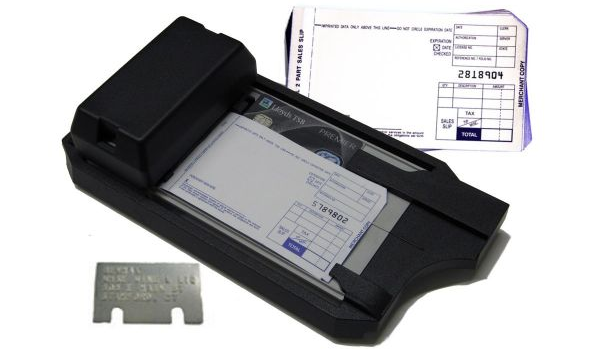
An imprinter is the name given to devices that transfer all the information embossed on a credit card onto the sales receipt on paper. Before POS terminals, it was generally used by merchants for authorization transactions.
When imprinters were used, the process roughly worked as follows:
- In transactions made with an imprinter, the merchant would call the bank's credit card authorization center by phone, provide the card number, and request approval for the transaction.
- After the card-issuing bank approved the transaction, the merchant would place the sales receipt, known as the slip, and the card onto the device and complete the transaction by manually pulling the machine's lever.
- In payments made with a credit card, the cardholder does not hand over cash; they only sign the sales receipt produced by the device. This sales receipt serves as a payment instruction given by the cardholder to the card company, directing that the amount of the purchased goods be paid to the merchant.
- When an imprinter was used, information printed on the credit card, such as the cardholder's first and last name, the card number, and the card's expiration date, was transferred onto the sales receipt (slip).
- The sales receipt had to have at least 3 copies. The amount owed was written in by an authorized person. The cardholder signed the top copy of these.
- The cardholder kept one of the remaining copies.
- One of the other copies stayed with the merchant. The other copy was submitted to the card-issuing institution so that the amount spent by the cardholder could be collected.
- The lending institution would also request payment for all of the purchases made by the cardholder at the end of the billing period (usually 15-day or monthly periods) by sending a statement.
Nowadays, when a transaction is carried out via POS, considering transaction security (chip & pin, encrypted data transmission, etc.), the real-time approvals obtained from the POS bank and the card bank, the shorter time it takes for transactions to be reflected in card and merchant accounts, and the reduced likelihood of fraud, it would not be too wrong to say it is a good thing that payment systems exist and have advanced by making use of technology.



