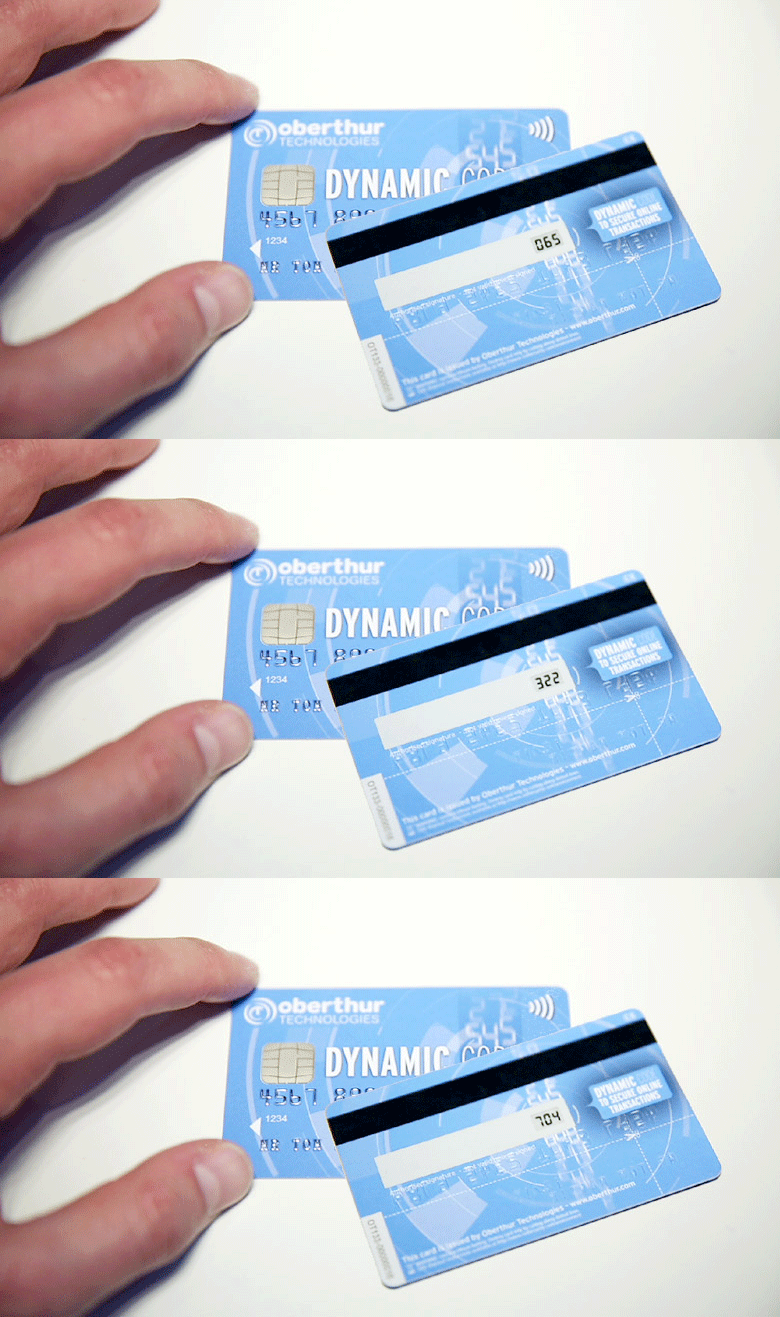
Most of us are familiar with CVV2/CVC2. In short, CVV2 can be described as the security code printed on the back of a card (though its exact form may vary by card scheme), usually three digits long.
So what is dCVV2?
On standard physical cards, the CVV2 printed during card personalization stays fixed for the lifetime of the card. When the CVV code on the card is not fixed but instead changes at regular intervals, or changes when triggered by the user, it is called dCVV.
How do dCVV cards work?
A dCVV card type is battery-powered and includes an interactive screen that displays the CVV number normally printed on the back of the card. This functionality provides extra security for online payments, which typically use the CVV as a verification code. By standardizing the certification of cards that include dCVV2, Visa is also paving the way for the certification of other battery-powered cards featuring buttons, screens, and biometric sensors.
With the spread of electronic shopping and the security issues in e-commerce, there is a growing need to change the CVV2 used in online payments.
Through its dCVV2 service, Visa provides card issuers with dynamic CVV2 information that is generated by Visa and checked by Visa during authorization. The security method that lets CVV2 be used dynamically at the cardholder's request is called dCVV2.
You can find more details on this topic on Visa's website.
https://developer.visa.com/capabilities/visa-dcvv2-generate
As transaction security becomes more important for users every day, we can expect this kind of development to increase further.