Introduction
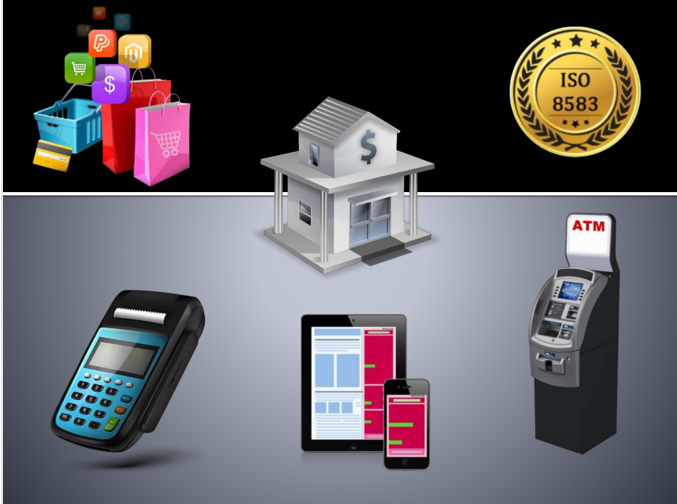
When a card (credit card/debit card/prepaid card) is used at an ATM or POS terminal, the data must be carried securely from one system to another. For example, in a sale transaction made at a store, the transaction is initiated by the POS. It must reach the cardholder's bank intact and securely.
The transaction carries the following:
- Transaction Type
- Card Number
- Transaction Amount
- Transaction Currency
- Security Information
- Merchant Number
- Terminal Number
- Acquirer Bank ID, and similar information.
The issuer bank then performs checks such as:
- Card status,
- Limit/Balance,
- PIN,
- CVV,
- Authorization,
- MCC, and similar checks, and returns an Approval/Decline for the transaction.
So where does ISO 8583 fit into this process?
ISO 8583 is right at the heart of this process! It is the language of the process, the message carrier, and the manager of the messaging standards.
ISO 8583 Message Structure
An ISO 8583 message consists of 3 main parts:
- MTI (Message Type Indicator)
- Bitmap (the field that indicates which data elements are present in the message)
- Data Element (the message content fields)
Application Data
| Field # | Description |
| 0 | MTI Message Type Indicator |
| 1 – Bitmap | 64 (or 128) bits indicating the presence/absence of the other fields |
| 2 – 128 | The other fields indicated in the bitmap |
In short, we can visualize the data flow as follows: