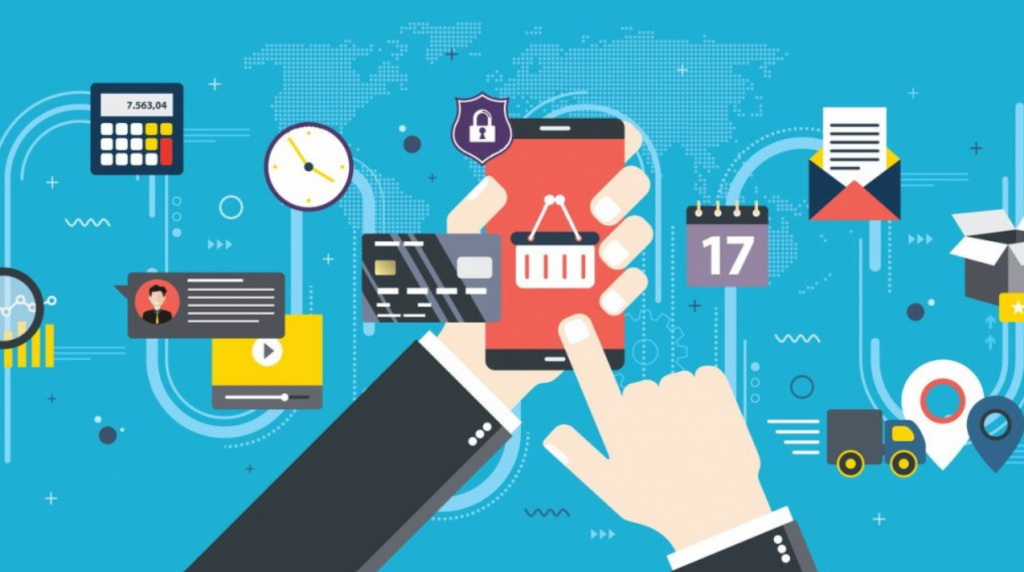
In recent years, data exchange over wireless mobile devices has become much faster and more secure. In 2019, mobile devices were used in 54.5 percent of the purchases made by e-commerce users. As the number of mobile users keeps growing, so does the number of people shopping on mobile. This seems set to keep changing the rules of digital marketing.
When we hear the term mobile commerce, the first thing that comes to mind may be consumers shopping with their wireless devices. But that is not all there is to it; it covers much more.
So what should we understand by mobile commerce?
We can divide mobile commerce into three main categories:
- Mobile shopping,
- Mobile banking,
- Mobile payments.
Mobile shopping can be thought of as customers shopping by using apps or mobile websites on their mobile devices.
Mobile banking refers to applications that let customers carry out all of their banking transactions from any portable device. Secure mobile apps built by banks are generally used in this category.
Mobile payments are when customers make a purchase using their mobile devices. Mobile wallets, which grow more popular every day, let customers complete their payments securely without entering any card details, and track their past transactions.
So how does mobile commerce work?
Purchases made with mobile devices connected to a wireless network are usually carried out through the secure mobile app of an e-commerce site or online marketplace. The main success criteria of a mobile commerce app are mobile traffic, average order value and how orders change over time. In addition, customer behavior, such as how many mobile visitors add products to their cart and how many of them complete the purchase, makes it possible to draw practical conclusions about the mobile commerce platform and to identify the improvements needed. Those who want to enter mobile commerce should also know that the loading times of mobile commerce apps, and the usability and practicality of the app, need to be at a level that matches the agility of e-commerce sites, and they should pay attention to these points.
Mobile payments work on a peer-to-peer (P2P) basis. Users first add their cards to a wallet they have downloaded on their mobile device, and then use this information to make digital and physical payments. In addition to mobile commerce platforms, this method also allows contactless payments with smartphones or tablets using near field communication (NFC).
What are the advantages and disadvantages of mobile commerce?
The main advantages of mobile commerce are as follows.
- Because users can reach you more easily from their mobile phones, it increases the number of visitors and sales.
- It gives consumers the opportunity to compare products and prices and read user reviews on their mobile phones.
- It makes a wider range of products and services possible.
- It can be used as a new sales channel.
The disadvantages of mobile commerce are as follows:
- A poorly designed mobile app can reduce customers' likelihood of buying and cause them to abandon their purchases.
- Insufficient mobile payment options can prevent purchases from being completed.
In short, mobile payments will become an even bigger part of our lives and will be used even more. At this point, mobile apps that are useful and match customer expectations will stand out.