
ISO 8583
ISO 8583 Field Descriptions (F3)
Field 3, Processing Code, is the field that shows what type of transaction is being performed and is critical for authorization. A Sale from POS differs from a Cash Withdrawal at an ATM.
Search
59 articles found
ISO 8583
Field 3, Processing Code, is the field that shows what type of transaction is being performed and is critical for authorization. A Sale from POS differs from a Cash Withdrawal at an ATM.
ISO 8583
F2 is the Card Number field in ISO 8583, identifying the cardholder and issuing bank. This post covers its structure, the 8-digit BIN update, field format, first-digit scheme identification, and PCI DSS security requirements.
ISO 8583
DE 95, Replacement Amounts, shows the transaction amount information in full or partial reversals. Here are its subfields and how it relates to F4.
ISO 8583
F90 - ORIGINAL DATA ELEMENTS: the data elements from an original message, designed to identify the transaction in correction or reversal transactions. Subfields: Original MTI, Original DE 11 (STAN), Original DE 7, Original DE 32, Original DE 33.
ISO 8583
DE 38 (AUTHORIZATION IDENTIFICATION RESPONSE) is the authorization code generated when a transaction is approved. It is alphanumeric, 6 characters long, and left empty for declined transactions.
ISO 8583
F32 - ACQUIRING INSTITUTION IDENTIFICATION CODE: the 11-digit acquirer bank ID. The values it can take for domestic transactions and by card brand include Visa, MasterCard, UnionPay, Discover and JCB formats.
ISO 8583
F23 - CARD SEQUENCE NUMBER: Information used to distinguish cards sharing the same card number. For example, the Card Sequence Number is incremented by 1 when a card is renewed. In an authorization transaction, if the F22 value is '05x'...
ISO 8583
F22 - POINT OF SERVICE ENTRY MODE: This field holds how the transaction was performed via the POS/ATM and the PIN entry capability of the POS device. The first 2 digits show how the transaction was performed, and the last digit (shown as x) carries the POS's PIN entry capability. Numeric...
Merchant & POS
In payment systems, every exchange between POS devices and bank or payment institution systems runs on a specific messaging standard, generally based on ISO 8583. However, each country, bank, or switch network defines its own version of this standard.
Merchant & POS
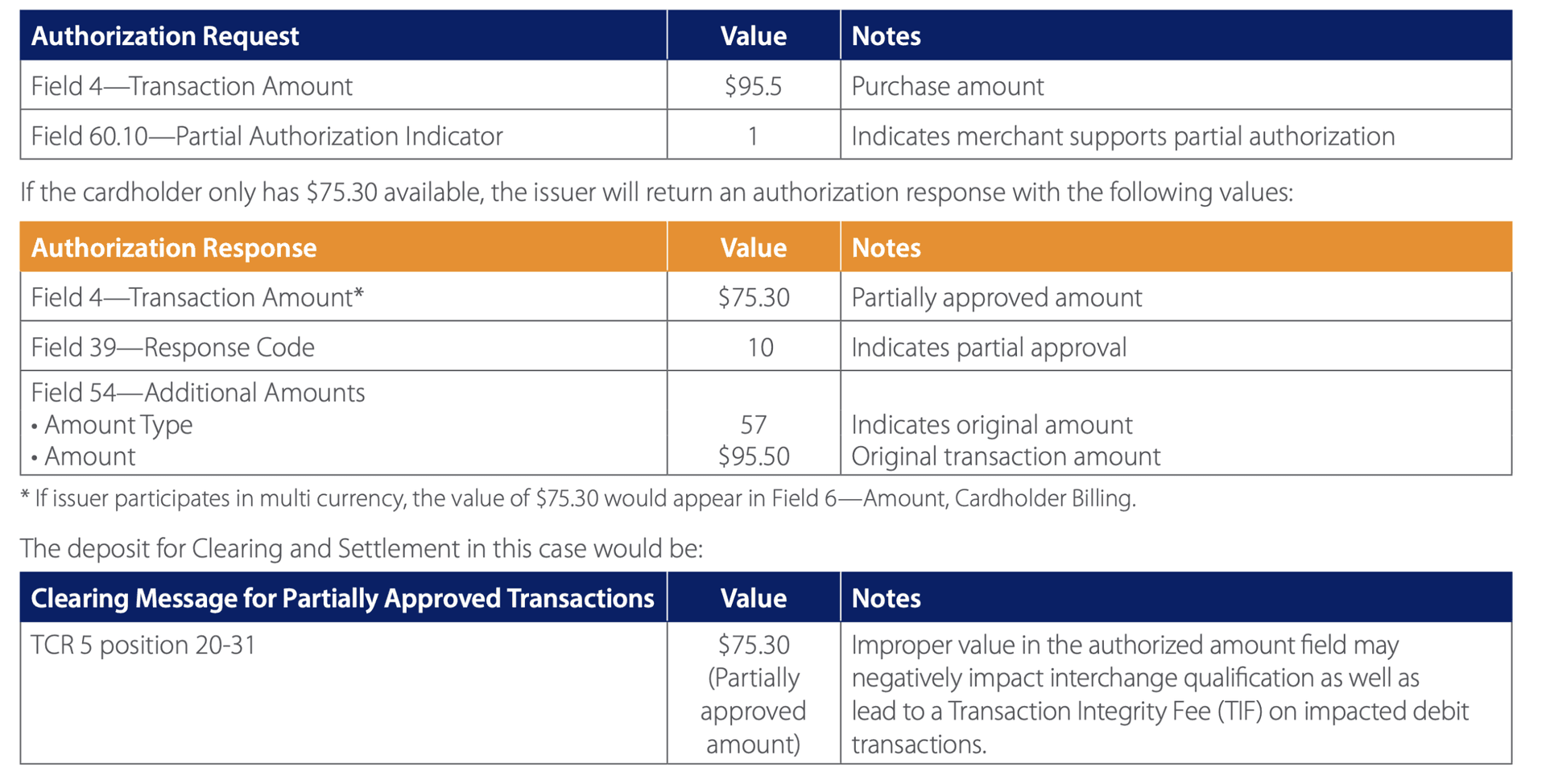
Partial Authorization lets an issuer approve part of a transaction instead of declining it when the balance or limit is insufficient. This post covers how it works in ISO 8583, whether it is mandatory, and why it matters for the business.
Payment Systems
ISO/TC 68 is a technical committee within the International Organization for Standardization in Geneva, responsible for developing and maintaining international standards for banking, securities and other financial services.

Online & Authorization
A reference guide to authorization response codes seen on POS and ATM transactions, with plain-language explanations of what each code means and what to do about it.