Skip to content

Search

"POS limits"

87 articles found

Diagram of a smartphone using Magnetic Secure Transmission (MST) to emit a signal that mimics a card's magnetic stripe at a POS terminal

Merchant & POS

What is MST (Magnetic Secure Transmission)?

Magnetic Secure Transmission (MST) is a mobile payment technology in which devices such as smartphones emit a signal that mimics the magnetic stripe on a traditional payment card, letting a physical card's POS use be imitated without upgrading terminal software or hardware.

Diagram illustrating the EMV Tag-Length-Value (TLV) data structure used in card transactions

Online & Authorization

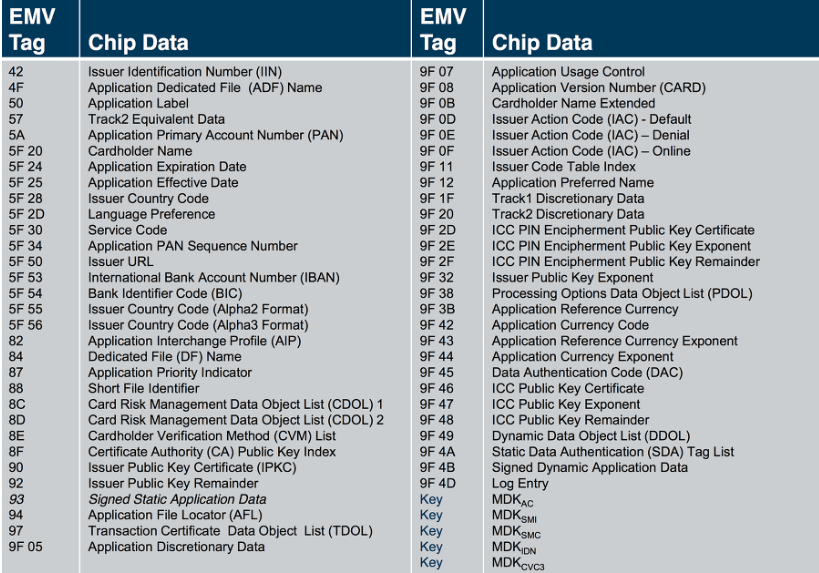
What are EMV Tags?

In EMV, data is stored in Tag-Length-Value (TLV) format, and it is carried between the card, the POS terminal, and the authorization system in this same format. This post lists every EMV Tag, its type, and its description.

Diagram showing how offline transactions are relayed from the POS to the card bank

Merchant & POS

How Do Offline Transactions Reach the Card and POS Bank?

In chip transactions made with a credit card via POS, the transaction amount is approved by the card and POS based on parameters on the card and POS, without going to the card bank or POS bank. These are called offline transactions.

Illustration representing an installment transaction made with a credit card

Credit Card

What is an Installment Transaction?

An installment transaction splits a payment into a set number of installments reflected on the cardholder's statement, when the card and POS bank are the same. For example, a 1000 TL transaction in 5 installments reflects 200 TL per statement period, starting from the first one.

Illustration representing a mail order card payment transaction

Merchant & POS

What is a Mail Order transaction?

Mail Order (Mail Order/Telephone Order) is a transaction made by selecting the Mail Order option on a POS or through the virtual POS interface, entering the card number, expiration date, and CVV2. It is typically used when the cardholder is not present.

Diagram showing an authorized card transaction that expires before reaching the clearing file

Credit Card

What does it mean for a card transaction to expire?

Due to how payment systems work, authorization is obtained for a transaction first. For a Not Onus transaction (different card and POS banks), the system waits for it to arrive via the clearing incoming file. If it does not arrive within about a week, the transaction expires.

American Express chargeback reason codes list from the Chargeback and Exception Processing Guide

Chargeback

What Are the American Express Chargeback Reason Codes?

Chargeback reason codes vary by card scheme. The Amex chargeback reason codes and their descriptions are listed below: American Express Chargeback Reason Codes A01 The charge you submitted did not receive a valid authorization approval code for the amount...

Diagram illustrating TCR (Transaction Record Component) packets used in payment clearing and settlement files

Payment Systems

What Is TCR (Transaction Record Component)?

TCR stands for Transaction Record Component, the packets that carry transaction information in a clearing system. Transaction types in a clearing file are distinguished by transaction code and usage code values, and this data is sent inside TCR packets.

Table of merchant sectors where offline transactions are restricted

Merchant & POS

In Which Sectors Can Offline Transactions Not Be Performed?

An offline transaction is one approved by the card and the POS themselves, without going to any system (the card's bank or the POS's bank), when a chip card transaction is made at a POS. For this reason, some sectors considered risky are restricted.