Skip to content

Search

"card issuing"

302 articles found

Illustration of the compliance process between merchant bank and issuer in card payments

Chargeback

What Is Compliance (Regulatory Compliance)?

Compliance means adherence to card scheme rules. Outside chargebacks, it is how a bank that loses money because card payment organization rules were broken recovers that amount from the party that caused the loss.
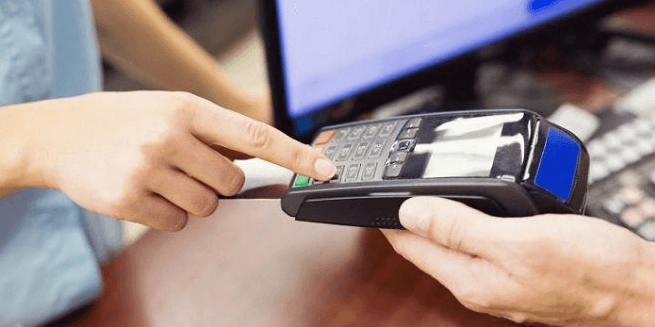

Diagram showing how an open authorization moves to a card statement after batch close and clearing

Credit Card

What Is an Open Authorization?

In credit card transactions made through a POS, receiving approval alone is not enough for the transaction to post to the card's statement period; settlement must also take place. The settlement period, known as the open-authorization waiting time, varies by transaction type.

Table of Visa and Mastercard fraud codes and descriptions

Security

What Are the Visa and Mastercard Fraud Codes?

Fraud means obtaining unjust gain by carrying out a transaction at a merchant or ATM using someone else's credit card or debit card, causing a loss to the real cardholder, the merchant, or the bank. So what fraud codes do Visa and Mastercard use?

Diagram showing membership types for Visa and Mastercard card schemes

Credit Card

How Many Types of Membership Are There by Card Scheme?

Banks must go through a costly, arduous process to issue cards (issuer) and accept cards (acquirer), paying high entry fees to international license providers and local organizations such as BKM.

Diagram illustrating the properties and lifecycle of a tokenized card number as it moves through the payment network

HCE

What Are the Characteristics of a Tokenized Card Number?

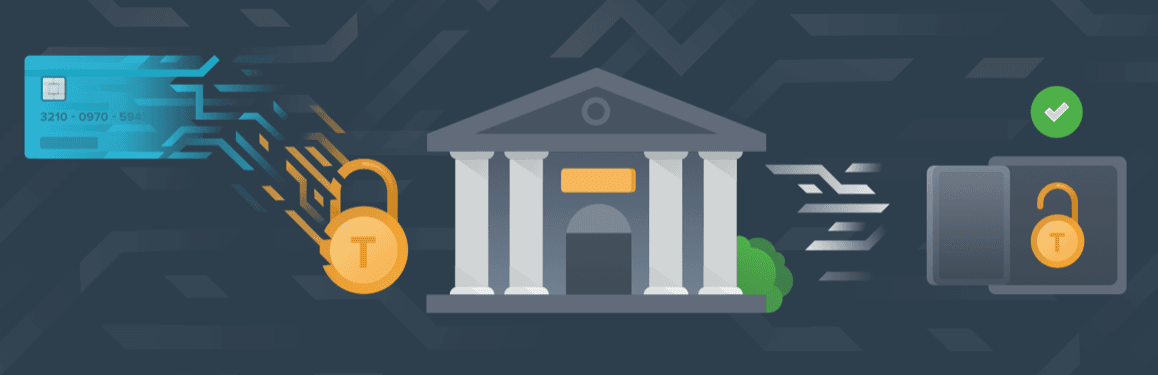
A tokenized card number replaces a physical card number so transactions can be carried out securely. It is generated by the TSP (Token Service Provider), used by the cardholder or merchant, and travels across the payment systems network.

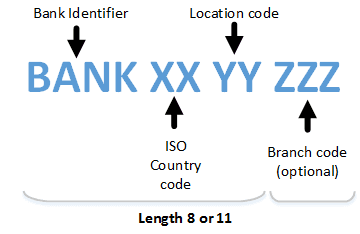
Diagram illustrating the structure of a Bank Identifier Code (BIC)

EMV

What is a Bank Identifier Code (BIC)?

BIC stands for Bank Identifier Code. It is the universal bank identification code used for automated processing in banking and related financial environments, identifying banks as specified by the ISO 9362 standard.

Diagram of the EMV Card Block command process

EMV

What is the Card Block command?

The Card Block command is used after card issuance to deactivate all applications within the ICC, including applications that could be selected indirectly. The components of the command are explained below.

Illustration representing payment card BIN numbers and card schemes

Credit Card

Which BINs Do Payment Schemes Work With?

Banks increase the variety of their products and services to serve customers better. When introducing new products, they usually issue them under a new BIN. So are there valid rules for obtaining a new BIN (Bank Identification Number)?

Diagram showing the flow of incoming and outgoing files in the clearing system between banks

Clearing

Clearing System Files: Incoming and Outgoing Files

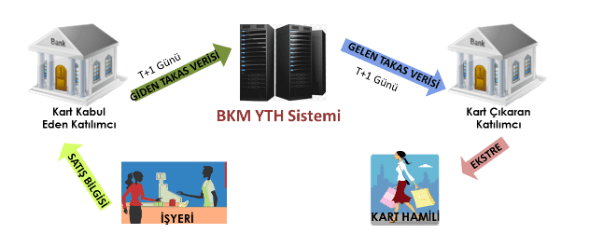
The clearing system settles a transaction between two participants when a card from one bank is used at another bank's POS or ATM. Learn about the incoming and outgoing files used in interbank clearing.

Diagram of the chargeback process between cardholder, issuer and acquirer

Chargeback

How to Reduce Chargebacks (For Cardholders)

A chargeback is when a cardholder asks the issuing bank to refund a transaction made without their knowledge. It cannot be prevented entirely, but simple precautions can minimize the risk. Here is how the process works and what cardholders should do.

Diagram illustrating how a bank allocates a credit card limit

Credit Card

What does credit card limit allocation mean?

A credit card is a card whose limit the bank sets after evaluating the customer against criteria such as income, payment history, and credit bureau score.