BIC is an abbreviation for Bank Identifier Code.
It is the universal Bank Identification Code used for automated processing in banking and related financial environments. It identifies banks as specified by the ISO 9362 standard.
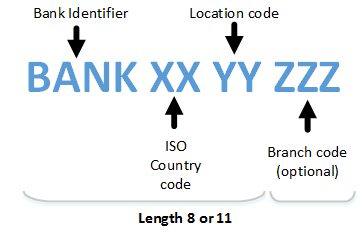
In Tag 5F54, it is a piece of data that is 8 or 11 characters long.
The BIC value consists of:
- a 4-character bank code,
- a 2-character country code,
- a 2-character location code, and
- an optional 3-character branch code.
BICs are used by financial institutions for letters of credit, payments, securities transactions, and other business messages exchanged between banks. The identification scheme is managed by the Society for Worldwide Interbank Financial Telecommunication.
Use of BIC in Turkey
Each bank in Turkey has its own BIC code. When money is sent from abroad to an account in Turkey, the receiving bank's BIC code is used together with the recipient's IBAN number. The BIC code is also commonly known as the SWIFT code.
Difference between BIC and IBAN
- BIC: Identifies the bank. It specifies which bank the money transfer will be sent to.
- IBAN: Identifies the account at the bank. It specifies which account the money will be deposited into.
Both pieces of information must be provided correctly for international money transfers.
Why is there a BIC on the card?
The BIC found in Tag 5F54 on the card identifies the issuing bank. This information is mainly used in certain payment applications where the IBAN of the account linked to the card is used together with it, and in some local card systems in Europe. In most card transactions, the BIC is not used, since the issuing bank is identified from the BIN portion of the card number.
Example of the code structure
For example, in a BIC code the first four characters identify the bank, the next two characters identify the country (TR for Turkey), and the next two characters identify the location. In 11-character codes, the last three characters indicate a specific branch.